
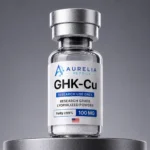
GHK-Cu
A copper-binding tripeptide studied in extracellular-matrix and skin-repair research
- Fulfillment Origin
- us
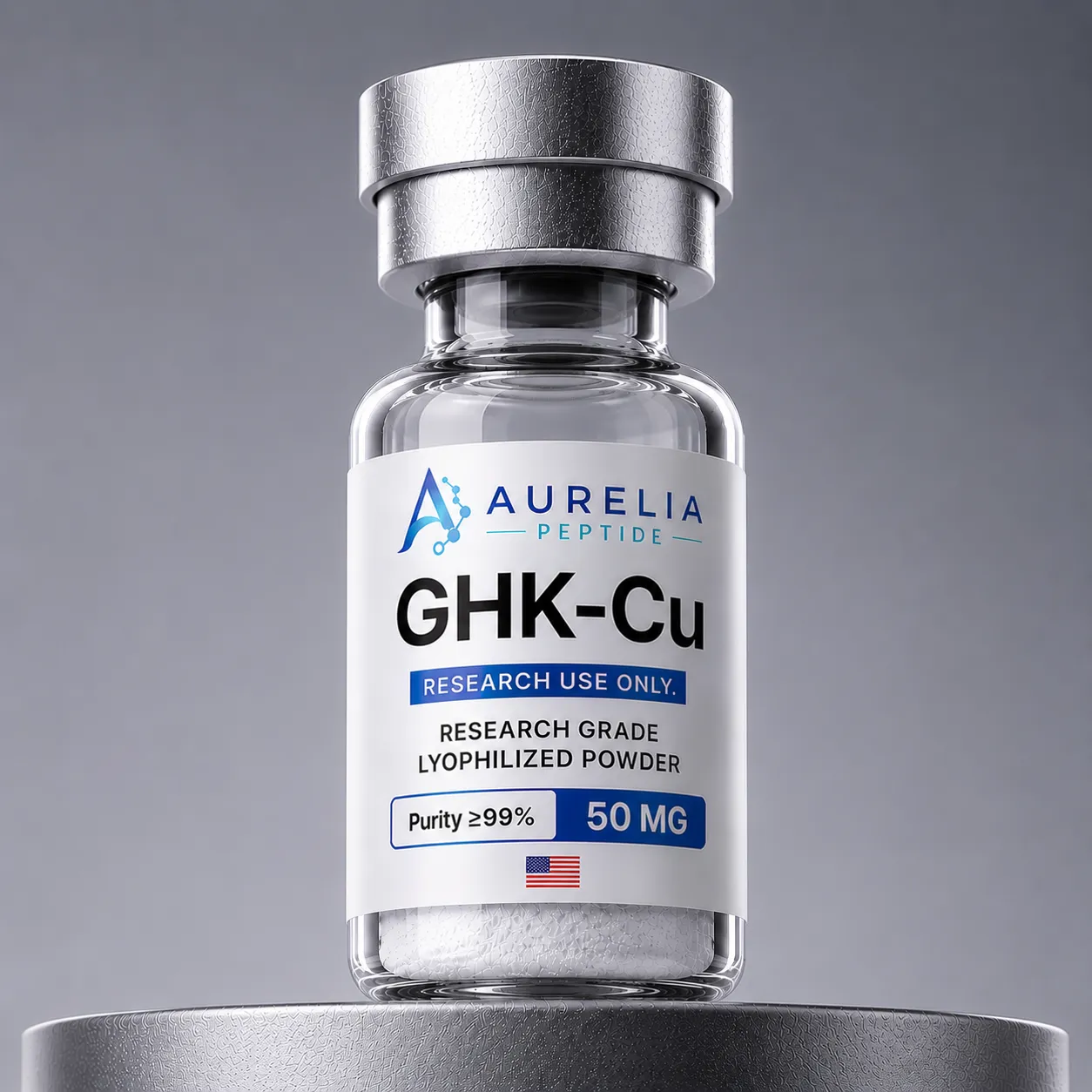
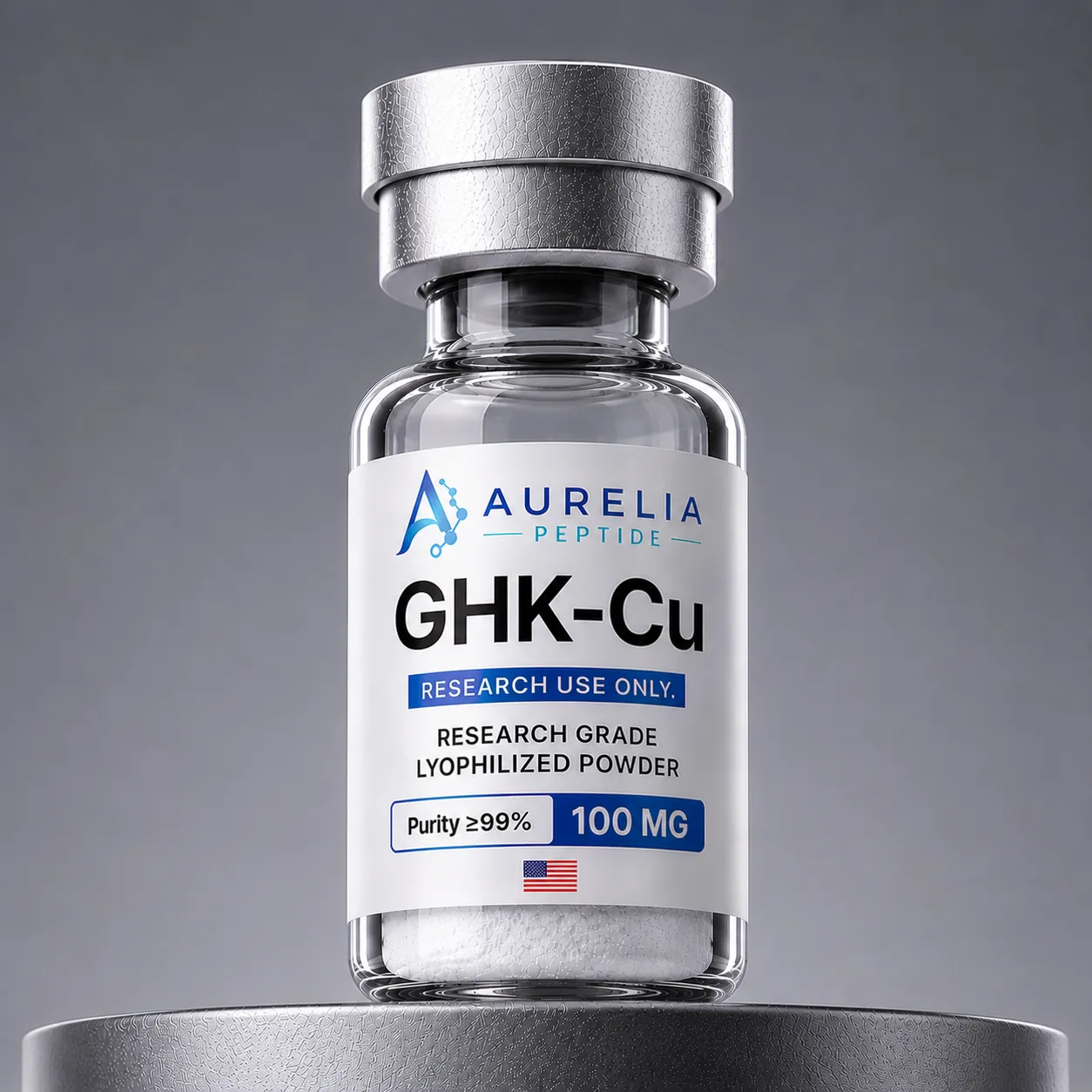
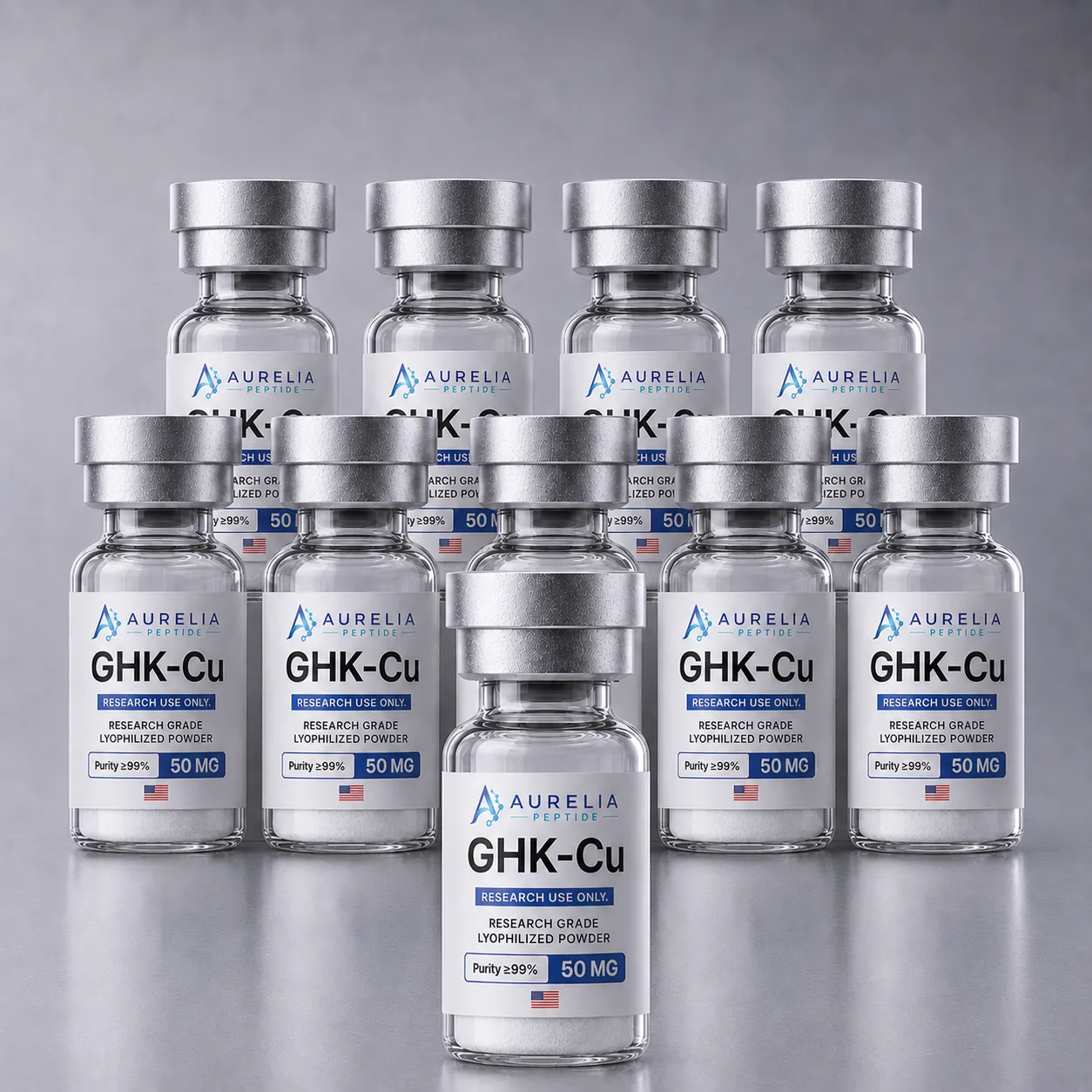
GHK-Cu is a copper complex of the naturally occurring tripeptide glycyl-L-histidyl-L-lysine. Published preclinical research has examined copper coordination, extracellular-matrix remodeling, collagen synthesis, antioxidant pathways and tissue-repair signaling. It is supplied solely as a laboratory research material.
Copper-binding Gly-His-Lys tripeptide complex (Copper tripeptide-1 / Cu-GHK)
- Formula
- C14H24CuN6O4
- Molecular weight
- Approximately 403.92 g/mol
- Form
- Lyophilized powder
- CAS / ID
- Copper tripeptide-1 (CAS 89030-95-5)
Independently tested. Verifiably pure.
Every batch of GHK-Cu is reviewed against its independent laboratory documentation before fulfillment.
- HPLC Purity AnalysisReported purity: Lot-specific purity — see COA
- Mass SpectrometryMass spectrometry — see lot COA
- Heavy Metals ScreeningLot-specific result — see COA
- Endotoxins (LPS)Lot-specific result — see COA
- Sterility TestingLot-specific result — see COA
- Net Peptide ContentLot-specific result — see COA
- HPLC Purity
- Lot-specific purity — see COA
- Identity
- Mass spectrometry — see lot COA
- Endotoxin (LAL)
- Lot-specific result — see COA
- Lab
- Independent third-party laboratory
Not for human or veterinary use. For in-vitro laboratory research only. This product is not intended to diagnose, treat, cure, or prevent any disease.
Three amino acids. One copper coordination complex.
GHK-Cu combines the Gly-His-Lys tripeptide with copper(II). Its compact coordination complex has been studied in extracellular-matrix remodeling, skin regeneration and repair-associated signaling.
Gly-His-Lys
A three-residue peptide containing glycine, histidine and lysine.
Copper(II)-binding complex
Histidine and neighboring donor groups participate in copper coordination in the Cu-GHK complex.
Matrix and repair signaling
Published work examines collagen, glycosaminoglycans, antioxidant pathways and tissue-repair responses.
The GHK-Cu molecule
An interactive illustrative atomic representation paired with public Cu-GHK compound data. The structure graphic is schematic and does not specify the exact solid-state or solution coordination geometry.
Published research observations.
Selected findings from cell, tissue and animal research are presented as scientific context. They do not predict human outcomes or establish the quality of this commercial research material.
Compact tripeptide
Gly-His-Lys forms a copper-binding complex studied across repair-associated models.
Collagen types studied
Published wound-model research reported changes in type I and type III collagen-associated measurements.
Copper-binding state
Copper coordination distinguishes GHK-Cu from the uncomplexed GHK ligand.
Copper coordination. Multiple repair pathways.
GHK-Cu research spans metal-ion handling, extracellular-matrix regulation and cellular stress responses. The profile is context-dependent and primarily preclinical.
Copper transport and signaling
GHK readily coordinates copper ions and is studied as a small copper-binding peptide complex.
Matrix remodeling
Fibroblast and wound-model studies examine collagen, glycosaminoglycan and extracellular-matrix accumulation.
Repair-associated signaling
Reviews discuss antioxidant, inflammatory, angiogenic and gene-expression pathways associated with GHK and GHK-Cu.
Where GHK-Cu fits.
This comparison separates the copper complex from its uncomplexed peptide ligand and from larger receptor-targeting peptides.
GHK-Cu
Gly-His-Lys coordinated with copper.
GHK
The uncomplexed tripeptide without copper coordination.
Small signaling complex
A three-residue complex rather than a long receptor-agonist peptide.
| Material | Copper | Sequence | Public identifier |
|---|---|---|---|
| Cu-GHK / Copper tripeptide-1 | Coordinated | Gly-His-Lys | 89030-95-5 |
| GHK ligand | Absent | Gly-His-Lys | 49557-75-7 |
Research profile visualized.
Qualitative bars summarize major published research themes and are not potency, efficacy or clinical-performance measurements.
A compact tripeptide copper complex.
GHK-Cu is structurally much smaller than incretin and growth-factor peptides. Its behavior depends on copper coordination, formulation, matrix and experimental environment.
Gly-His-Lys
A compact peptide ligand with multiple donor groups.
Copper coordination
The copper ion is the defining distinction between GHK-Cu and free GHK.
Small coordination complex
Public neutral Cu-GHK compound record value in grams per mole.
Full specification.
Public compound identity is shown separately from lot-specific salt form and analytical measurements.
GHK-Cu
Copper tripeptide-1 / Cu-GHK research complex.
C14H24CuN6O4
Neutral Cu-GHK record; protonation and salt form may differ by supplied material.
403.92 g/mol
Public neutral Cu-GHK compound record value.
Gly-His-Lys
Three amino-acid peptide ligand.
89030-95-5
Common public identifier for copper tripeptide-1 / prezatide copper.
See selected COA
Purity, identity, copper content, water and net content are lot-specific.
GHK-Cu research development.
Selected milestones show the progression from collagen and wound-model studies to broader pathway reviews.
Skin-regeneration pathway review published
A review summarized GHK-associated pathways relevant to skin regeneration and repair research.
Gene-expression review published
Published analysis discussed GHK-associated gene-expression patterns across repair and stress-response pathways.
Connective-tissue accumulation studied in vivo
A wound-model study reported changes in collagen, glycosaminoglycans and extracellular-matrix measurements.
Fibroblast collagen synthesis reported
Cell-culture research examined GHK-Cu-associated collagen synthesis.
Handling and documentation.
Storage and prepared-material stability depend on the exact salt form, formulation, container, concentration and lot. Follow the product label and available lot documentation.
Follow documented storage
Keep the lyophilized material within its documented storage conditions.
Minimize exposure
Keep the container closed and use appropriate laboratory monitoring and handling.
Use validated stability data
Stability depends on solvent, pH, concentration, container, temperature and copper coordination state.
- Check the lot recordMatch the vial identifier with its available Certificate of Analysis.
- Confirm material formIdentify the documented complex, salt and copper-content basis.
- Use a validated methodHandle laboratory material using qualified equipment and an approved protocol.
- Record handlingDocument lot, solvent, concentration, container, conditions and disposition.
Featured GHK-Cu research.
Explore selected review, cell, wound-model and delivery research. Each record links to the corresponding primary source.
A review of GHK and GHK-Cu research across skin regeneration, repair-associated signaling and extracellular-matrix pathways.
View primary source →Cell-culture research examining collagen synthesis associated with the tripeptide-copper complex.
View primary source →A wound-model study reporting extracellular-matrix, collagen and glycosaminoglycan measurements.
View primary source →A review discussing GHK-associated gene-expression patterns and repair-related pathways.
View primary source →In-vitro skin models evaluated microneedle-assisted delivery of hydrophilic GHK-Cu.
View primary source →References.
Government compound records and peer-reviewed publications used for this dossier.
- PubChem. Cu-GHK, CID 378611.Open source ↗
- PubChem. Prezatide copper / Copper tripeptide-1, CID 71587328.Open source ↗
- Pickart L, et al. GHK Peptide as a Natural Modulator of Multiple Cellular Pathways in Skin Regeneration. 2015.Open source ↗
- Maquart FX, et al. Stimulation of collagen synthesis in fibroblast cultures by the tripeptide-copper complex GHK-Cu. 1988.Open source ↗
- Maquart FX, et al. In vivo stimulation of connective tissue accumulation by GHK-Cu in experimental wounds. 1993.Open source ↗
- Pickart L, et al. GHK and DNA: resetting the human genome to health. 2014.Open source ↗
Related products
Glow