
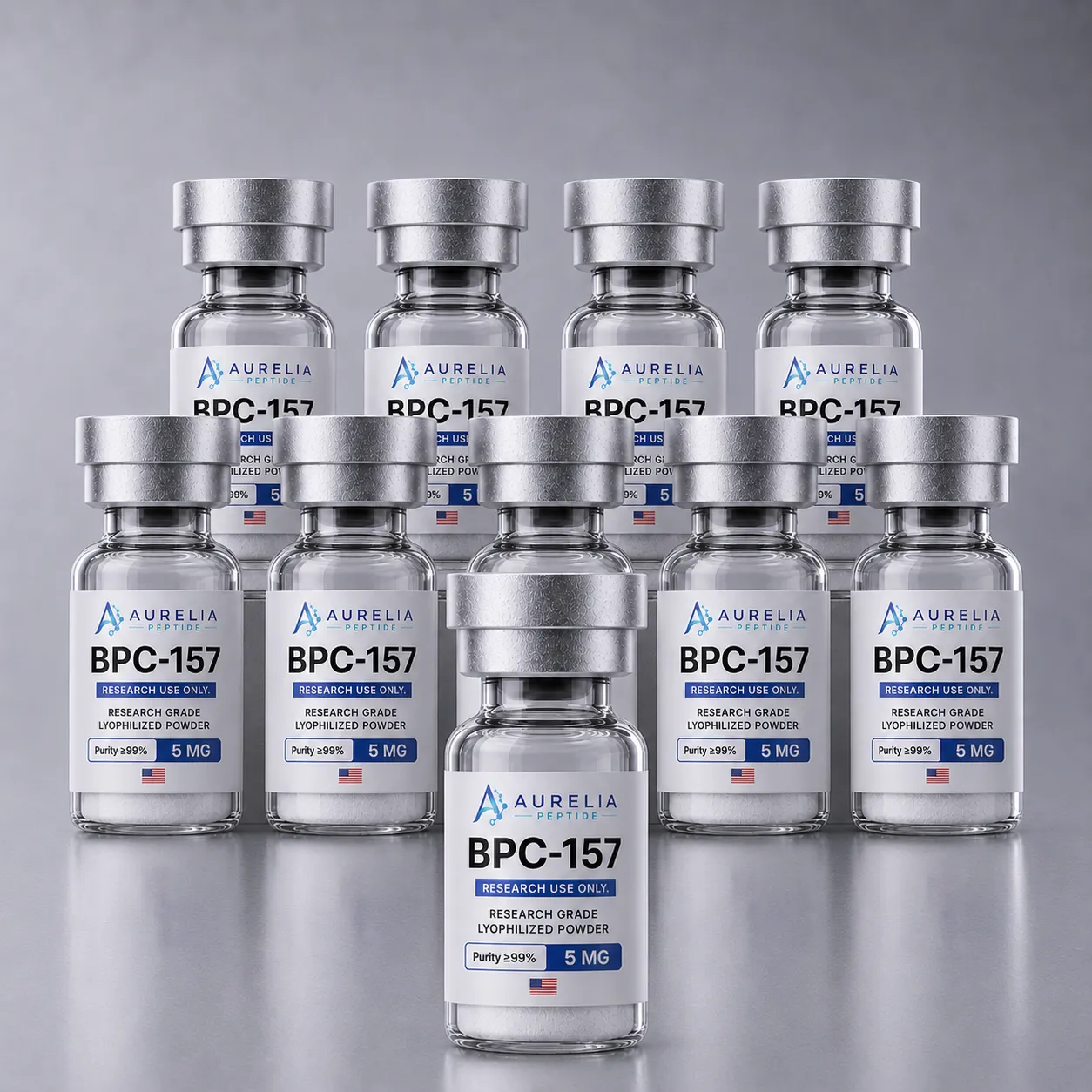
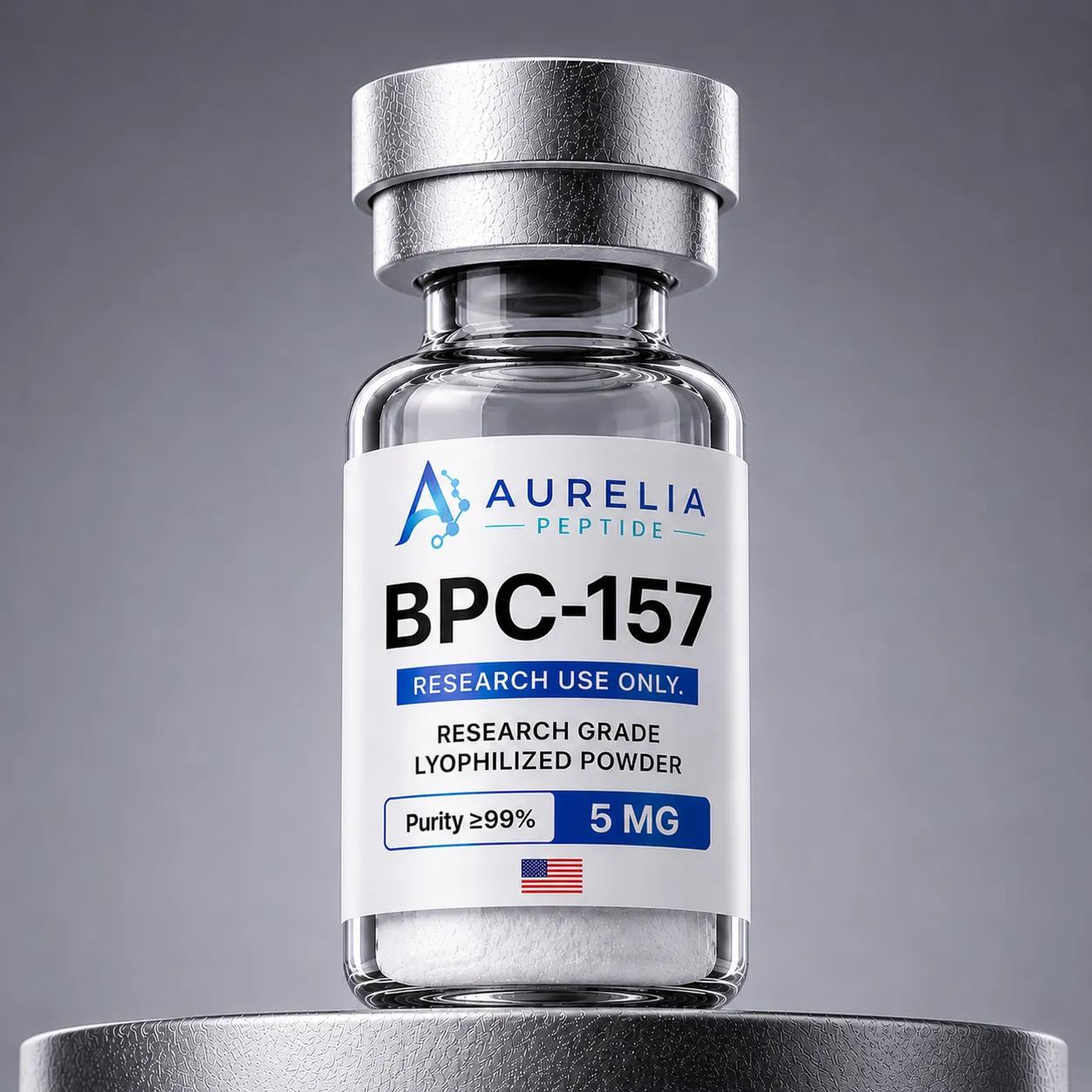
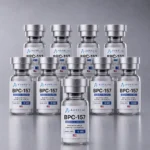
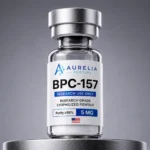
BPC-157
A synthetic 15-amino-acid peptide studied in gastrointestinal, tendon and tissue-repair models
- Fulfillment Origin
- us
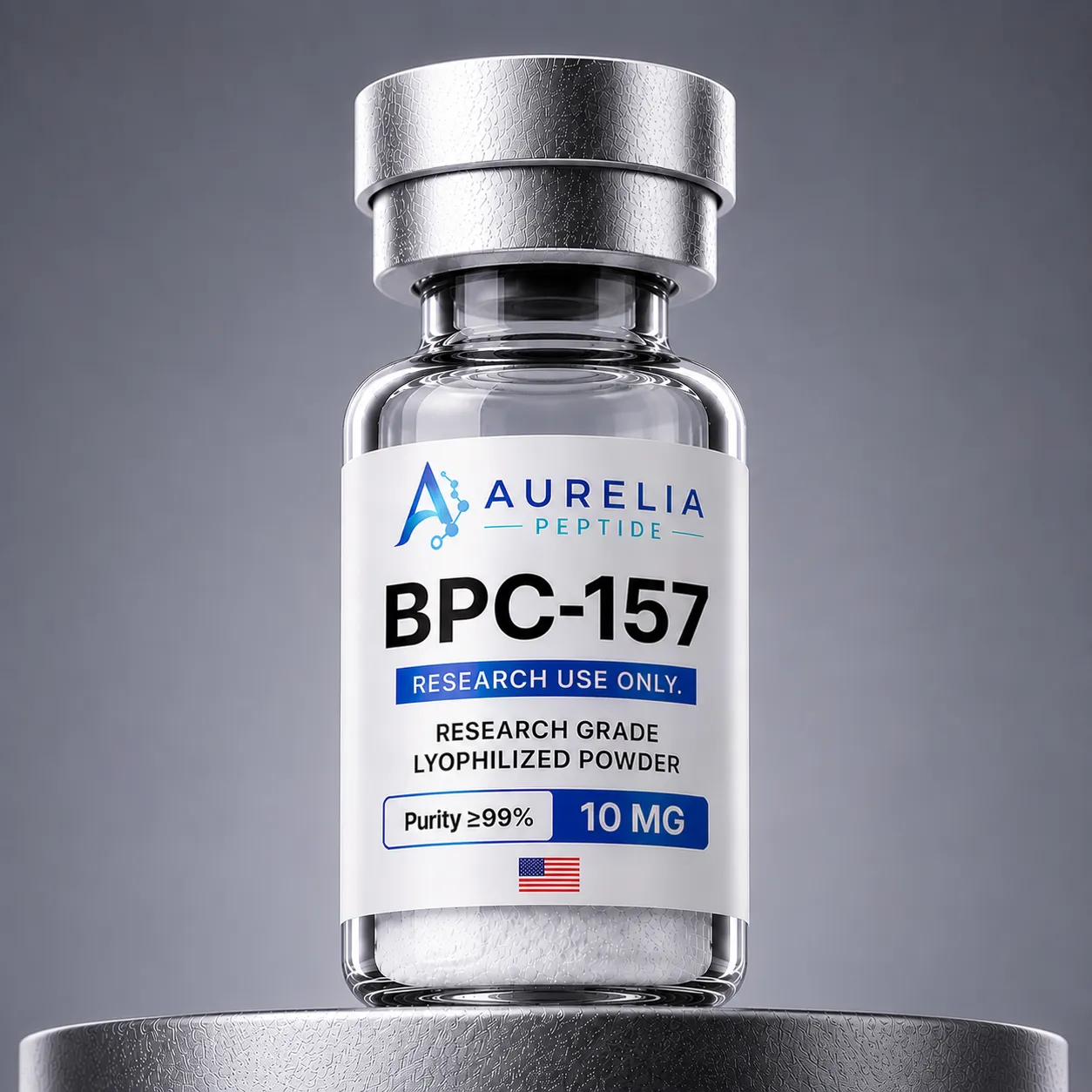
BPC-157 is a synthetic 15-amino-acid peptide with the sequence GEPPPGKPADDAGLV. Published research has examined it primarily in cell and animal models involving gastrointestinal protection, tendon fibroblasts, vascular signaling and tissue repair. These preclinical observations do not establish efficacy or safety in humans.
Synthetic stable gastric pentadecapeptide (15 amino acids)
- Formula
- C62H98N16O22
- Molecular weight
- 1419.53 g/mol
- Form
- Lyophilized powder
- CAS / ID
- 137525-51-0
Independently tested. Verifiably pure.
Every batch of BPC-157 is reviewed against its independent laboratory documentation before fulfillment.
- HPLC Purity AnalysisReported purity: Lot-specific purity — see COA
- Mass SpectrometryMass spectrometry — see lot COA
- Heavy Metals ScreeningLot-specific result — see COA
- Endotoxins (LPS)Lot-specific result — see COA
- Sterility TestingLot-specific result — see COA
- Net Peptide ContentLot-specific result — see COA
- HPLC Purity
- Lot-specific purity — see COA
- Identity
- Mass spectrometry — see lot COA
- Endotoxin (LAL)
- Lot-specific result — see COA
- Lab
- Independent third-party laboratory
Not for human or veterinary use. For in-vitro laboratory research only. This product is not intended to diagnose, treat, cure, or prevent any disease.
Fifteen residues. One synthetic pentadecapeptide.
BPC-157 is the synthetic sequence Gly-Glu-Pro-Pro-Pro-Gly-Lys-Pro-Ala-Asp-Asp-Ala-Gly-Leu-Val. Its published research profile is predominantly preclinical and spans gastrointestinal, tendon, vascular and tissue-injury models.
GEPPPGKPADDAGLV
A linear peptide containing 15 amino-acid residues.
Stable gastric pentadecapeptide
The research name refers to a synthetic fragment associated with gastric peptide research.
Predominantly preclinical
Most published observations come from cell, tissue and animal experiments rather than established human treatment evidence.
The BPC-157 molecule
An interactive illustrative atomic representation generated from the public compound record, alongside verified molecular data. The structure figure is schematic and is not a measured conformation.
Published research observations.
Selected cell and animal findings are presented for scientific context. They do not predict individual outcomes, demonstrate human efficacy or establish the quality of this commercial research material.
Linear pentadecapeptide
The public compound record identifies the sequence GEPPPGKPADDAGLV.
Fibroblast signaling studied
A rat tendon-fibroblast study reported increased growth-hormone-receptor expression under its experimental conditions.
Gastric and intestinal models
Published animal work has examined gastrointestinal injury and protective-response models.
Multiple models. Interconnected research pathways.
Published BPC-157 studies investigate several context-dependent pathways. The evidence base is largely preclinical and should not be interpreted as established clinical action.
Gastrointestinal protection models
Animal studies examine mucosal injury, gastrointestinal lesions and related protective responses.
Fibroblast and GHR signaling
Cultured rat tendon fibroblasts have been used to study growth-hormone-receptor expression and downstream JAK2 signaling.
Nitric-oxide and angiogenic pathways
Preclinical literature discusses interactions with nitric-oxide signaling and vascular-response pathways.
Where BPC-157 fits.
This comparison distinguishes BPC-157 from other repair-associated research peptides by sequence and principal experimental context. It is not a clinical comparison.
BPC-157
A 15-residue linear peptide studied in gastrointestinal and tissue-repair models.
TB-500
A thymosin beta-4-related research peptide with a different sequence and research mechanism.
GHK-Cu
A three-residue copper coordination complex studied in matrix and skin-repair research.
| Research molecule | Sequence length | Defining feature | Research context |
|---|---|---|---|
| BPC-157 | 15 residues | Stable gastric pentadecapeptide | GI, tendon and tissue models |
| TB-500 | Fragment-dependent | Thymosin beta-4-related | Actin and cell-migration models |
| GHK-Cu | 3 residues | Copper-binding complex | Matrix and skin-repair models |
Research profile visualized.
Qualitative bars summarize major published research themes. They are not receptor-potency, efficacy or clinical-performance measurements.
A linear 15-residue research peptide.
Public molecular identity is well documented, while exposure, degradation and stability depend on formulation, route and experimental conditions. This section does not provide dosing guidance.
Pentadecapeptide
A linear peptide with the sequence GEPPPGKPADDAGLV.
Public compound value
Molecular weight in grams per mole for the public parent-compound record.
No disulfide bridge
The sequence contains no cysteine residues and therefore no intramolecular disulfide bond.
Full specification.
Public compound identity is separated from lot-specific analytical measurements and the exact supplied salt form.
BPC-157
Stable gastric pentadecapeptide research material.
C62H98N16O22
Public parent-compound formula.
1419.53 g/mol
Public parent-compound molecular weight.
GEPPPGKPADDAGLV
Gly-Glu-Pro-Pro-Pro-Gly-Lys-Pro-Ala-Asp-Asp-Ala-Gly-Leu-Val.
137525-51-0
PubChem CID 9941957.
See selected COA
Purity, identity, counterion, water and net peptide content are lot-specific.
Selected BPC-157 research milestones.
These entries summarize selected publications and do not imply regulatory approval or established clinical use.
Gastric mucosal signaling examined
A rat study examined gastric injury and VEGF-A/VEGFR1-associated signaling under its experimental conditions.
Nitric-oxide-system research expanded
Animal studies continued to examine BPC-157 in models involving nitric-oxide signaling and vascular responses.
Tendon fibroblast GHR study published
Cultured rat tendon fibroblasts were used to study growth-hormone-receptor expression and downstream signaling.
Gastrointestinal injury models reported
Animal studies evaluated BPC-157 in NSAID-associated gastrointestinal and systemic injury models.
Handling and documentation.
Storage and prepared-material stability depend on the supplied form, formulation, container, concentration and lot. Follow the product label and available lot documentation.
Follow documented storage
Keep lyophilized material within the conditions documented by the supplier.
Minimize exposure
Keep the container closed and use appropriate laboratory monitoring and handling.
Use validated stability data
Stability depends on solvent, pH, concentration, container, temperature and handling.
- Check the lot recordMatch the vial identifier with its available Certificate of Analysis.
- Confirm material formIdentify the documented parent peptide, counterion and net-peptide basis.
- Use a validated methodHandle laboratory material using qualified equipment and an approved protocol.
- Record handlingDocument lot, solvent, concentration, container, conditions and disposition.
Featured BPC-157 research.
Explore selected public compound data and peer-reviewed preclinical research. Each record links to its source.
Public molecular formula, molecular weight, sequence, identifiers and structure record.
View primary source →A cell study using rat tendon fibroblasts examined GHR expression, proliferation-associated measurements and JAK2 signaling.
View primary source →A rat study examined diclofenac-associated gastrointestinal, liver and encephalopathy lesions.
View primary source →An animal study examined esophagitis, sphincter pressure and pancreatitis-related experimental outcomes.
View primary source →A rat study investigated gastric mucosal injury, nitric-oxide blockade and VEGF-A/VEGFR1-associated signaling.
View primary source →References.
Government compound data and peer-reviewed publications used for this dossier.
- PubChem. BPC-157, CID 9941957.Open source ↗
- Chang CH, et al. Pentadecapeptide BPC 157 enhances the growth hormone receptor expression in tendon fibroblasts. Molecules. 2014.Open source ↗
- Ilic S, et al. Pentadecapeptide BPC 157 and its effects on a NSAID toxicity model. Life Sciences. 2011.Open source ↗
- Petrovic I, et al. BPC 157 therapy in sphincter failure, esophagitis and pancreatitis models. Journal of Physiology and Pharmacology. 2011.Open source ↗
- Wu H, et al. Clopidogrel-induced gastric injury in rats is attenuated by stable gastric pentadecapeptide BPC 157. 2020.Open source ↗
Related products
ARA-290
Glow
KLOW Blend