
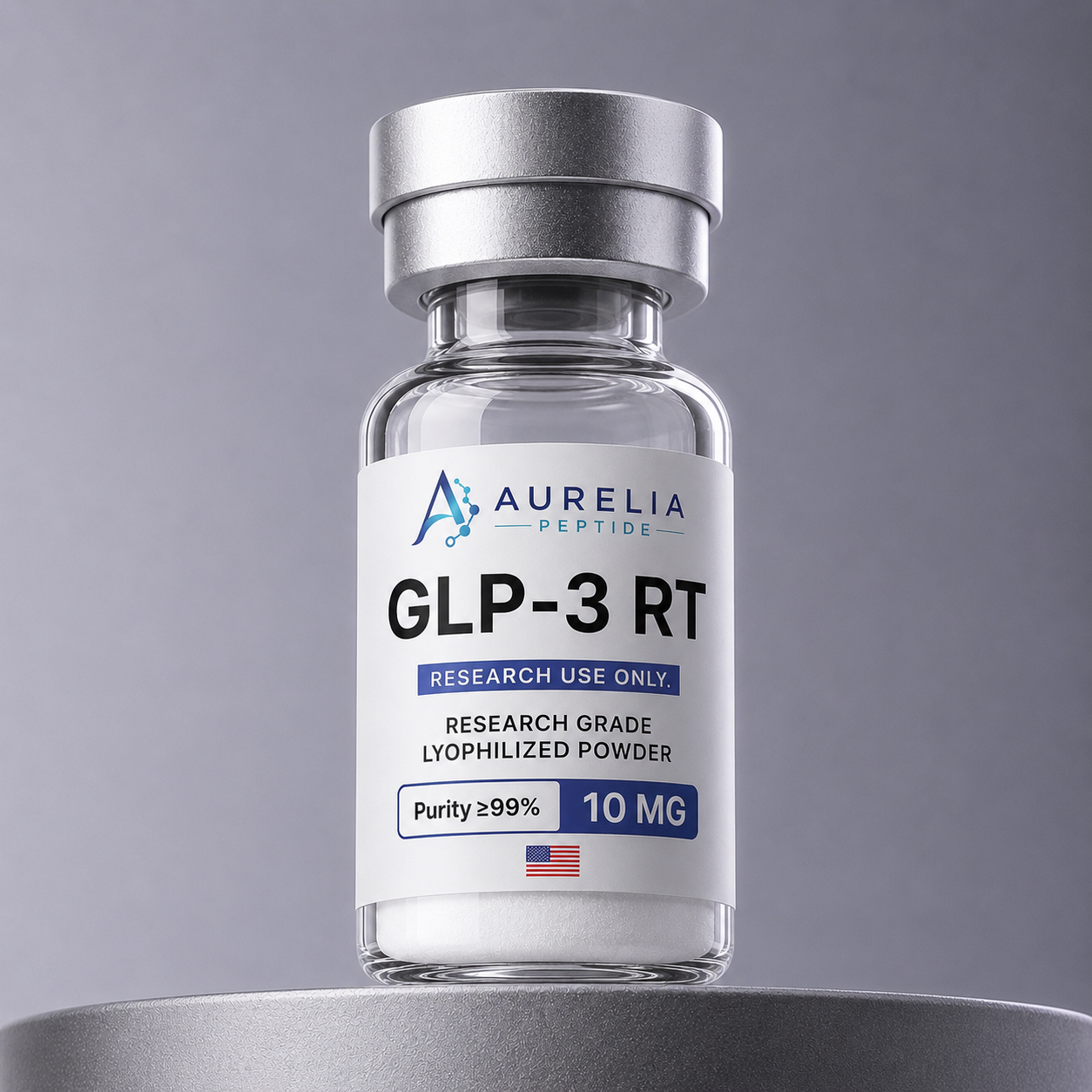
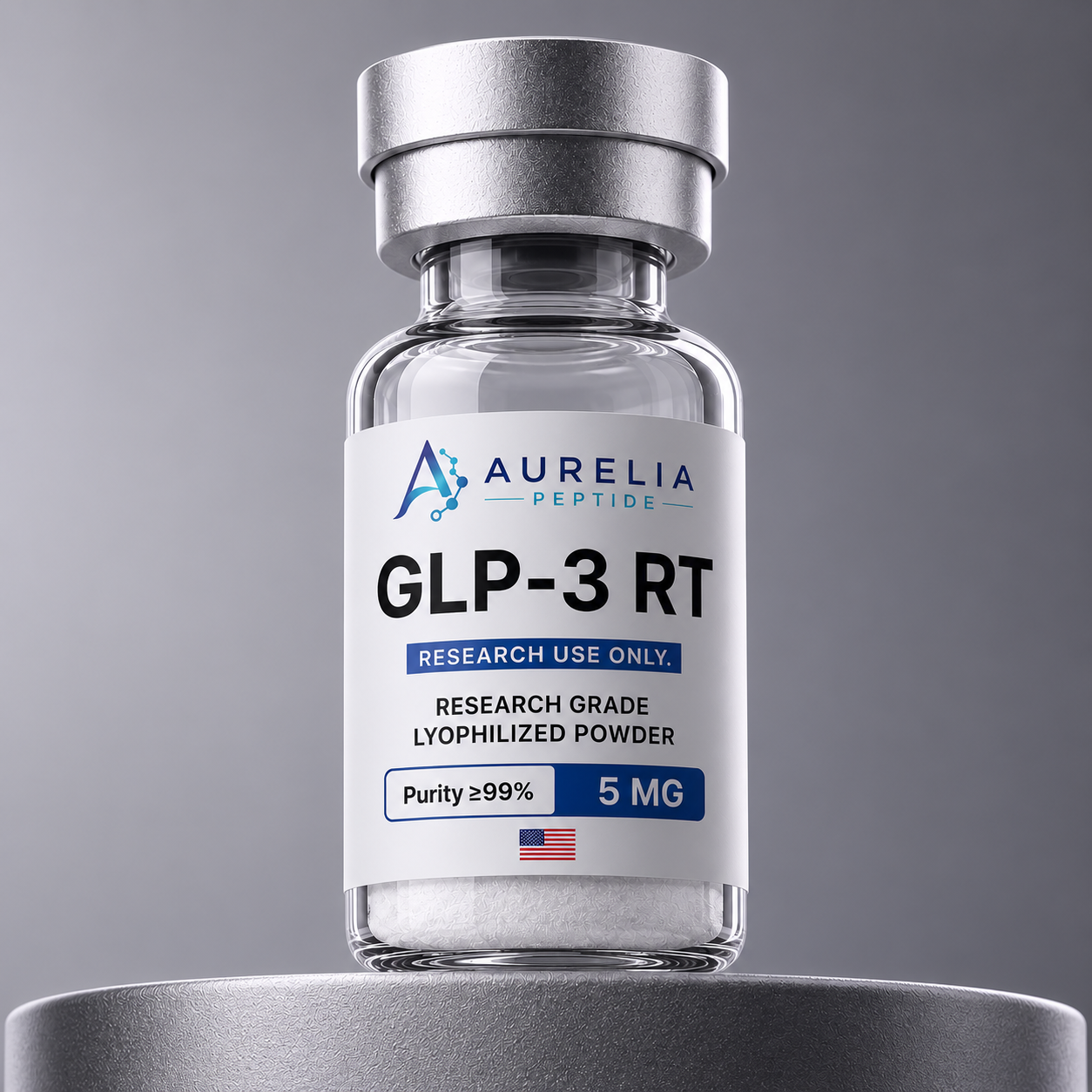
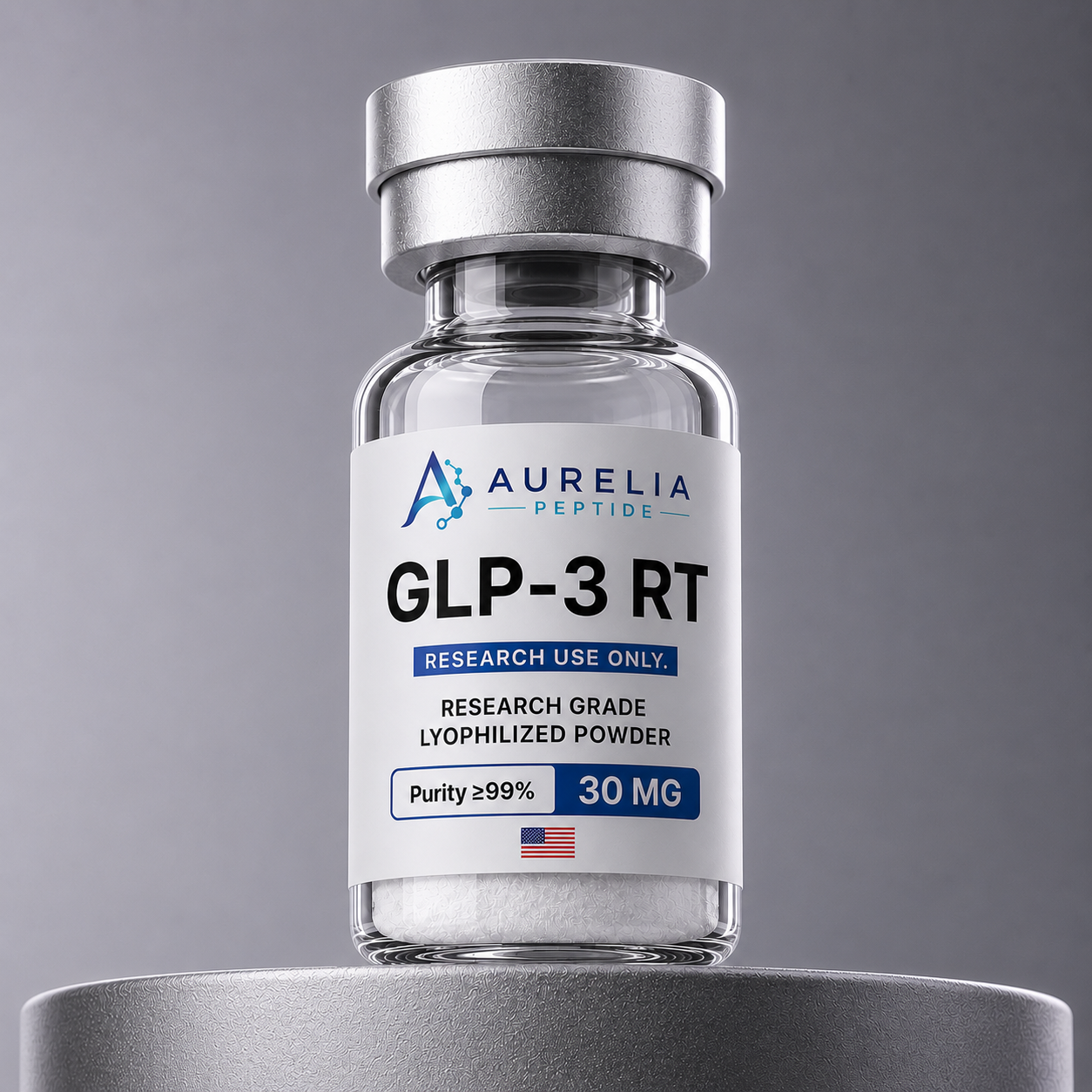
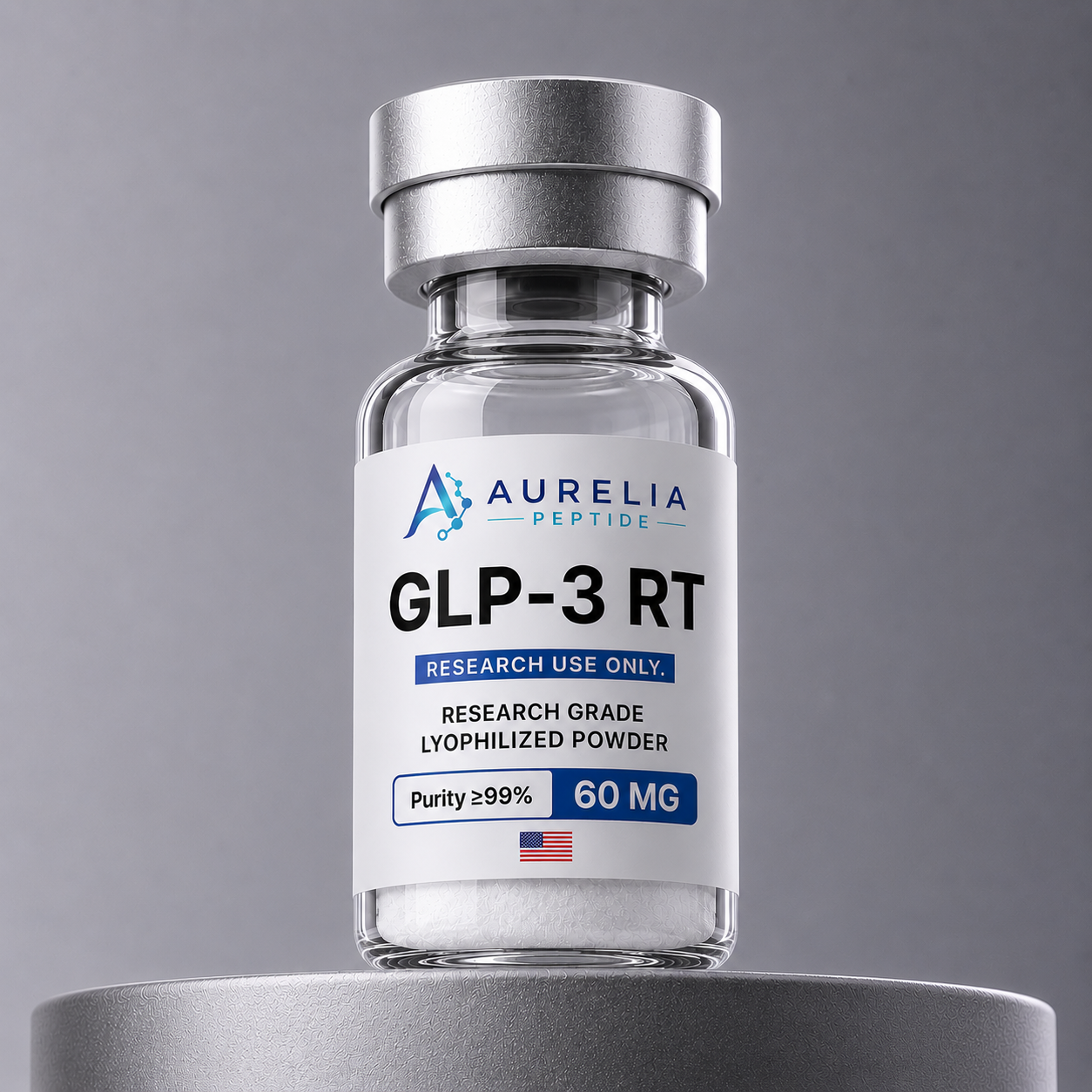
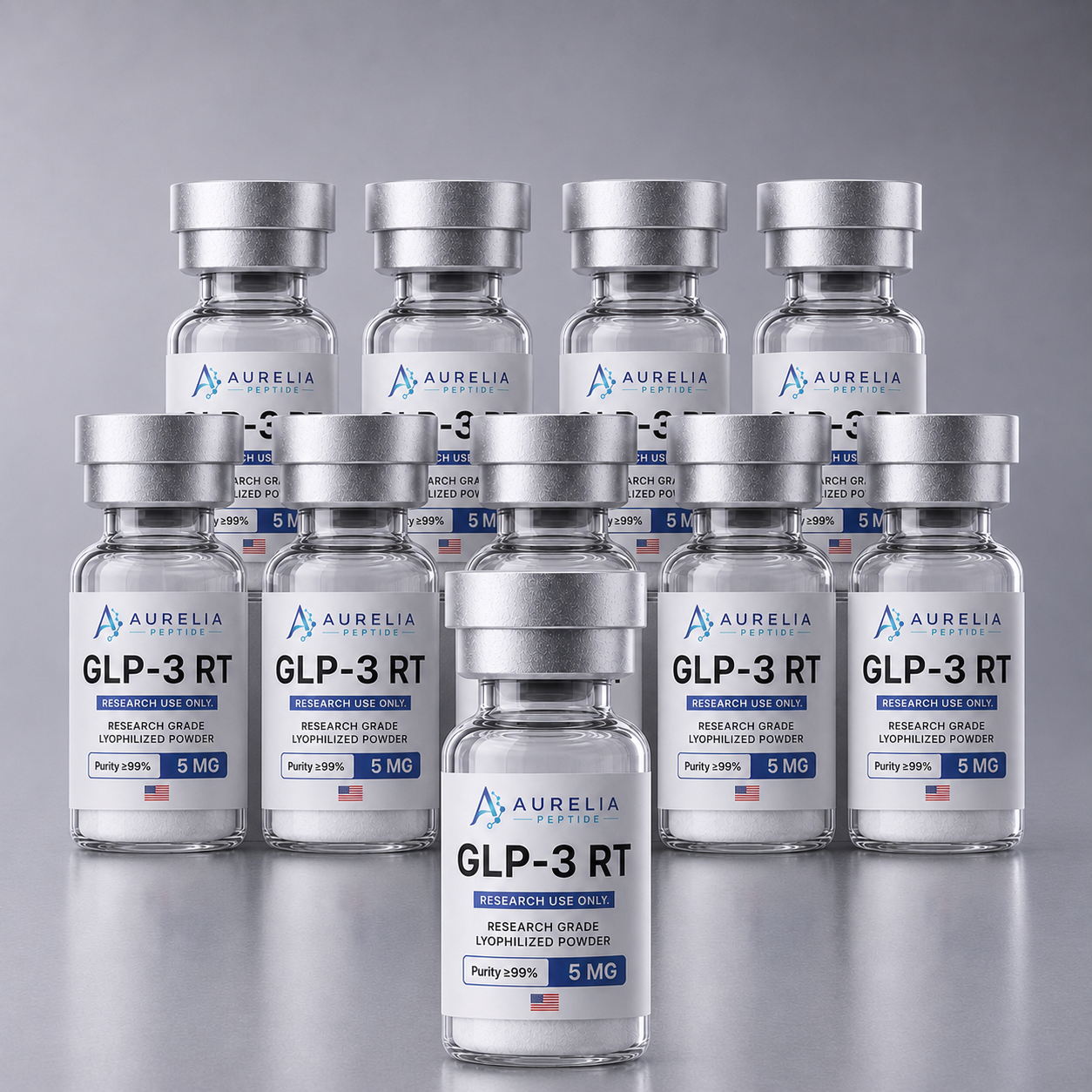
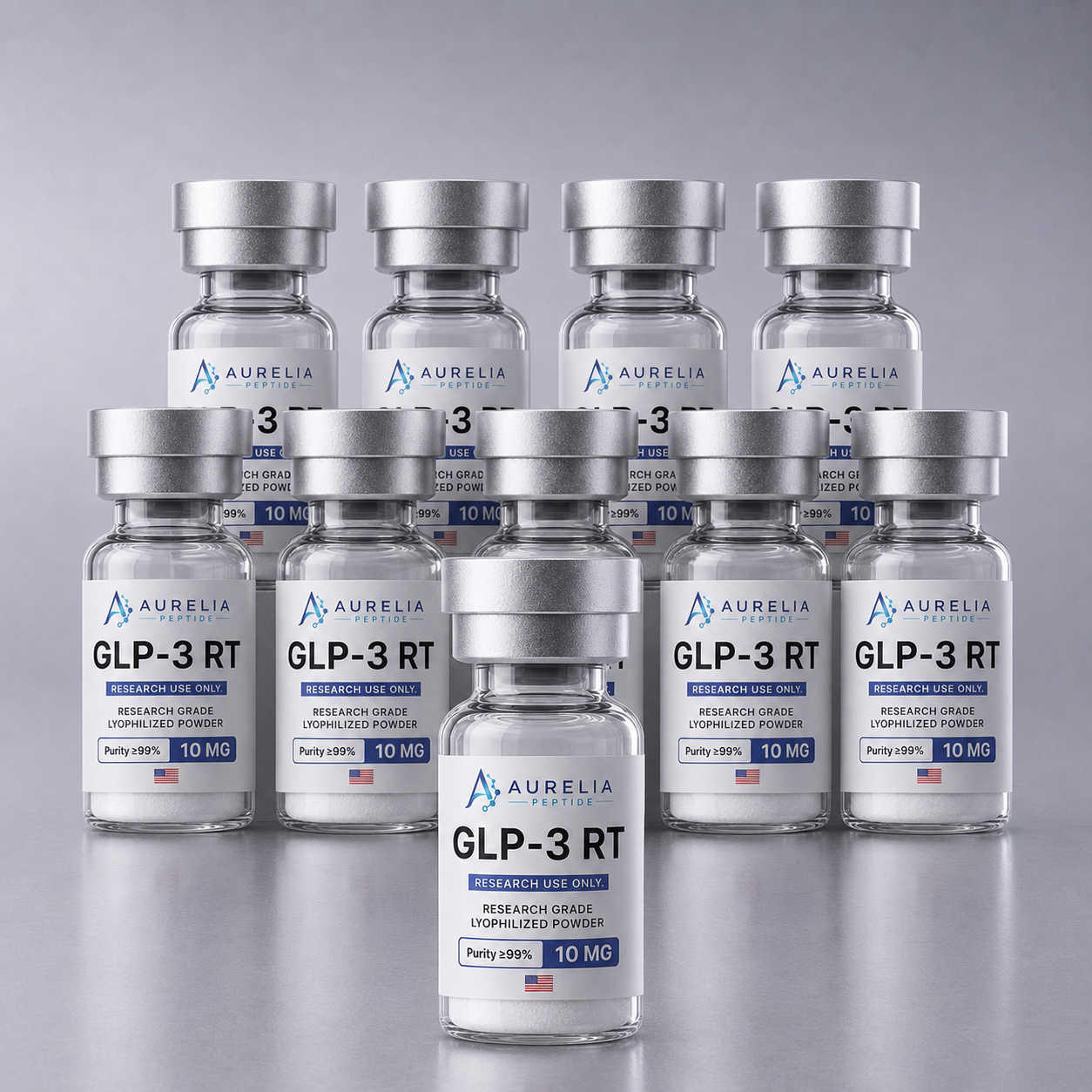
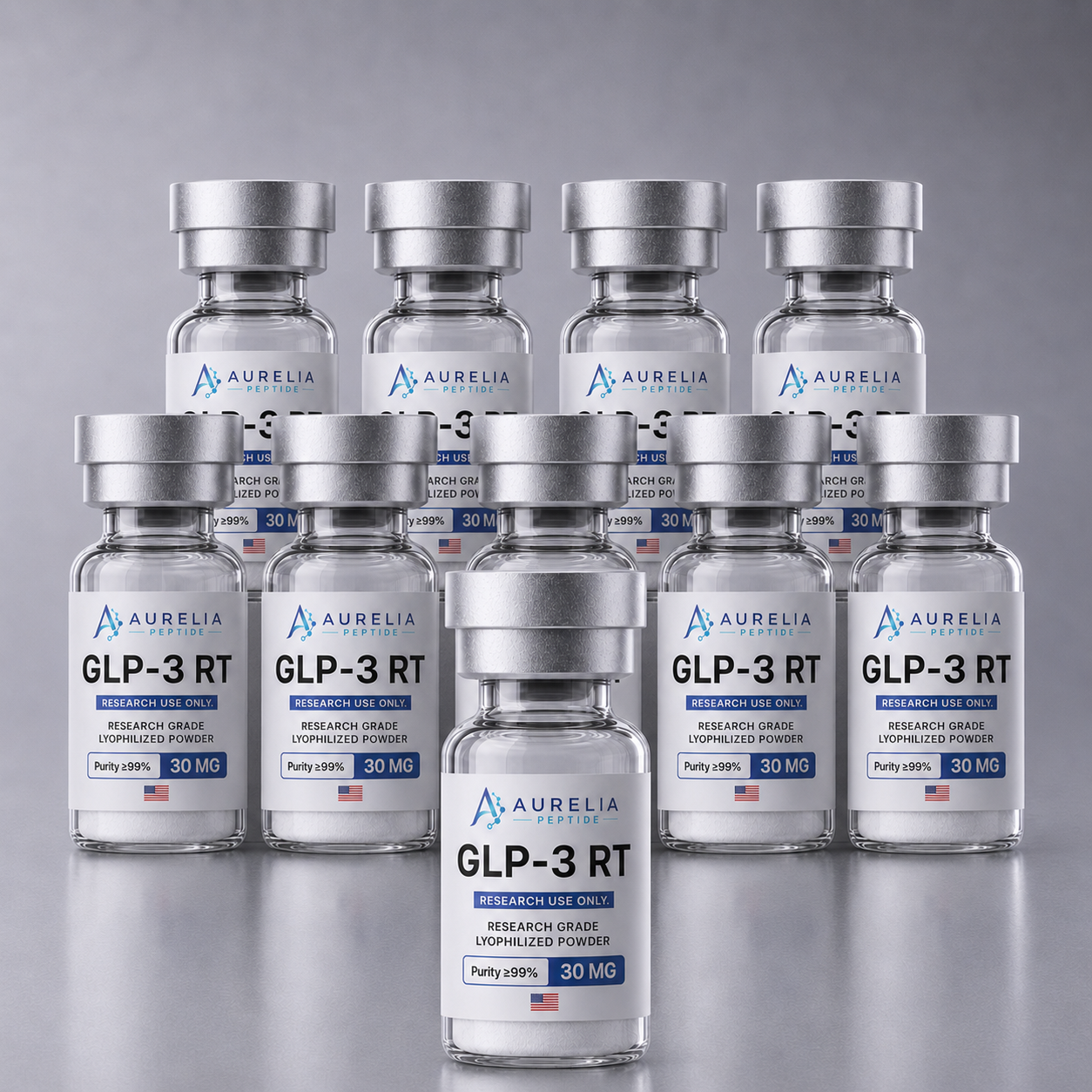
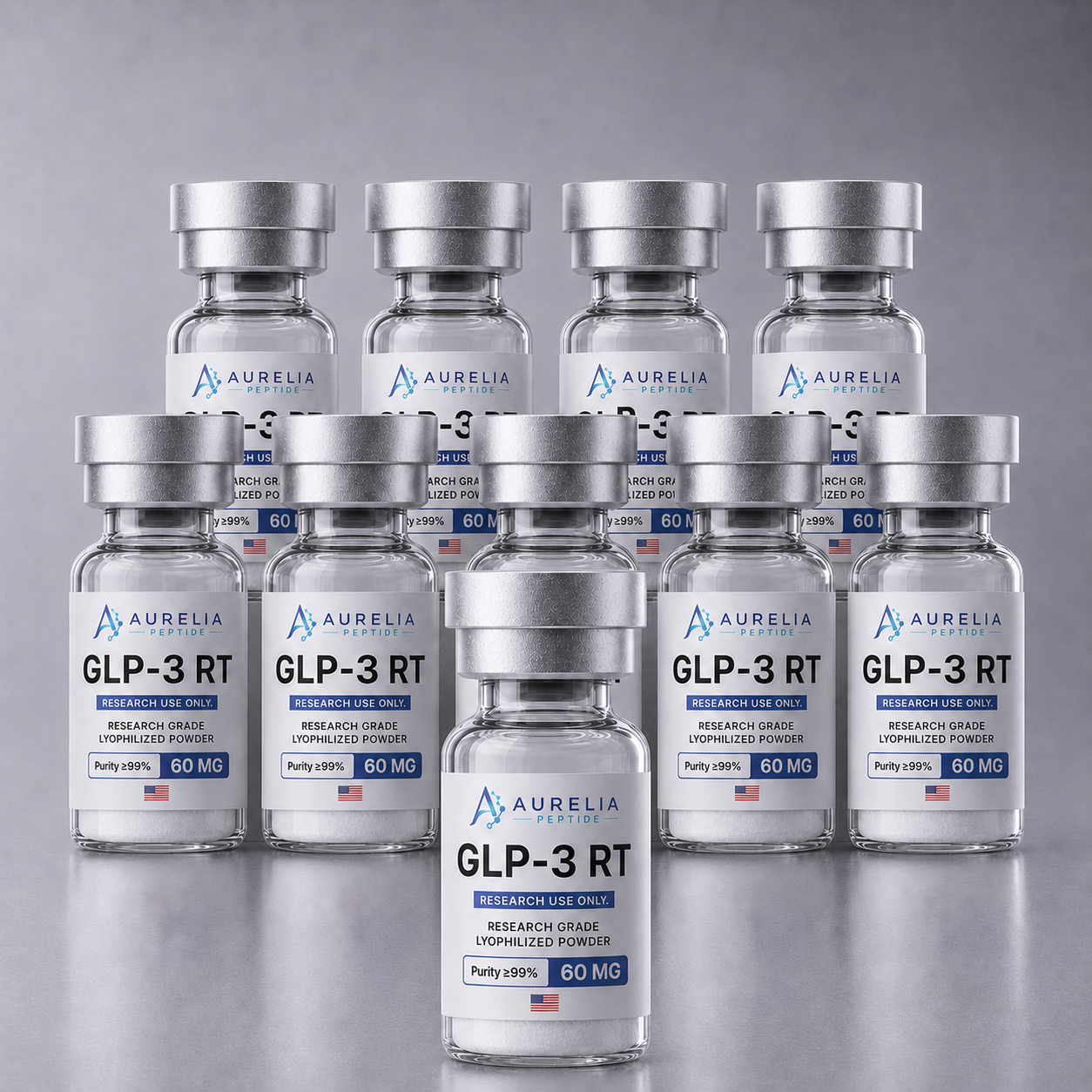
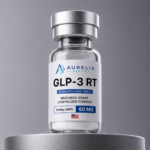
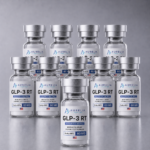

GLP-3 RT
A triple-receptor research compound studied for metabolic signaling pathways
- Fulfillment Origin
- us
GLP-3 RT (LY3437943) is a synthetic research peptide designed for in-vitro study of activity across the GLP-1, GIP, and glucagon receptor pathways. It is supplied in lyophilized form for qualified laboratory research and analytical investigation only.
Triple GLP-1/GIP/glucagon receptor agonist research peptide (LY3437943)
- Formula
- C221H342N50O68
- Molecular weight
- 4731.32 g/mol
- Form
- Lyophilized powder
- CAS / ID
- LY3437943 (CAS 2381089-83-2)
Independently tested. Verifiably pure.
Every batch of GLP-3 RT is reviewed against its independent laboratory documentation before fulfillment.
- HPLC Purity AnalysisReported purity: ≥99%
- Mass SpectrometryMass-spec confirmed
- Heavy Metals ScreeningPass
- Endotoxins (LPS)Pass
- Sterility TestingPass
- Net Peptide ContentVerified
- HPLC Purity
- ≥99%
- Identity
- Mass-spec confirmed
- Endotoxin (LAL)
- Pass
- Lab
- Independent third-party laboratory
Not for human or veterinary use. For in-vitro laboratory research only. This product is not intended to diagnose, treat, cure, or prevent any disease.
A triple-incretin investigational analog under active study.
GLP-3 RT is the research designation used here for retatrutide (LY3437943), a long-acting peptide investigated for activity at GIP, GLP-1 and glucagon receptors. This page summarizes published research and is not medical guidance.
Single peptide, three receptor pathways
Designed to combine GIPR, GLP-1R and GCGR agonism in one acylated peptide scaffold.
Clinical research is ongoing
Published early- and mid-stage studies have reported metabolic and body-weight outcomes; confirm current trial status at the linked registries.
Lyophilized research material
Use only within an appropriately equipped laboratory and follow the supplier’s lot documentation.
Published research observations.
Selected outcomes below summarize reported group-level observations from published trials. They are not guarantees, instructions or claims about this commercial research product.
Reported study duration
Adults with obesity were followed across multiple once-weekly dose groups.
Mean weight change reported
Reported for the 12 mg group at week 48 in the cited phase 2 trial.
Randomized participants
Refer to the publication for eligibility, estimands, discontinuations and adverse-event data.
Illustrative comparison of reported mean percentage weight change at week 48. It omits confidence intervals and estimand details; consult the NEJM paper before reuse.
Three pathways. One molecule.
The investigational design brings three receptor activities into a single molecule. Each pathway has distinct physiology, while the observed profile depends on combined exposure and receptor pharmacology.
Glucose-dependent insulinotropic polypeptide receptor
A metabolic signaling pathway studied for effects on nutrient handling and insulin secretion.
Glucagon-like peptide-1 receptor
A well-characterized incretin pathway associated with glucose-dependent signaling and appetite-related research.
Glucagon receptor
A pathway investigated for hepatic substrate flux and energy-expenditure-related mechanisms.
Where GLP-3 RT fits.
A structural comparison of receptor targets can help position the molecule within the incretin research landscape. This is not a comparison of approved indications, safety or clinical suitability.
GLP-1 pathway
One primary incretin receptor target.
GIP + GLP-1
Two incretin receptor targets in one peptide.
GIP + GLP-1 + glucagon
Three receptor pathways represented in the investigational analog.
| Research molecule | GIPR | GLP-1R | GCGR | Development context |
|---|---|---|---|---|
| Semaglutide | — | Agonist | — | Approved products exist; molecule-specific labeling applies |
| Tirzepatide | Agonist | Agonist | — | Approved products exist; molecule-specific labeling applies |
| Retatrutide / GLP-3 RT | Agonist | Agonist | Agonist | Investigational |
Triple agonism visualized.
Relative in-vitro signaling is assay-dependent. The bars are a qualitative map for explaining the three-target design, not a validated potency conversion.
~6-day half-life. C18 acylation.
Published phase 1 research reported an approximately six-day half-life, supporting once-weekly clinical investigation. The molecule uses a fatty diacid side chain intended to prolong systemic exposure.
Terminal half-life
Approximate value reported in an early clinical study.
Fatty diacid moiety
Acylation contributes to extended pharmacokinetic behavior.
Clinical investigation
Studied as a once-weekly investigational administration schedule.
The decay display is a simplified half-life illustration, not measured concentration-time data and not a dosing guide.
Full specification.
Identity fields describe the research molecule. Lot-specific analytical values must come from the COA linked to the selected variation.
LY3437943
Retatrutide investigational identifier.
C221H342N50O68
Verify against your supplier specification before publishing.
4731.32 g/mol
Nominal molecular weight; verify against source documentation.
Lyophilized powder
Product presentation may vary by supplier and lot.
2381089-83-2
Confirm identifier against your supplier records.
See selected COA
Purity, identity, quantity and other test results are lot-specific.
Phase 3 active. Most recent first.
Development status changes over time. The entries below are a concise research timeline; verify current recruitment and completion information in the linked trial registries.
Phase 3 TRIUMPH program
Multiple phase 3 studies were initiated across obesity-related research populations. Trial status and outcomes should be checked directly in the registry.
Phase 2 obesity results published
A randomized phase 2 trial reported dose-dependent body-weight changes through 48 weeks and described the safety observations.
Early clinical results published
Phase 1b research described pharmacokinetics, tolerability and exploratory metabolic outcomes in people with type 2 diabetes.
Preclinical characterization published
Cellular and animal studies characterized triple-receptor pharmacology and metabolic effects.
Stability specs.
Storage and handling are product- and formulation-specific. Use the conditions printed on your actual supplier documentation; the text below is deliberately conservative.
Follow the vial label
Protect from conditions outside the documented storage range.
Minimize exposure
Keep the container closed and use appropriate laboratory handling.
Use validated protocol
Prepared-solution stability depends on diluent, concentration, container and test conditions.
- Verify the lotMatch the vial identifier to its COA and supplier documentation.
- Review storage conditionsFollow the exact temperature and protection requirements on the product record.
- Use aseptic techniqueWork within a qualified laboratory procedure and suitable containment.
- Document the preparationRecord diluent, concentration, date, operator and disposition according to your protocol.
All research on GLP-3 RT.
Open each record for a short orientation, then use the primary-source link for methods, limitations and current status.
Randomized, double-blind, placebo-controlled phase 2 study evaluating retatrutide across multiple dose groups in adults with obesity. Read the paper for estimands, adverse events and limitations.
View primary source →Early clinical study reporting pharmacokinetics, tolerability and exploratory metabolic outcomes, including an approximately six-day half-life.
View primary source →Preclinical characterization of LY3437943 across receptor assays and animal models. Translational limits apply.
View primary source →Current registry search for retatrutide studies. Confirm recruitment status, eligibility, endpoints and posted results directly on each trial record.
View primary source →References.
Primary research and registries used for this dossier. Access and status can change.
- Jastreboff AM, et al. Triple–Hormone-Receptor Agonist Retatrutide for Obesity — A Phase 2 Trial. N Engl J Med. 2023.Open source ↗
- Urva S, et al. LY3437943, a novel triple GIP, GLP-1, and glucagon receptor agonist in people with type 2 diabetes. Lancet. 2022.Open source ↗
- Coskun T, et al. LY3437943 preclinical receptor pharmacology and metabolic characterization. Cell Metabolism. 2022.Open source ↗
- ClinicalTrials.gov. Retatrutide study search and individual registry records.Open source ↗
Related products
5-Amino-1MQ
GLP-2 TZ