
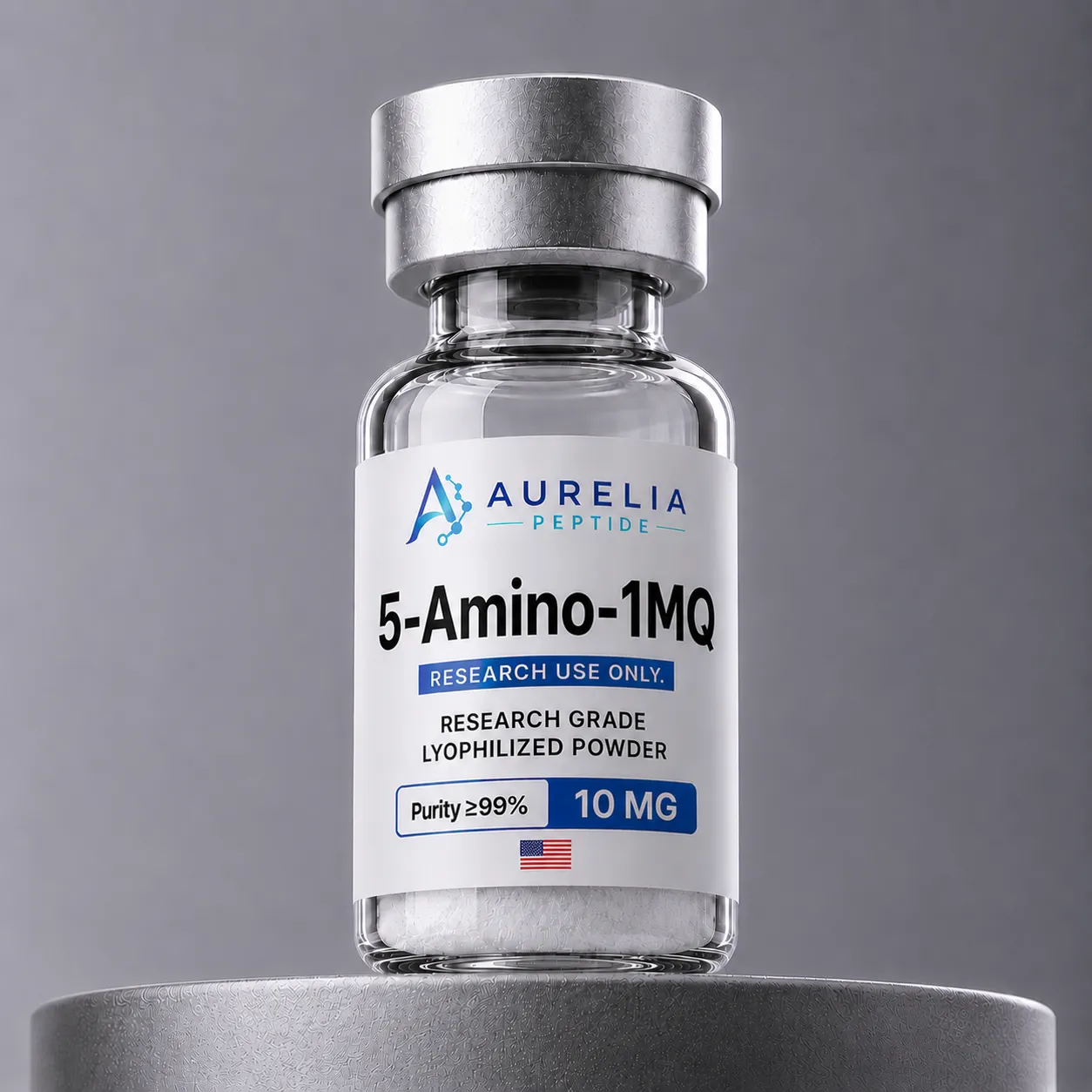
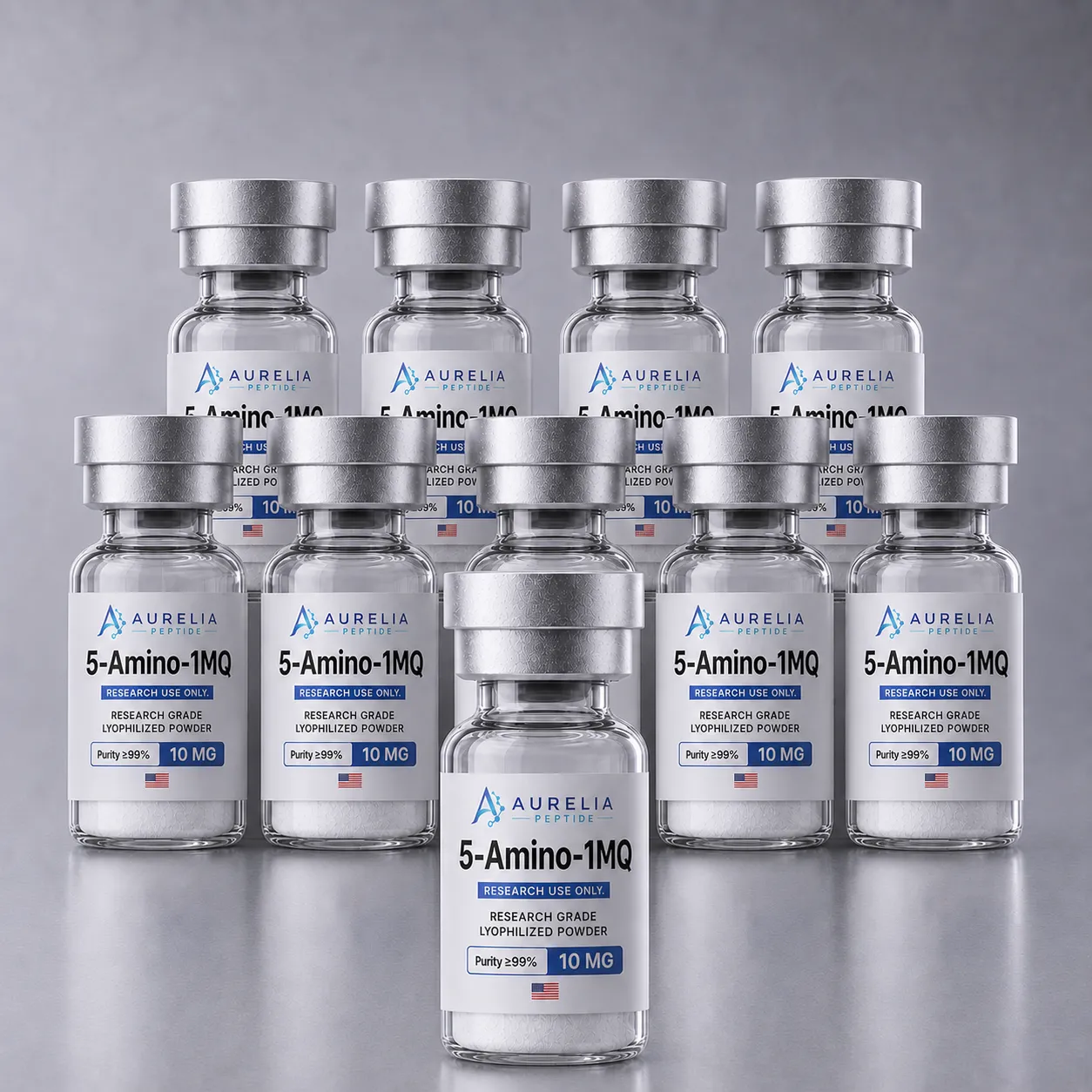
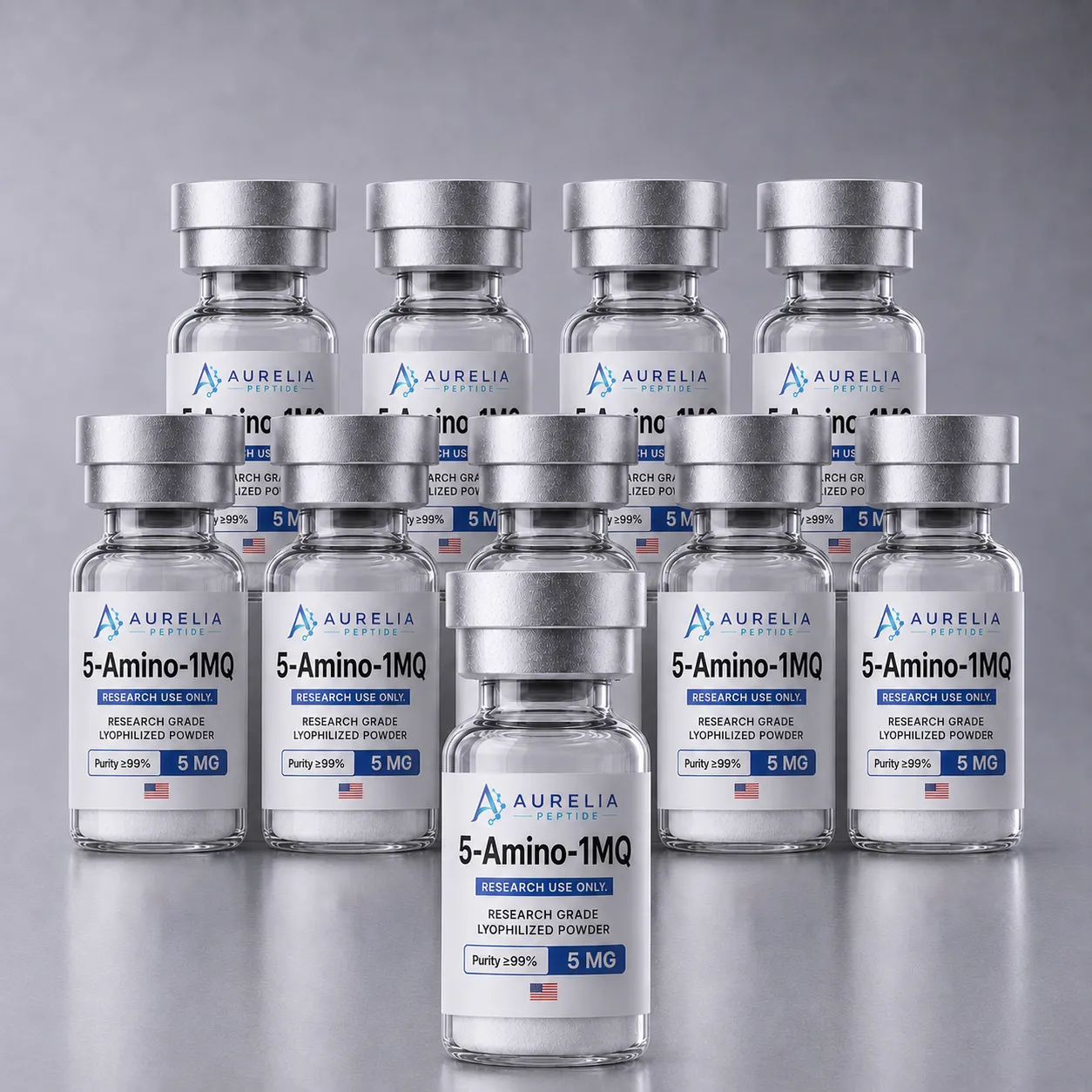
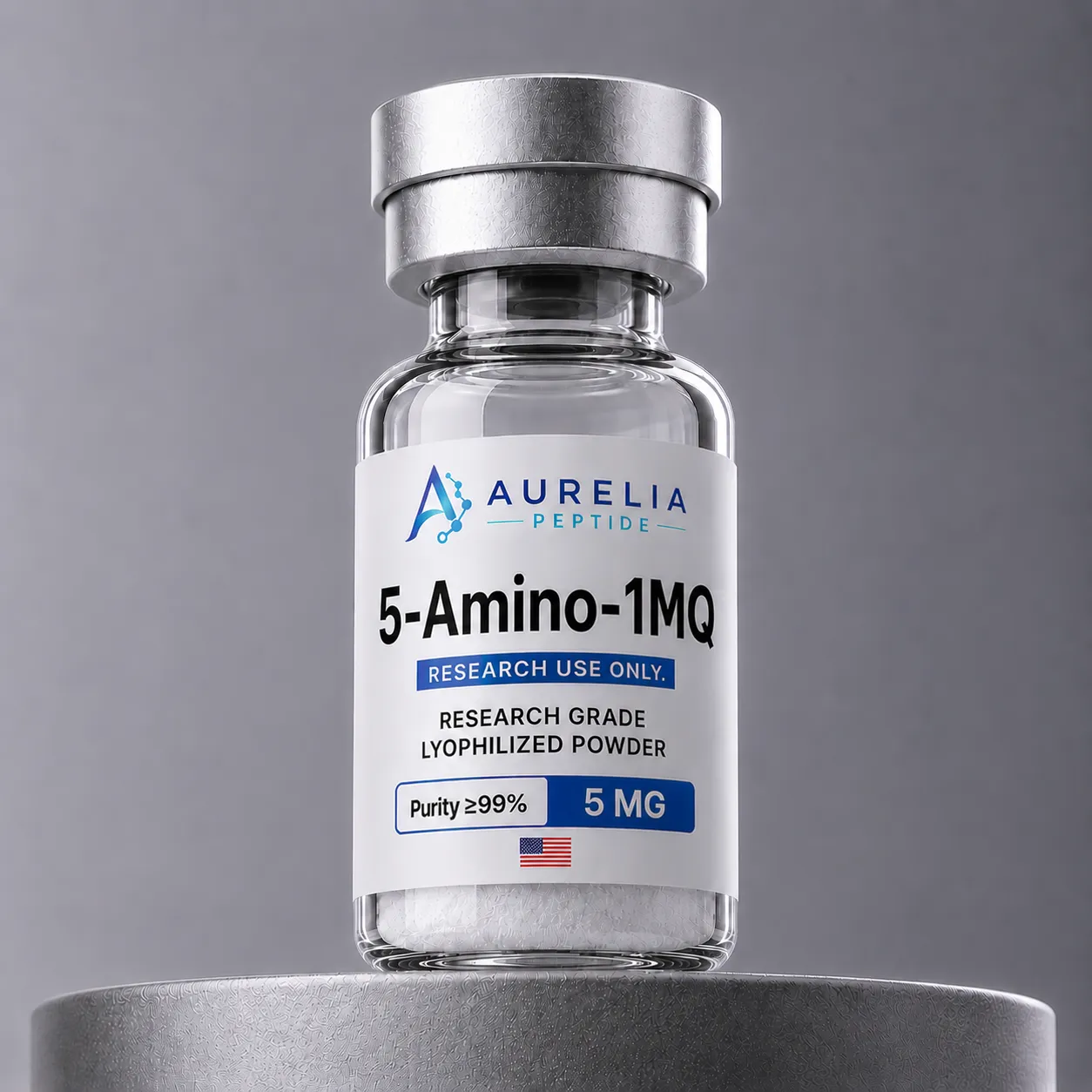

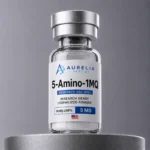
5-Amino-1MQ
A membrane-permeable small-molecule inhibitor used to study nicotinamide N-methyltransferase biology
- Fulfillment Origin
- us
5-Amino-1MQ is a quinolinium small molecule used in preclinical research as an inhibitor of nicotinamide N-methyltransferase (NNMT). NNMT transfers a methyl group from S-adenosyl-L-methionine to nicotinamide, producing 1-methylnicotinamide. Research with 5-Amino-1MQ has examined NNMT-dependent methyl-donor flux, nicotinamide metabolism and adipose-tissue biology, primarily in cellular and animal models.
Small-molecule NNMT inhibitor; not a peptide
- Formula
- C10H11IN2 (iodide salt)
- Molecular weight
- 286.11 g/mol (iodide salt)
- Form
- Lyophilized research material
- CAS / ID
- 42464-96-0 (iodide salt)
Independently tested. Verifiably pure.
Every batch of 5-Amino-1MQ is reviewed against its independent laboratory documentation before fulfillment.
- HPLC Purity AnalysisReported purity: Lot-specific assay — see COA
- Mass SpectrometryMass spectrometry — see lot COA
- Heavy Metals ScreeningLot-specific result — see COA
- Endotoxins (LPS)Lot-specific result — see COA
- Sterility TestingLot-specific result — see COA
- Net Peptide ContentLot-specific net content — see COA
- HPLC Purity
- Lot-specific assay — see COA
- Identity
- Mass spectrometry — see lot COA
- Endotoxin (LAL)
- Lot-specific result — see COA
- Lab
- Independent third-party laboratory
Not for human or veterinary use. For in-vitro laboratory research only. This product is not intended to diagnose, treat, cure, or prevent any disease.
A quinolinium scaffold designed to inhibit NNMT.
The commonly studied iodide salt contains a positively charged 5-amino-1-methylquinolinium cation paired with iodide. It is a small organic molecule rather than an amino-acid peptide, and its counterion materially changes the reported formula and molecular weight.
Quinolinium inhibitor
A compact aromatic cation studied as a membrane-permeable NNMT inhibitor.
Nicotinamide N-methyltransferase
NNMT uses SAM to methylate nicotinamide and generate 1-methylnicotinamide.
Counterion must be identified
The iodide salt and an isolated cation cannot share one molecular weight or complete formula.
The 5-Amino-1MQ iodide structure
An animated illustrative atomic representation of the quinolinium research compound, paired with public data for the iodide salt. The graphic is schematic rather than a measured three-dimensional conformation.
Published research observations.
Published work describes enzyme inhibition, cellular metabolic effects and animal adiposity models. These findings do not establish human weight-loss efficacy, dosing, safety or clinical use.
Enzyme inhibition
Biochemical studies identified 5-Amino-1MQ among selective, membrane-permeable NNMT inhibitors.
Cell and animal research
Frequently cited metabolic observations were generated outside controlled human trials.
Iodide-salt molecular mass
Mass in grams per mole for the documented iodide form.
NNMT inhibition and connected metabolic pathways.
5-Amino-1MQ is used to perturb one enzyme node; downstream effects depend on model, tissue, exposure and experimental design.
Nicotinamide methylation
NNMT transfers a methyl group from SAM to nicotinamide, forming 1-methylnicotinamide and S-adenosyl-L-homocysteine.
Nicotinamide substrate availability
Inhibiting nicotinamide methylation can alter the nicotinamide pool available to salvage-pathway reactions in experimental systems.
SAM-dependent metabolism
NNMT activity intersects with cellular methyl-donor balance, but pathway-wide effects cannot be inferred from enzyme inhibition alone.
Where 5-Amino-1MQ fits.
This table separates an NNMT inhibitor from NAD precursors and from other NNMT research tools. It is not a comparison of clinical effectiveness.
5-Amino-1MQ
Directly studied as a small-molecule inhibitor of NNMT.
Nicotinamide, NR and NMN
Metabolic substrates or intermediates rather than direct NNMT inhibitors.
NNMT knockdown
Reduces enzyme expression and is mechanistically distinct from chemical inhibition.
| Research tool | Class | Primary intervention | Interpretation |
|---|---|---|---|
| 5-Amino-1MQ | Quinolinium small molecule | NNMT inhibition | Chemical perturbation |
| Nicotinamide / NR / NMN | NAD-related metabolites | Precursor availability | Metabolic substrate research |
| NNMT knockdown | Genetic intervention | Reduced NNMT expression | Gene-function model |
Mechanistic focus visualized.
Qualitative bars summarize research emphasis, not clinical effect size or human performance.
A small ionic molecule with form-dependent properties.
Chemical form, counterion, solvent, route and experimental model affect exposure and disposition. No consumer dosing or human half-life can be inferred from an in-vitro reagent record.
Non-peptide inhibitor
The compound is structurally distinct from injectable peptide chains.
Quinolinium iodide
A cation-counterion pair requiring salt-form confirmation.
No validated value for this product
Use formulation-specific laboratory documentation rather than seller-derived estimates.
Full compound specification.
Values below describe the commonly cataloged iodide salt. The actual lot COA must confirm that your supplied material matches this form.
NNMT research. Most recent first.
Selected milestones trace the compound's analytical and preclinical research rather than an approved clinical-development program.
Diet and NNMT-inhibition study
Mouse research examined 5-Amino-1MQ with dietary intervention and body-composition outcomes.
LC-MS/MS assay validation
An analytical study developed a method for measuring 5-Amino-1MQ in plasma for preclinical research.
Selective inhibitor study published
Small-molecule NNMT inhibitors were characterized biochemically and evaluated in diet-induced-obesity mouse models.
NNMT knockdown metabolic study
Genetic reduction of NNMT linked the enzyme with adipose metabolism in experimental models.
Stability depends on the documented chemical form.
Storage and solution handling must follow evidence for the actual iodide or alternative salt form, concentration, container and analytical method.
Protect chemical identity
Do not copy shelf-life or storage claims from a chemically ambiguous listing.
Use method-specific evidence
Stability depends on solvent, concentration, temperature, light and container.
Lot-specific criteria
Evaluate identity, assay, water, impurities and net content against the actual specification.
- Verify the counterionMatch the vial identity with its specification and lot COA before assigning formula or molecular weight.
- Follow validated storageUse documented temperature, light and moisture conditions for the supplied chemical form.
- Use a validated solvent systemConfirm solubility, concentration and compatibility for the intended in-vitro protocol.
- Record preparationDocument lot, solvent, concentration, container, date and disposition.
Research on 5-Amino-1MQ and NNMT.
Selected peer-reviewed publications cover chemical inhibition, analytical measurement and preclinical metabolic models. They do not establish approved human use.
Biochemical and mouse-model evaluation of NNMT inhibitors, including a 5-amino-1-methylquinolinium compound.
View primary source →Preclinical mouse research combining dietary intervention and NNMT inhibition.
View primary source →Method-development work for preclinical measurement of the NNMT inhibitor.
View primary source →A review of NNMT biology, methyl-donor metabolism and metabolic research contexts.
View primary source →References
Authoritative chemical records and peer-reviewed literature used for the molecular and research summary.
- PubChem. NNMTi / 5-amino-1-methylquinolinium iodide. CID 66522933.Open source ↗
- Neelakantan H, et al. Selective and membrane-permeable small molecule inhibitors of nicotinamide N-methyltransferase reverse high fat diet-induced obesity in mice. Biochem Pharmacol. 2018.Open source ↗
- Dimet-Wiley A, et al. Reduced calorie diet combined with NNMT inhibition is more effective than either intervention alone in obese mice. Sci Rep. 2022.Open source ↗
- Development and validation of an LC-MS/MS assay for 5-amino-1-methylquinolinium in preclinical plasma samples. Biomed Chromatogr. 2021.Open source ↗
- Pissios P. Nicotinamide N-methyltransferase: more than a vitamin B3 clearance enzyme. Trends Endocrinol Metab. 2017.Open source ↗
Related products
GLP-2 TZ
GLP-3 RT