
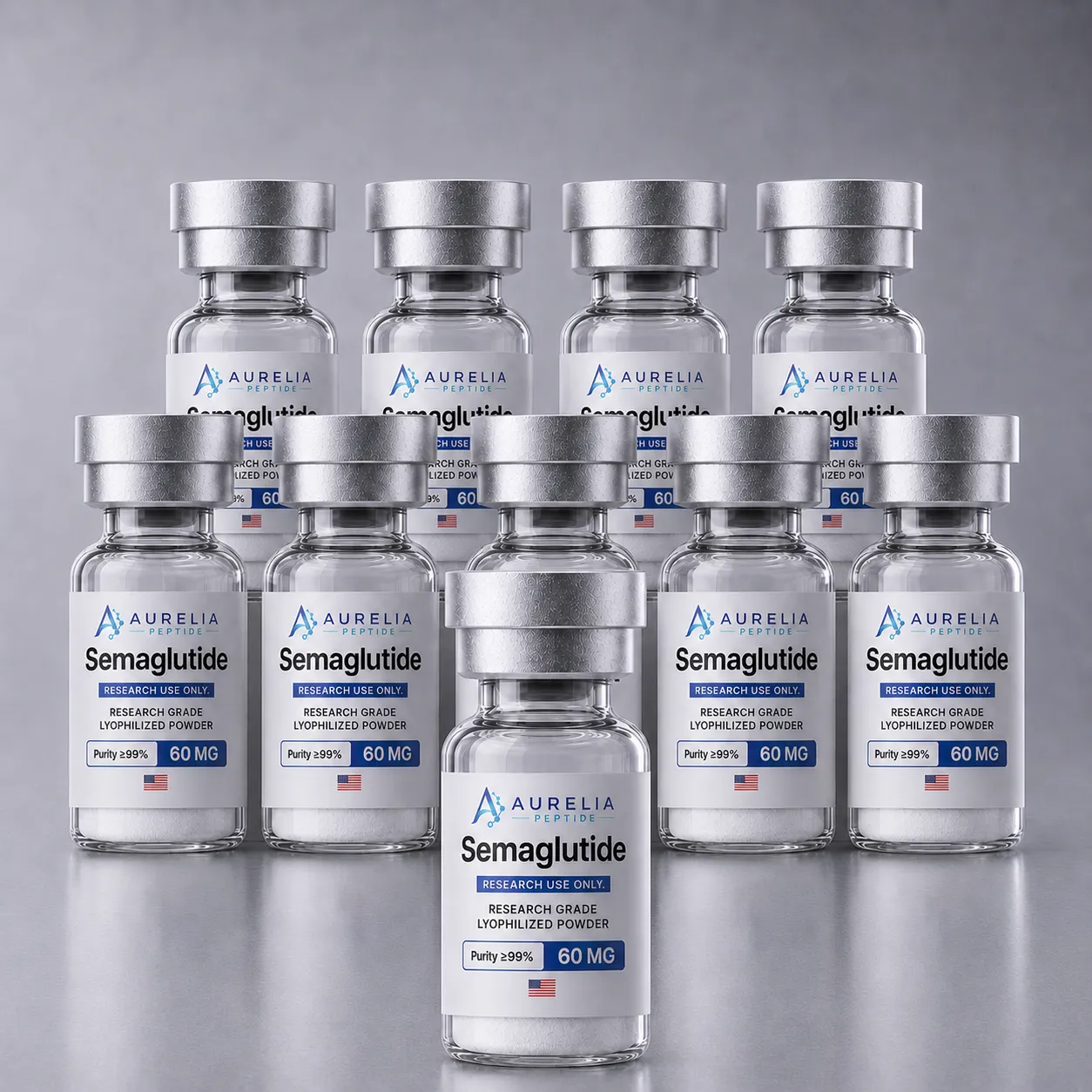
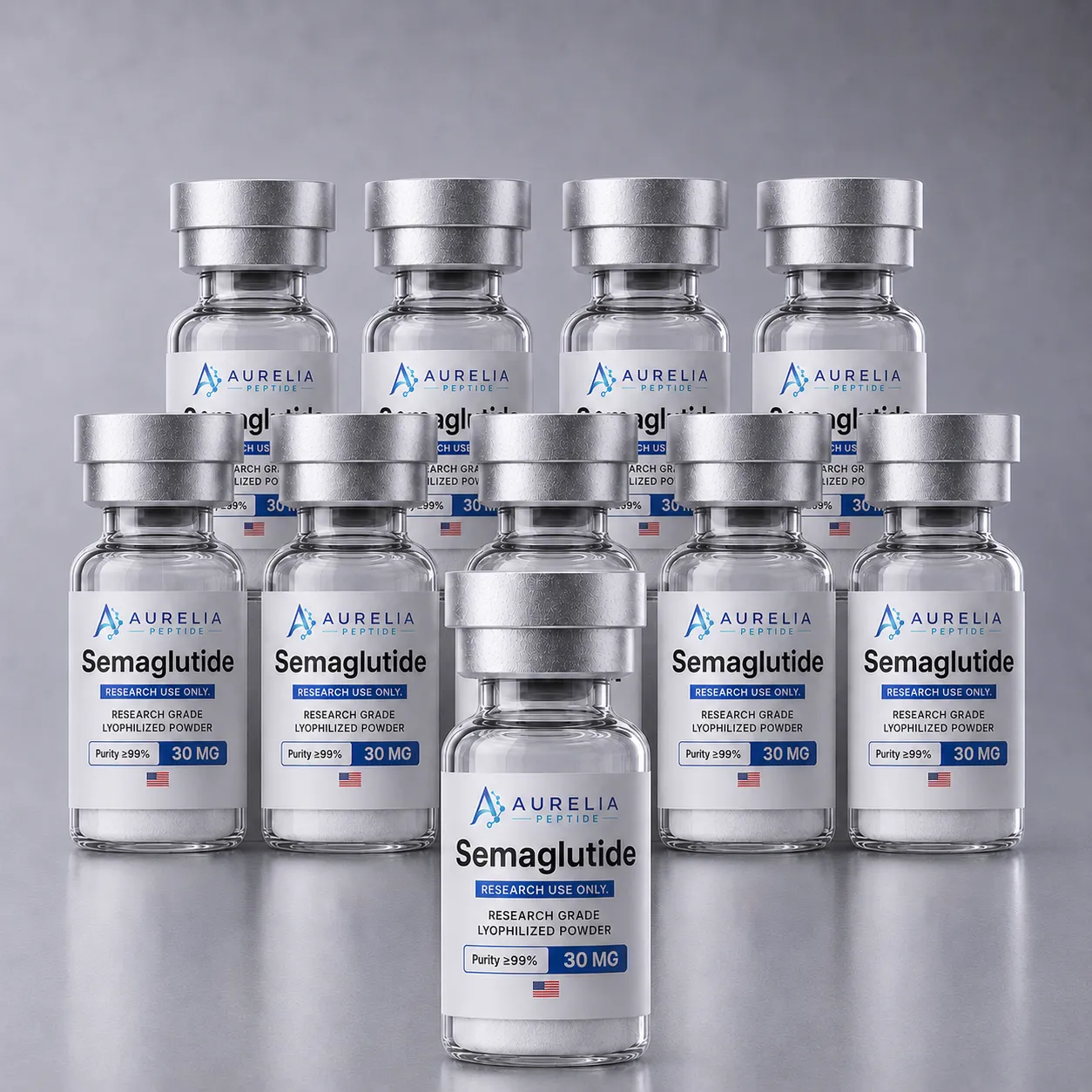
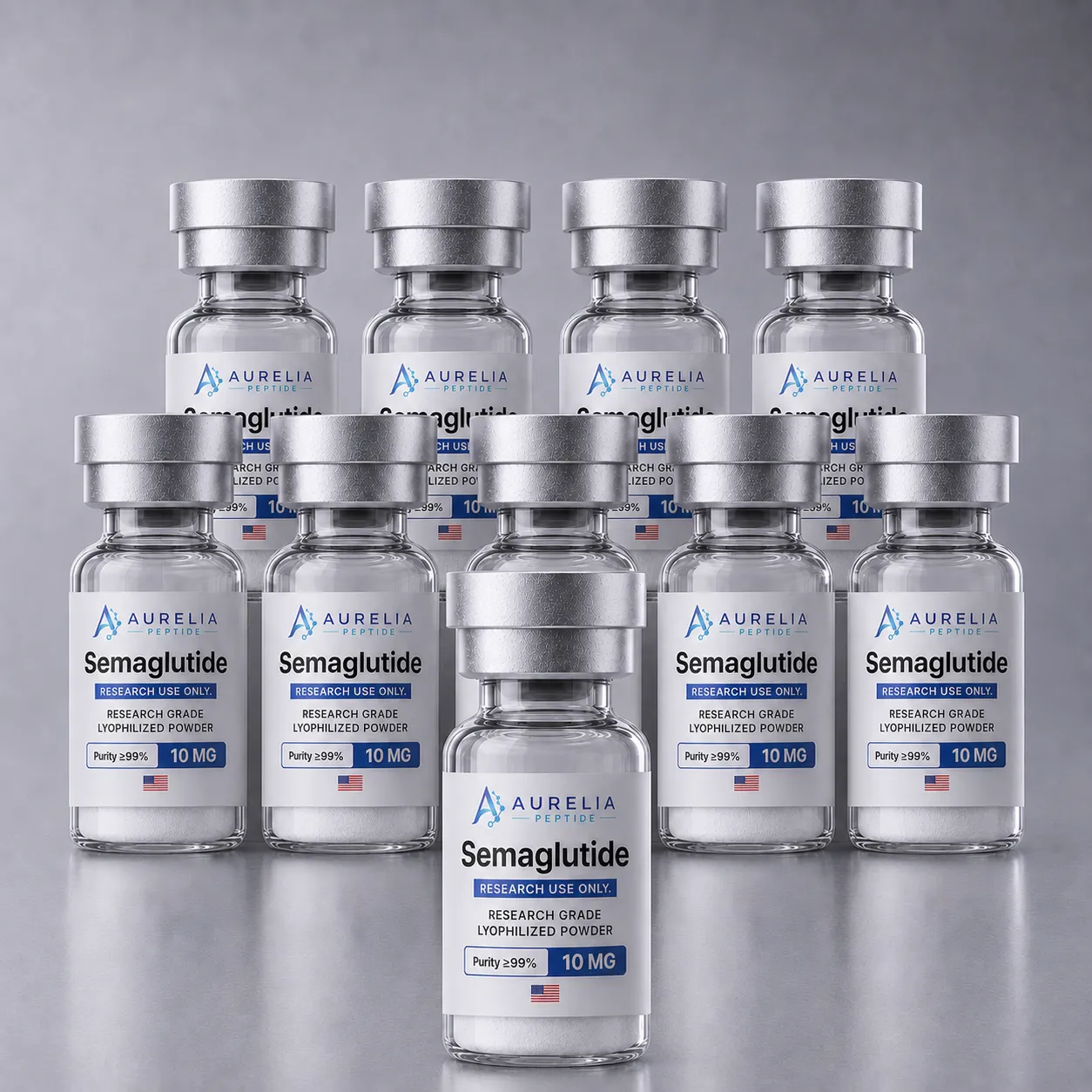
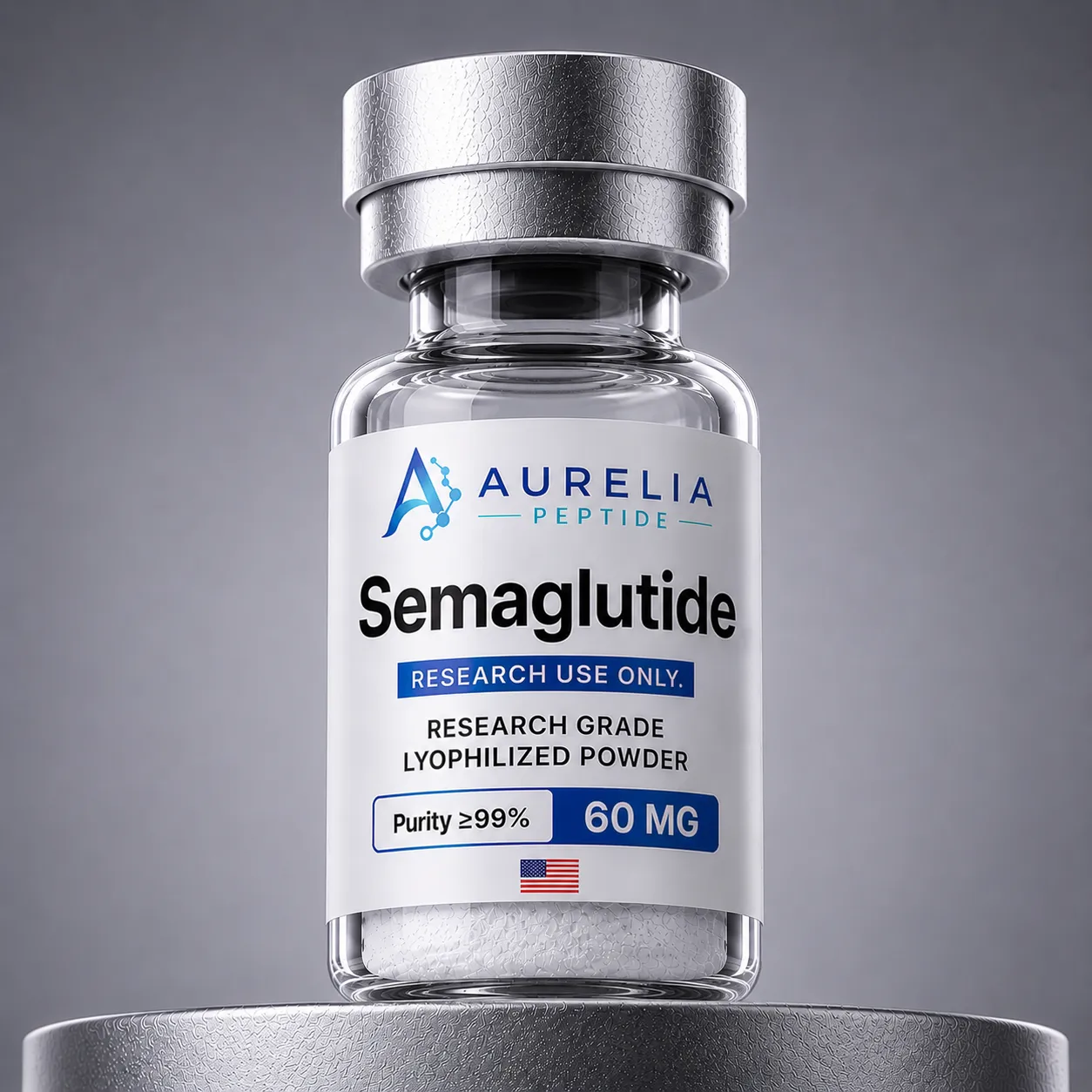
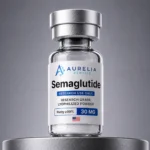
Semaglutide
A selective GLP-1 receptor agonist research peptide
- Fulfillment Origin
- us
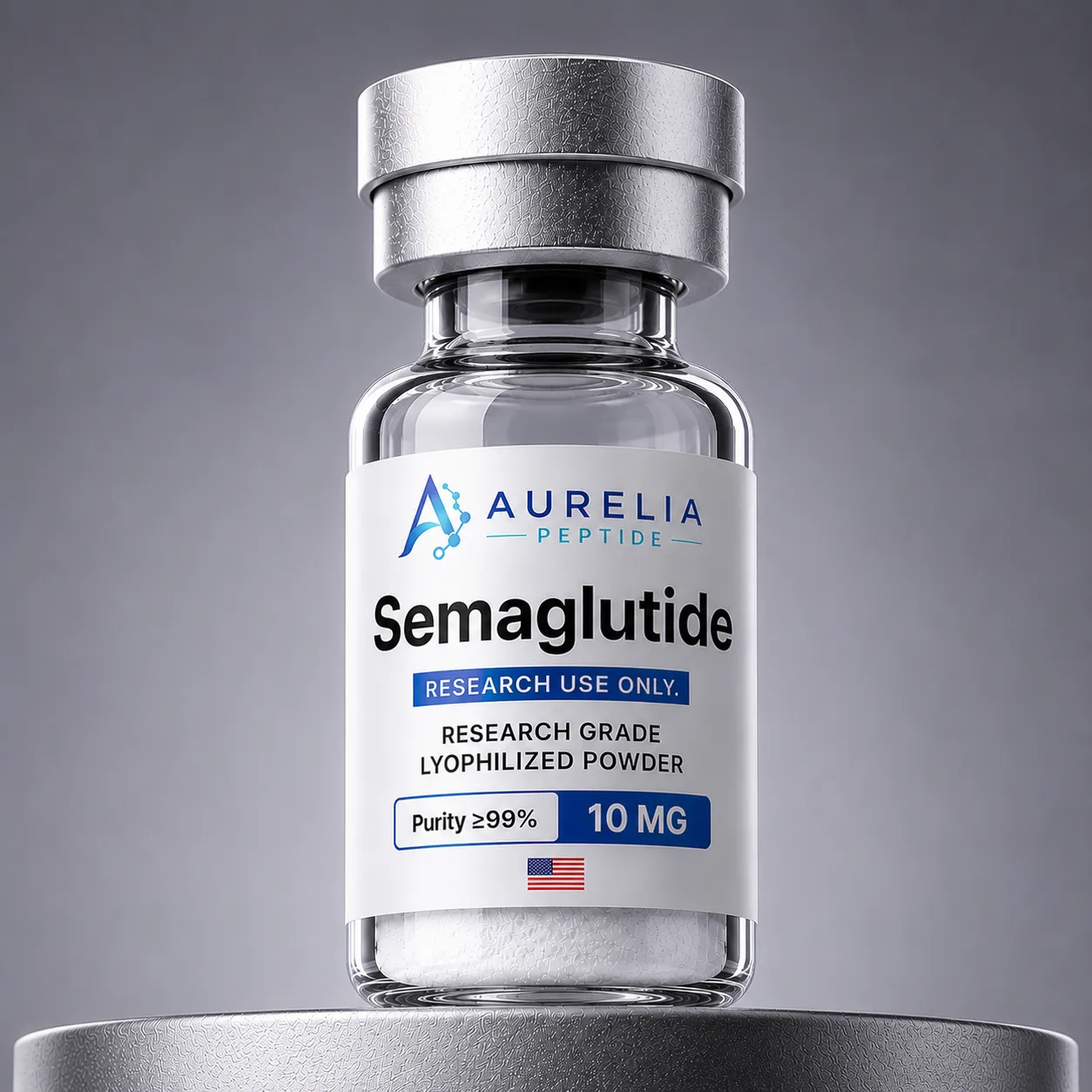
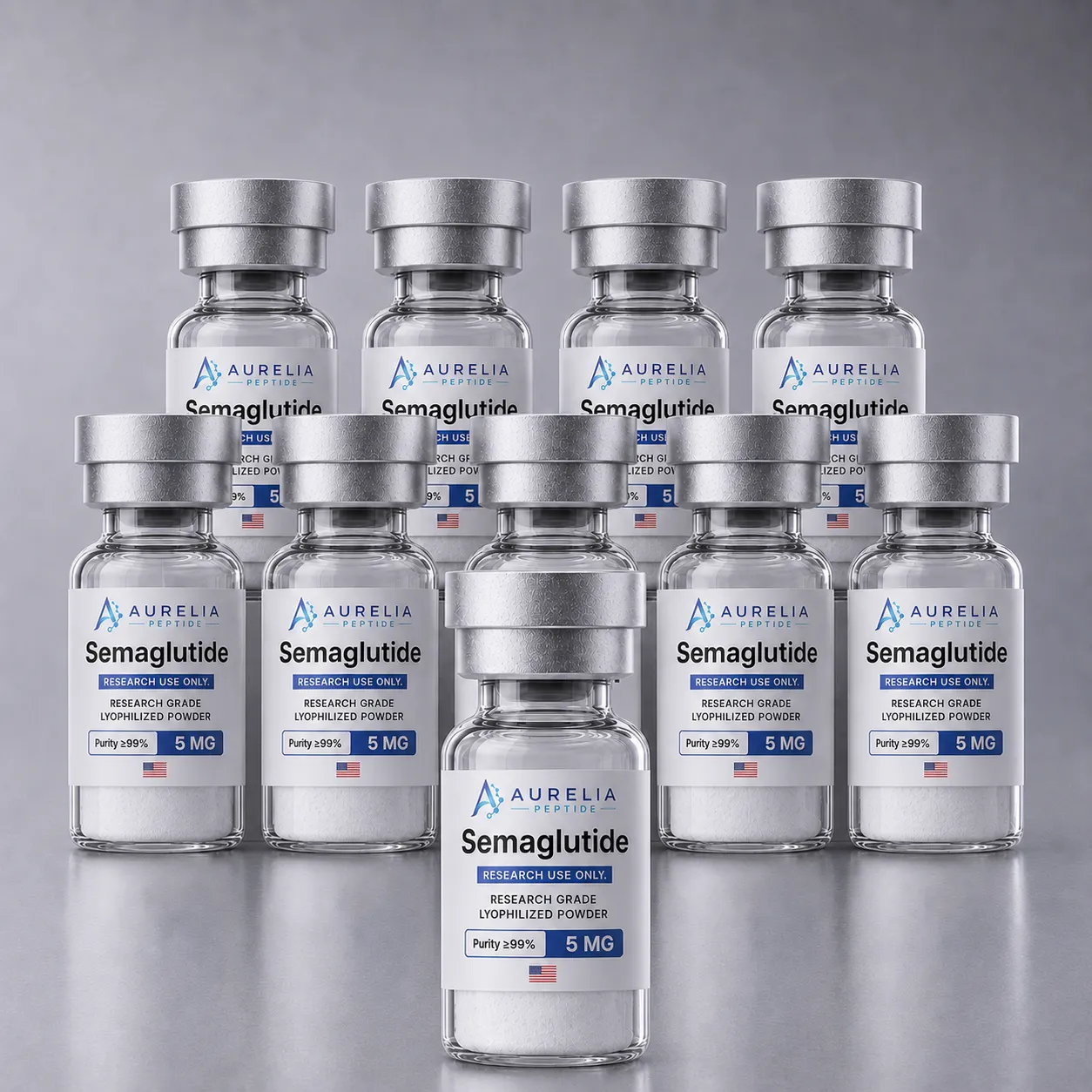
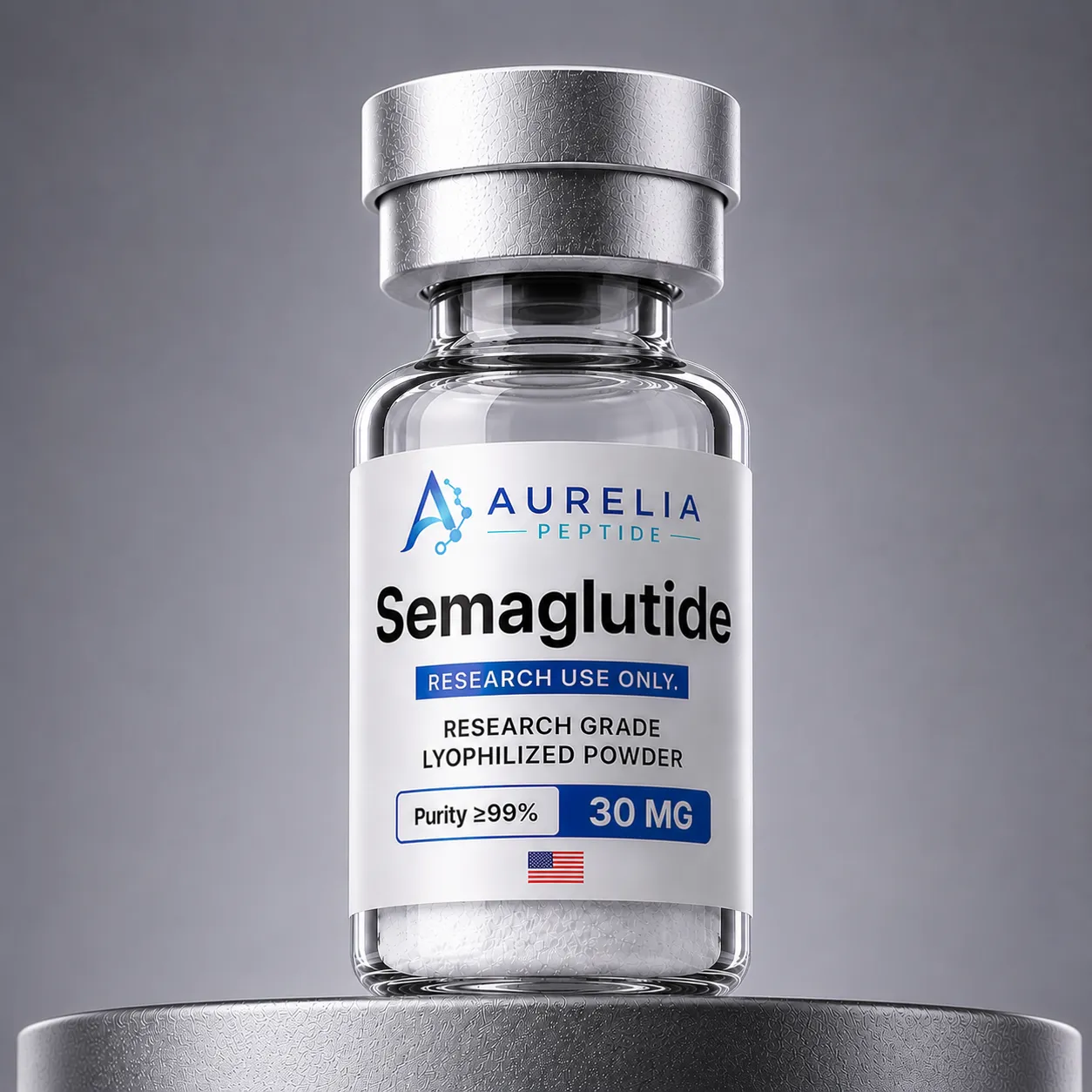
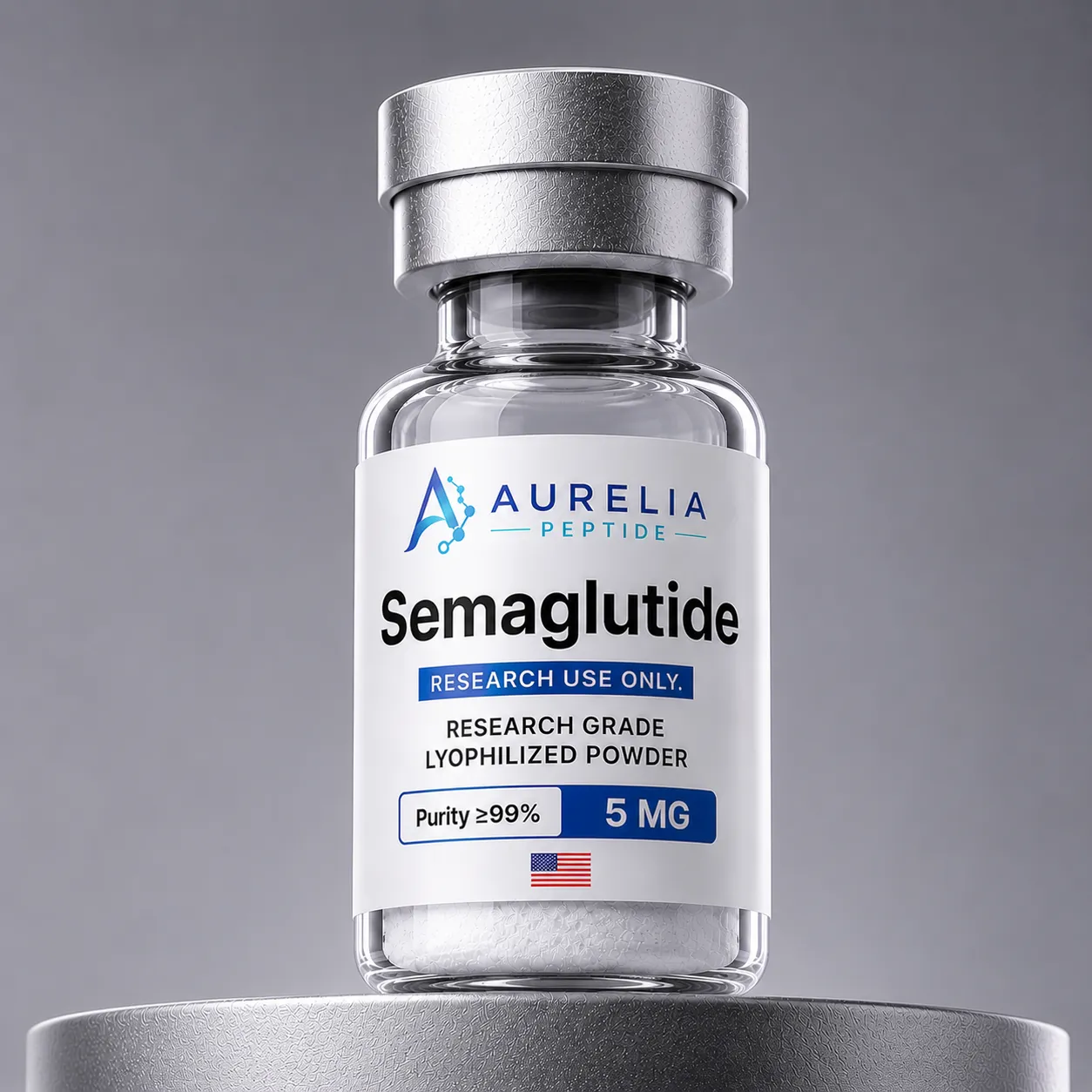
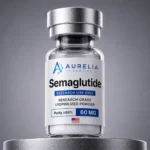
GLP-1 S is the Aurelia product designation for semaglutide, a long-acting synthetic GLP-1 analog and selective glucagon-like peptide-1 receptor agonist. Published research has examined glucose-dependent signaling, appetite-related pathways and metabolic outcomes. It is supplied solely as a laboratory research material.
31-amino-acid selective GLP-1 receptor agonist peptide with a C18 fatty diacid side chain (semaglutide)
- Formula
- C187H291N45O59
- Molecular weight
- Approximately 4113.58 g/mol
- Form
- Lyophilized powder
- CAS / ID
- Semaglutide (CAS 910463-68-2)
Independently tested. Verifiably pure.
Every batch of Semaglutide is reviewed against its independent laboratory documentation before fulfillment.
- HPLC Purity AnalysisReported purity: ≥99% — verify against selected lot COA
- Mass SpectrometryMass spectrometry — verify against selected lot COA
- Heavy Metals ScreeningSee selected lot COA
- Endotoxins (LPS)See selected lot COA
- Sterility TestingSee selected lot COA
- Net Peptide ContentSee selected lot COA
- HPLC Purity
- ≥99% — verify against selected lot COA
- Identity
- Mass spectrometry — verify against selected lot COA
- Endotoxin (LAL)
- See selected lot COA
- Lab
- Independent third-party laboratory — replace with actual COA lab
Not for human or veterinary use. For in-vitro laboratory research only. This product is not intended to diagnose, treat, cure, or prevent any disease.
Selective GLP-1 receptor agonism with extended exposure.
Semaglutide is a 31-amino-acid GLP-1 analog engineered for selective GLP-1R activity, resistance to enzymatic degradation and reversible albumin association. This dossier summarizes published research and is not medical guidance.
GLP-1R selective agonist
The molecule activates the glucagon-like peptide-1 receptor without adding GIP or glucagon receptor agonism.
DPP-4-resistant design
Amino-acid substitutions reduce rapid enzymatic degradation compared with native GLP-1.
C18 fatty diacid side chain
Lipid conjugation supports reversible albumin association and an approximately one-week pharmacokinetic profile.
The GLP-1 S molecule
An interactive illustrative atomic representation paired with verified public compound data. The structure graphic is schematic and is not a measured molecular conformation.
Published research observations.
Selected STEP 1 group-level outcomes are shown for research context. They do not predict individual outcomes or establish the quality or performance of this commercial research material.
Phase 3 study period
Adults with overweight or obesity without diabetes were randomized to semaglutide 2.4 mg or placebo with lifestyle intervention.
Mean body-weight change reported
Reported for the semaglutide group at week 68 under the treatment-policy estimand.
Participants randomized
Use the primary publication for eligibility, estimands, discontinuations and adverse-event information.
STEP 1 values are representative published group results at week 68. Review the paper for confidence intervals, estimand definitions, safety results and study limitations.
One receptor. Multiple downstream pathways.
Selective GLP-1R activation initiates glucose-dependent and neural signaling pathways. The observed research profile reflects receptor distribution, exposure and experimental context.
Glucose-dependent incretin signaling
GLP-1 receptor activation has been studied for glucose-dependent insulin secretion and glucagon regulation.
Appetite and satiety signaling
Central GLP-1 pathways are investigated for effects on hunger, satiety and energy-intake-related behavior.
Extended half-life design
DPP-4 resistance and albumin association prolong exposure compared with native GLP-1.
Where GLP-1 S fits.
This table organizes research molecules by receptor targets. It is not a comparison of approved labeling, clinical suitability, safety or commercial products.
GLP-1 receptor
Semaglutide selectively targets GLP-1R.
GIP + GLP-1
Tirzepatide integrates two incretin receptor pathways.
GIP + GLP-1 + glucagon
Investigational triple agonists add GCGR activity.
| Research molecule | GIPR | GLP-1R | GCGR | Receptor profile |
|---|---|---|---|---|
| Semaglutide / GLP-1 S | — | Agonist | — | Selective GLP-1 receptor agonist |
| Tirzepatide / GLP-2 TZ | Agonist | Agonist | — | Dual GIP/GLP-1 receptor agonist |
| Retatrutide / GLP-3 RT | Agonist | Agonist | Agonist | Investigational triple receptor agonist |
Single-receptor agonism visualized.
Semaglutide is classified as a selective GLP-1 receptor agonist. The graphic communicates target coverage and is not an assay-specific potency comparison.
~165-hour half-life. C18 acylation.
Published pharmacology describes an approximately one-week half-life. A C18 fatty diacid side chain and DPP-4-resistant design contribute to prolonged exposure.
Approximate half-life
The long pharmacokinetic profile supports once-weekly clinical study schedules.
Fatty diacid side chain
The lipid moiety promotes reversible albumin association.
Synthetic GLP-1 analog
A modified peptide sequence with extended-exposure design features.
The curve is a simplified half-life illustration, not measured concentration-time data and not an administration or dosing guide.
Full specification.
Identity fields describe semaglutide compound records. Lot-specific analytical values and the exact supplied chemical form must be confirmed using your supplier specification and selected COA.
Semaglutide
Selective GLP-1 receptor agonist research peptide.
C187H291N45O59
Formula reported in the PubChem compound record.
4113.58 g/mol
Nominal mass; verify the exact supplied form against lot documentation.
31 residues
Synthetic GLP-1 analog with a lipidated side chain.
910463-68-2
Confirm identifier and chemical form against your supplier record.
See selected COA
Purity, identity, net content, water and other measurements are lot-specific.
A mature clinical research program. Most recent first.
Semaglutide research and approved labeling continue to evolve. Verify current indications, study status and outcomes using primary publications, registries and applicable regulatory sources.
SELECT cardiovascular outcomes published
A large outcomes trial studied semaglutide 2.4 mg in adults with overweight or obesity and established cardiovascular disease without diabetes.
STEP 1 and STEP 2 published
Phase 3 trials reported weight-related and metabolic outcomes over 68 weeks in populations without and with type 2 diabetes.
SUSTAIN-6 cardiovascular outcomes published
A randomized trial evaluated cardiovascular outcomes in adults with type 2 diabetes at high cardiovascular risk.
Compound record established
Public compound records document the semaglutide molecular formula, identifiers and peptide classification.
Stability specs.
Storage and prepared-solution stability depend on formulation, container, concentration and lot. Replace the placeholders with your supplier-validated specification.
Follow the product label
Protect lyophilized material from conditions outside its documented storage range.
Minimize exposure
Keep the container closed and use appropriate laboratory monitoring and handling.
Use validated stability data
Prepared-solution stability depends on diluent, pH, concentration, container and temperature.
- Verify the lotMatch the vial identifier with its COA and supplier specification.
- Confirm storageUse only documented temperature, light and moisture conditions.
- Use a validated methodPrepare laboratory material using qualified equipment and an approved protocol.
- Record preparationDocument lot, diluent, concentration, container, date, operator and disposition.
Featured research on Semaglutide.
Use the filters to review selected clinical, mechanism and registry sources. Open each primary record for methods, limitations, conflicts of interest and current status.
Randomized, double-blind, placebo-controlled phase 3 trial in 1,961 adults without diabetes, evaluating semaglutide 2.4 mg with lifestyle intervention over 68 weeks.
View primary source →Randomized phase 3 trial comparing semaglutide 2.4 mg, semaglutide 1.0 mg and placebo through 68 weeks.
View primary source →Randomized cardiovascular outcomes trial in adults with type 2 diabetes at high cardiovascular risk.
View primary source →Randomized outcomes trial evaluating semaglutide 2.4 mg in adults with established cardiovascular disease and overweight or obesity without diabetes.
View primary source →Government compound record documenting molecular formula, identifiers, peptide length and GLP-1 receptor agonist classification.
View primary source →Registry record for NCT03548935, including protocol information, enrollment, study dates and posted results.
View primary source →References.
Primary publications, government compound data and trial records used for this dossier.
- Wilding JPH, et al. Once-Weekly Semaglutide in Adults with Overweight or Obesity. N Engl J Med. 2021.Open source ↗
- Davies M, et al. Semaglutide 2.4 mg Once Weekly in Adults with Overweight or Obesity and Type 2 Diabetes. Lancet. 2021.Open source ↗
- Marso SP, et al. Semaglutide and Cardiovascular Outcomes in Patients with Type 2 Diabetes. N Engl J Med. 2016.Open source ↗
- Lincoff AM, et al. Semaglutide and Cardiovascular Outcomes in Obesity without Diabetes. N Engl J Med. 2023.Open source ↗
- National Center for Biotechnology Information. PubChem Compound Summary for Semaglutide, CID 56843331.Open source ↗
- ClinicalTrials.gov. NCT03548935 — STEP 1.Open source ↗
Related products
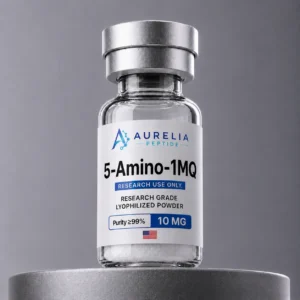
5-Amino-1MQ
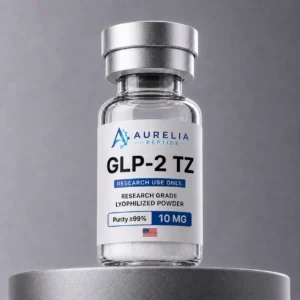
GLP-2 TZ