
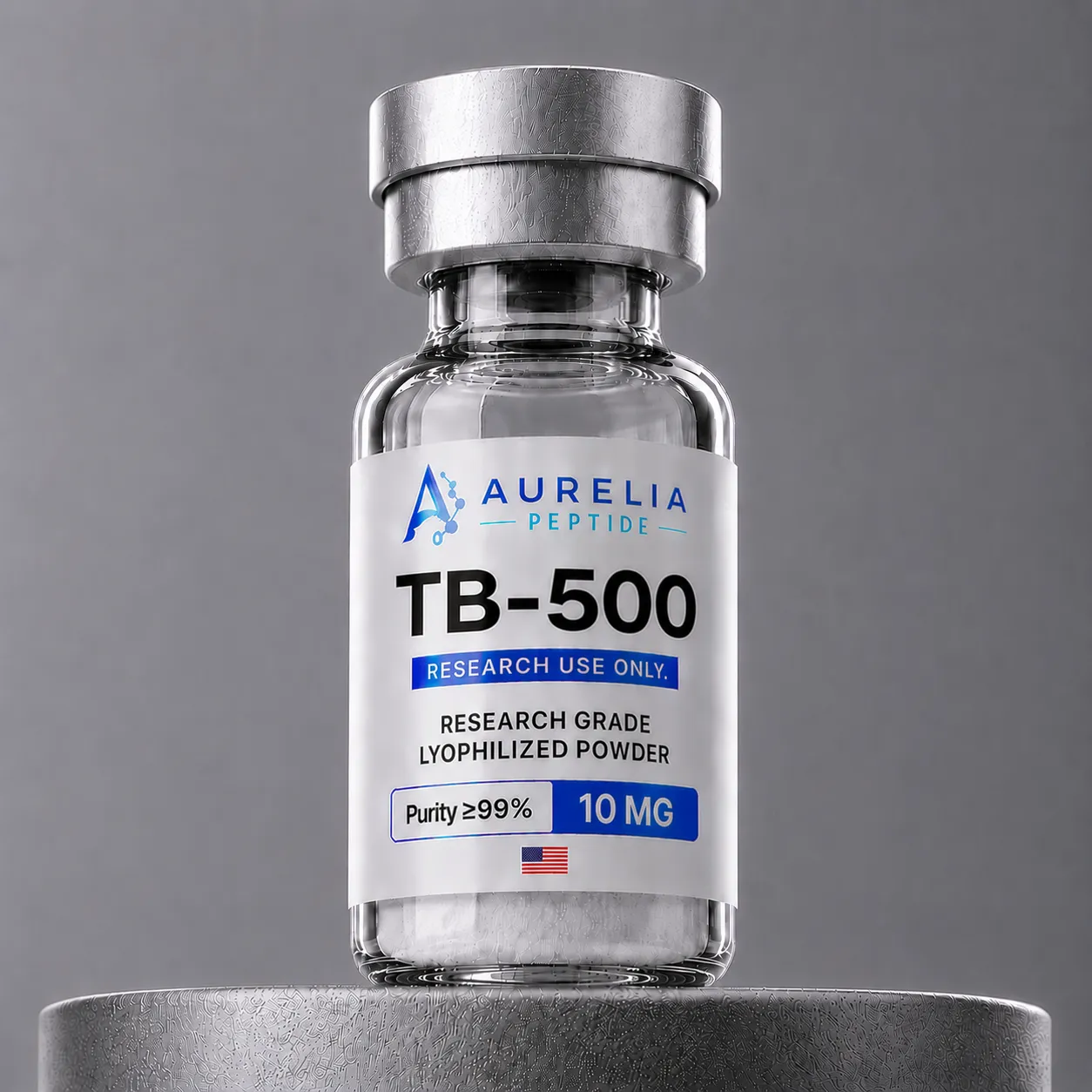
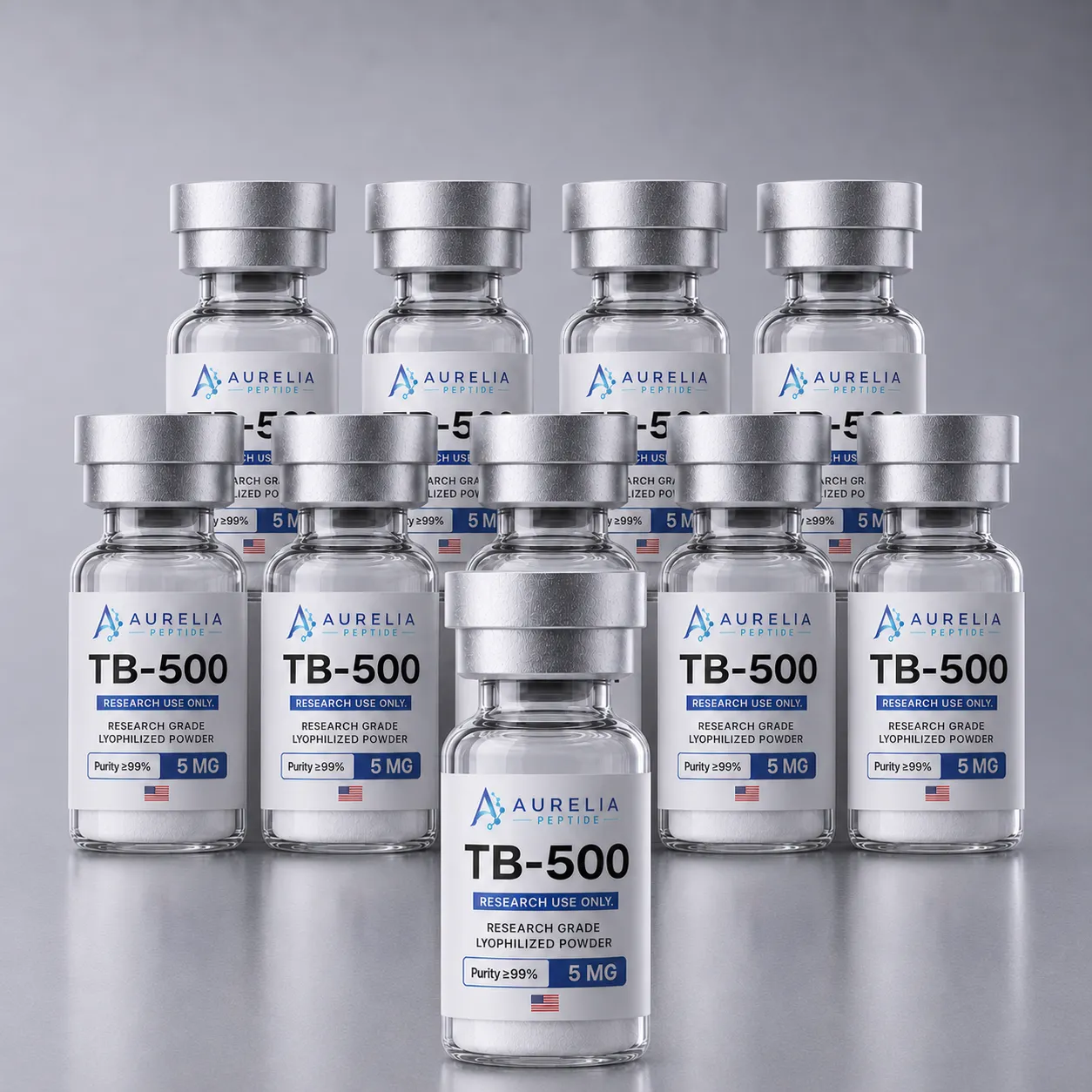
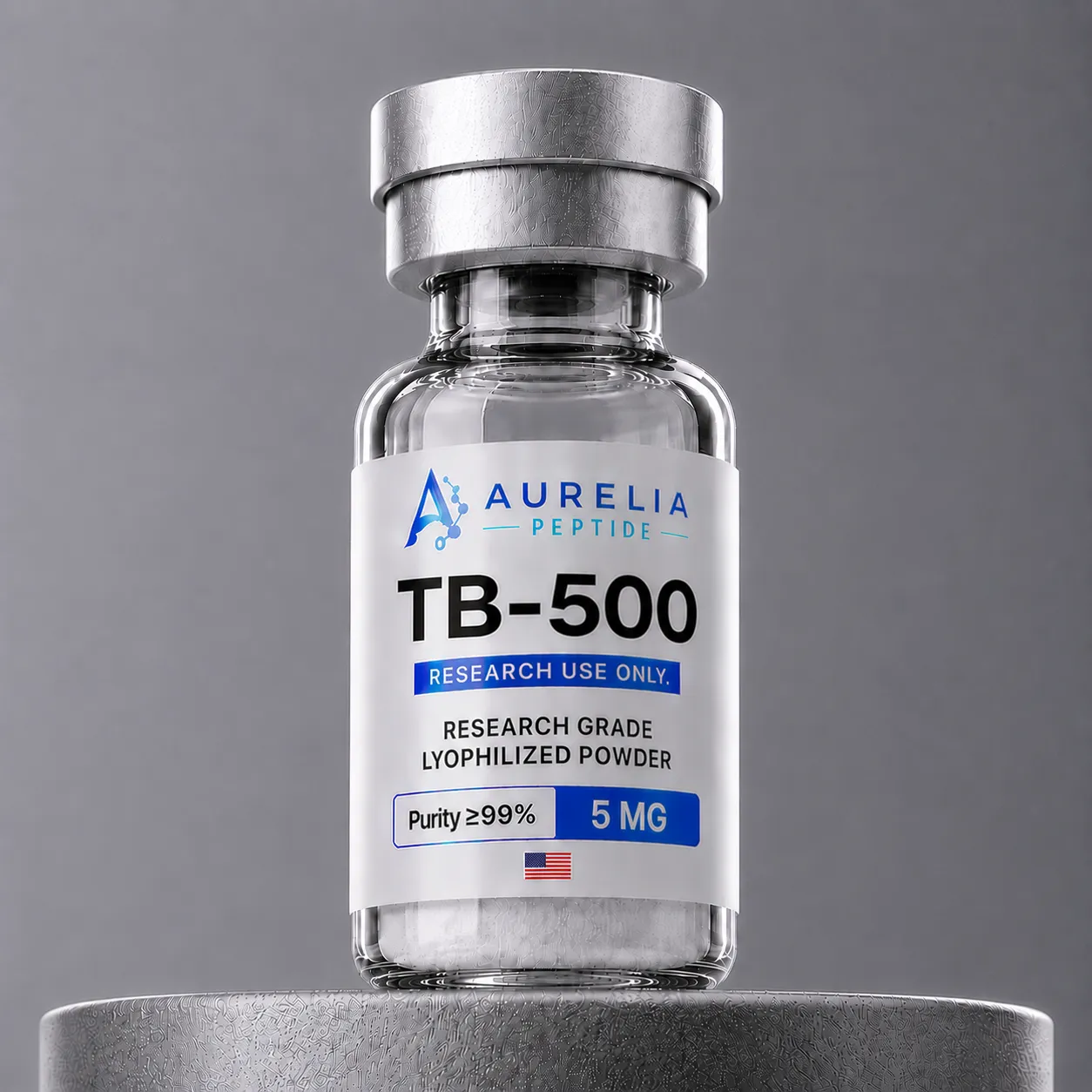
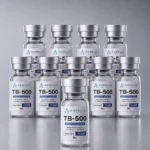
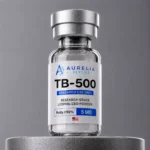
TB-500
A 43-amino-acid actin-binding research peptide studied in cell migration, tissue remodeling and repair models
- Fulfillment Origin
- us
TB-500 is used commercially as a research name for thymosin-beta-4-related material. This dossier is configured for full-length thymosin beta-4 acetate, a 43-amino-acid peptide that binds monomeric actin and has been investigated in cell-migration, corneal, dermal, cardiac and inflammatory research. Published findings for thymosin beta-4 do not automatically establish the identity, quality, safety or performance of a commercial TB-500 lot.
Full-length thymosin beta-4 acetate, subject to supplier and lot confirmation
- Formula
- C212H350N56O78S
- Molecular weight
- 4963.44 g/mol
- Form
- Lyophilized powder
- CAS / ID
- 77591-33-4
Independently tested. Verifiably pure.
Every batch of TB-500 is reviewed against its independent laboratory documentation before fulfillment.
- HPLC Purity AnalysisReported purity: Lot-specific purity — see COA
- Mass SpectrometryMass spectrometry — see lot COA
- Heavy Metals ScreeningLot-specific result — see COA
- Endotoxins (LPS)Lot-specific result — see COA
- Sterility TestingLot-specific result — see COA
- Net Peptide ContentLot-specific result — see COA
- HPLC Purity
- Lot-specific purity — see COA
- Identity
- Mass spectrometry — see lot COA
- Endotoxin (LAL)
- Lot-specific result — see COA
- Lab
- Independent third-party laboratory
Not for human or veterinary use. For in-vitro laboratory research only. This product is not intended to diagnose, treat, cure, or prevent any disease.
Forty-three residues. One actin-binding peptide.
This Aurelia dossier treats the product as full-length thymosin beta-4 acetate, pending confirmation from the supplier specification and lot COA. Thymosin beta-4 is a 43-residue peptide widely studied as a major intracellular G-actin-sequestering molecule.
43 amino acids
The full-length human thymosin beta-4 sequence contains 43 residues.
G-actin binding
Thymosin beta-4 binds monomeric actin and participates in regulation of cytoskeletal dynamics and cell migration.
TB-500 naming varies
Commercial TB-500 may be described inconsistently. The supplied sequence and analytical identity must be confirmed for every lot.
The thymosin beta-4 molecule
An animated illustrative atomic network is displayed alongside public full-length thymosin beta-4 molecular data. The visual is schematic and is not a measured solution conformation.
Published research observations.
Selected findings summarize thymosin beta-4 literature and are presented for scientific context only. They do not establish human efficacy, dosing, safety or the analytical quality of this commercial research material.
Actin sequestration
Thymosin beta-4 is recognized as a major monomeric actin-binding peptide in mammalian cells.
Migration and survival signaling
A 2004 study examined integrin-linked kinase activation, cardiac-cell migration, survival and repair.
Re-epithelialization models
Corneal studies have examined epithelial migration, wound closure and inflammatory responses.
Three connected research pathways.
The animated signaling map organizes major thymosin beta-4 research contexts. It is an illustrative scientific map, not a validated clinical mechanism for this product.
G-actin sequestration and cytoskeletal remodeling
Thymosin beta-4 binds monomeric G-actin, influencing the available actin pool and supporting context-dependent cell motility and cytoskeletal reorganization.
Integrin-linked kinase and cell-survival research
Cardiac research has associated thymosin beta-4 with integrin-linked kinase activation, progenitor-cell migration and survival signaling.
Inflammatory and tissue-remodeling responses
Preclinical literature examines cytokine modulation, re-epithelialization, angiogenic responses and extracellular-matrix remodeling.
Where TB-500 fits.
This comparison separates full-length thymosin beta-4 from other repair-associated research peptides. It does not compare clinical effectiveness or suitability.
TB-500 / thymosin beta-4
An actin-binding peptide studied in migration, remodeling, corneal, dermal and cardiac models.
BPC-157
A different synthetic pentadecapeptide studied mainly in gastrointestinal and tissue-injury models.
GHK-Cu
A copper-coordinating tripeptide complex studied in extracellular-matrix and skin-related research.
| Research molecule | Sequence length | Defining feature | Research context |
|---|---|---|---|
| TB-500 / Tβ4 | 43 residues | G-actin binding | Migration, corneal, dermal and cardiac models |
| BPC-157 | 15 residues | Stable gastric pentadecapeptide | GI, tendon and injury models |
| GHK-Cu | 3 residues | Copper-binding complex | Matrix and skin-related models |
Research profile visualized.
Qualitative bars summarize the relative prominence of published research themes. They are not potency, efficacy or clinical-performance measurements.
A full-length 43-residue research peptide.
Public molecular identity is available for thymosin beta-4, while exposure, degradation and stability depend on formulation, route, concentration and experimental conditions. No dosing guidance is provided.
Full-length thymosin beta-4
A compact acidic peptide with one methionine residue and no disulfide bridge.
Public compound value
Approximate molecular weight in grams per mole for full-length thymosin beta-4.
No universal half-life
A single commercial-product half-life should not be claimed without formulation- and route-specific measurements.
Full specification.
Public full-length thymosin beta-4 identity is separated from lot-specific analytical measurements and the exact supplied acetate form.
TB-500
Commercial research designation; confirm exact molecular identity.
Thymosin beta-4 acetate
Full-length 43-residue peptide, subject to supplier confirmation.
C212H350N56O78S
Public formula for thymosin beta-4 parent peptide.
4963.44 g/mol
Public parent-peptide molecular weight.
Lyophilized powder
Available Aurelia variations may include 5 mg and 10 mg.
See selected COA
Purity, identity, acetate, water, endotoxin, sterility and net peptide content are lot-specific.
Selected thymosin beta-4 research milestones.
These milestones concern thymosin beta-4 research and do not imply regulatory approval or established clinical use of Aurelia TB-500.
Ocular translational research reviewed
A review summarized the development of thymosin beta-4 research for corneal wound-healing disorders.
Regenerative-peptide research summarized
Published work reviewed migration, stem-cell mobilization, differentiation and inflammatory mechanisms.
Cardiac ILK study published
A Nature study reported integrin-linked kinase activation and cardiac-cell migration, survival and repair in experimental models.
Corneal wound models reported
Experimental studies examined corneal epithelial migration, wound closure and inflammatory mediators.
Handling and documentation.
Storage and prepared-material stability depend on the exact supplied form, formulation, container, concentration and lot. Follow the product label and available lot documentation.
Follow documented storage
Keep lyophilized material within the temperature and environmental conditions documented by the supplier.
Protect methionine integrity
The sequence contains methionine; minimize unnecessary exposure to oxidizing conditions, heat and light.
Use validated stability data
Prepared-material stability depends on solvent, pH, concentration, container, temperature and handling.
- Verify molecular identityConfirm whether the vial contains full-length thymosin beta-4 acetate or another thymosin-derived material.
- Match the lot recordMatch the vial identifier with its available Certificate of Analysis.
- Follow validated conditionsUse supplier-documented storage and laboratory handling conditions.
- Record handlingDocument lot, solvent, concentration, container, conditions and disposition.
Featured thymosin beta-4 research.
Explore public compound data and selected peer-reviewed studies. Findings relate to thymosin beta-4 and should not be treated as lot-specific claims for commercial TB-500.
Public molecular formula, molecular weight, identifiers and chemical record for the full-length peptide.
View primary source →A review of actin binding, cell migration, stem and progenitor-cell behavior and regenerative research.
View primary source →Experimental cardiac research examined migration, survival and repair-associated signaling.
View primary source →An in-vivo corneal study examined wound closure and inflammatory mediators.
View primary source →Experimental wound-repair work examined full-length thymosin beta-4 and a related synthetic peptide.
View primary source →References.
Government compound data and peer-reviewed publications used for this Aurelia dossier.
- PubChem. Thymosin Beta 4, CID 45382195.Open source ↗
- Goldstein AL, et al. Thymosin beta-4: a multi-functional regenerative peptide. Basic properties and clinical applications. 2012.Open source ↗
- Bock-Marquette I, et al. Thymosin beta-4 activates integrin-linked kinase and promotes cardiac cell migration, survival and cardiac repair. Nature. 2004.Open source ↗
- Sosne G, et al. Thymosin beta-4 promotes corneal wound healing and modulates inflammatory mediators in vivo. Experimental Eye Research. 2001.Open source ↗
- Philp D, et al. Thymosin beta-4 and a synthetic peptide containing its actin-binding domain promote dermal wound repair in db/db diabetic mice and in aged mice. Wound Repair and Regeneration. 2003.Open source ↗
- Crockford D, et al. Thymosin beta-4: structure, function, and biological properties supporting current and future clinical applications. Annals of the New York Academy of Sciences. 2010.Open source ↗
Related products