
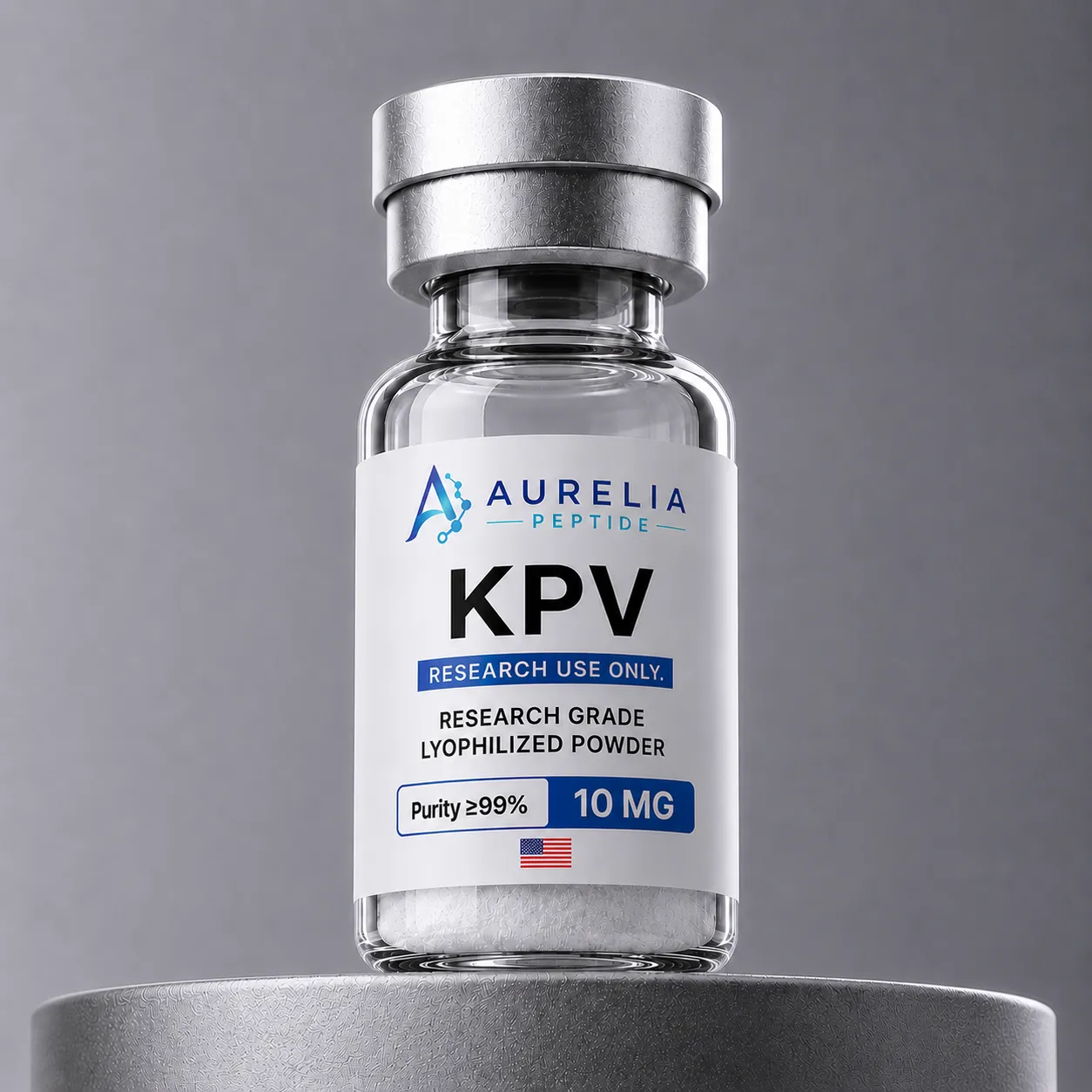
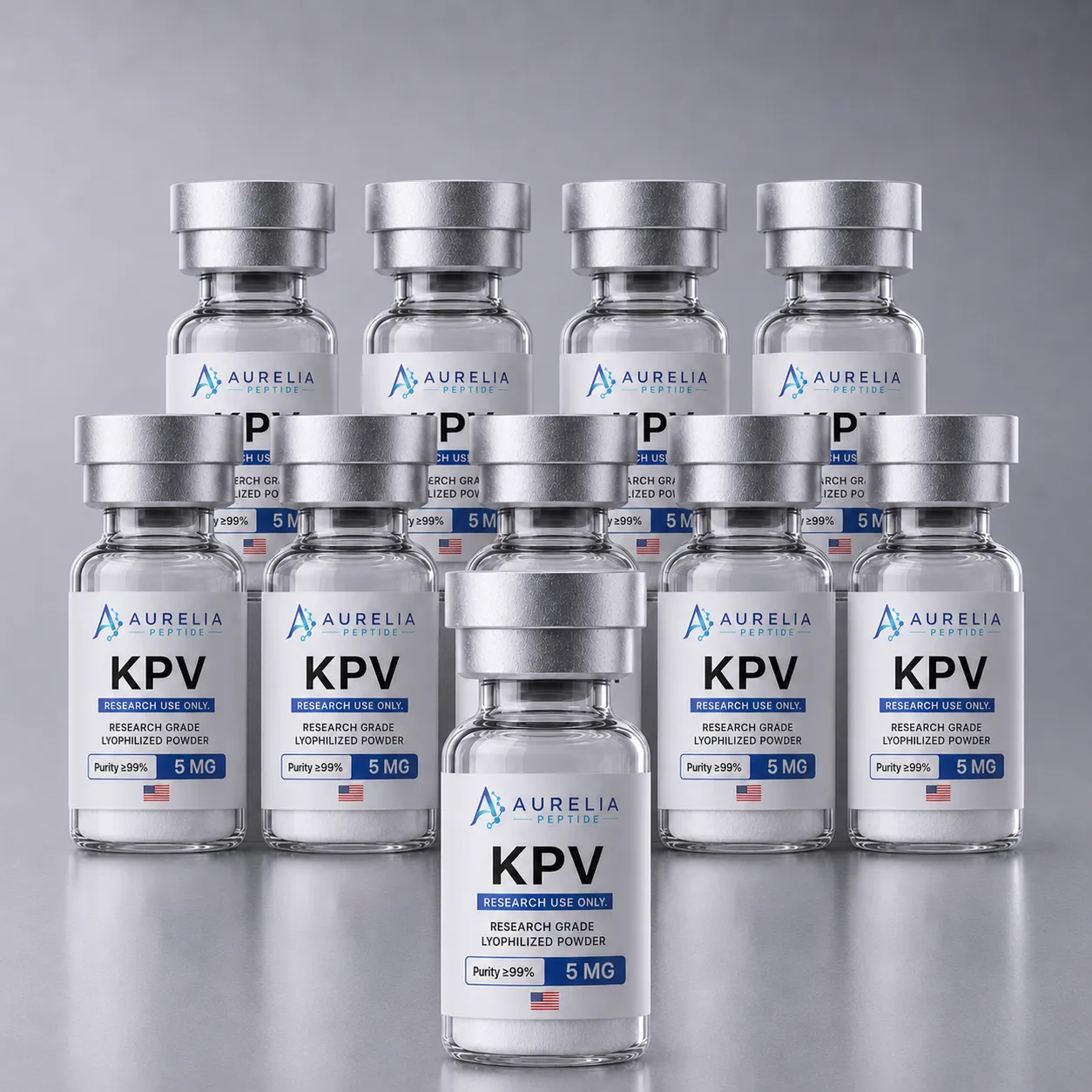
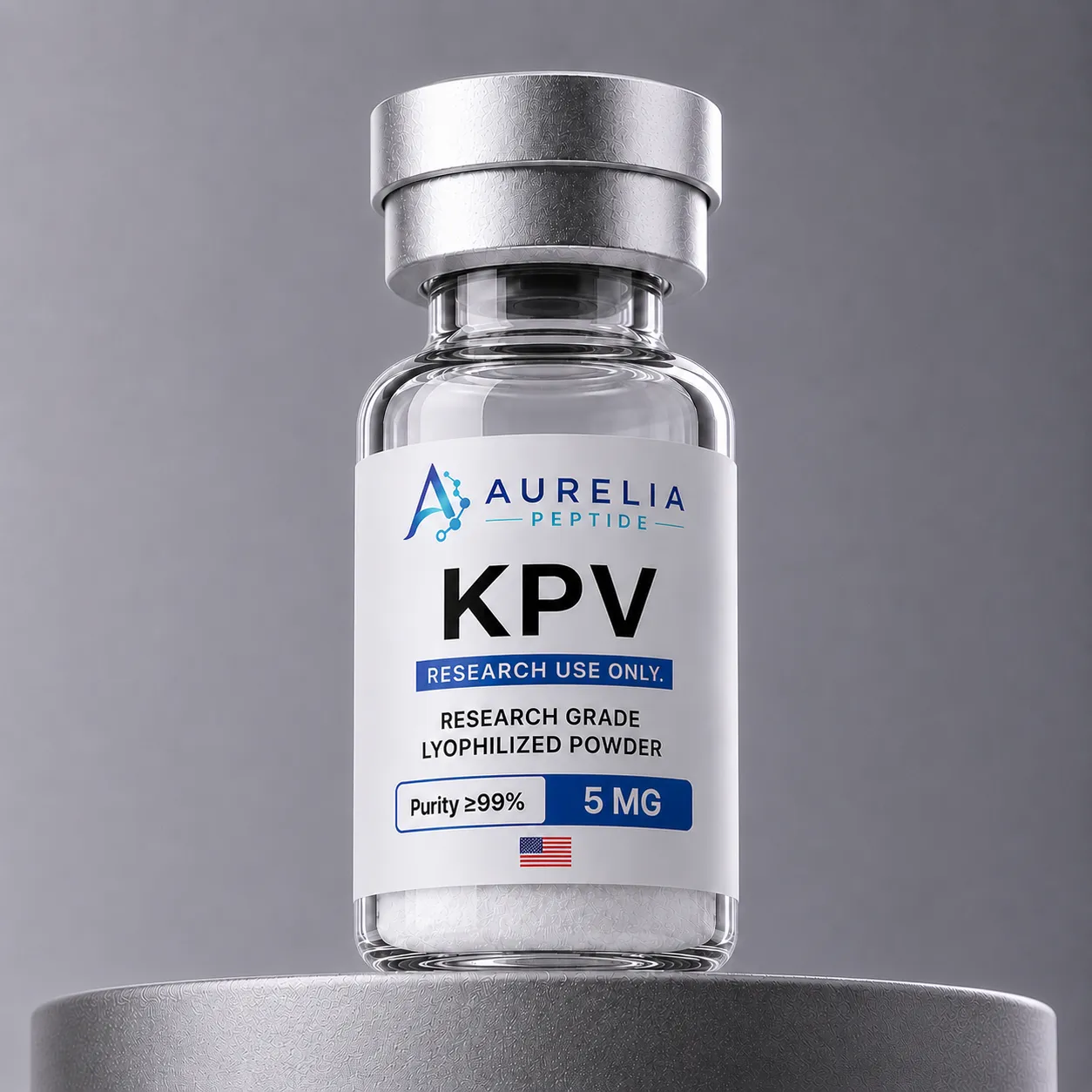
KPV
An α-MSH-derived tripeptide studied in inflammatory, epithelial and intestinal research models
- Fulfillment Origin
- us
KPV is the C-terminal tripeptide Lys-Pro-Val corresponding to residues 11–13 of alpha-melanocyte-stimulating hormone. It has been investigated in preclinical models involving inflammatory signaling, intestinal epithelial transport, cytokine output, antimicrobial activity and epithelial repair. The available literature is predominantly preclinical and does not establish clinical safety or efficacy.
α-MSH-derived tripeptide · 3 amino-acid residues
- Formula
- C16H31N5O4
- Molecular weight
- 342.43 g/mol
- Form
- Lyophilized powder
- CAS / ID
- Not assigned consistently across supplier records
Independently tested. Verifiably pure.
Every batch of KPV is reviewed against its independent laboratory documentation before fulfillment.
- HPLC Purity AnalysisReported purity: Lot-specific purity — see COA
- Mass SpectrometryMass-spectrometric identity — see lot COA
- Heavy Metals ScreeningLot-specific result — see COA
- Endotoxins (LPS)Lot-specific result — see COA
- Sterility TestingLot-specific result — see COA
- Net Peptide ContentLot-specific result — see COA
- HPLC Purity
- Lot-specific purity — see COA
- Identity
- Mass-spectrometric identity — see lot COA
- Endotoxin (LAL)
- Lot-specific result — see COA
- Lab
- Independent third-party laboratory
Not for human or veterinary use. For in-vitro laboratory research only. This product is not intended to diagnose, treat, cure, or prevent any disease.
Three amino acids with a focused research profile.
KPV is composed of lysine, proline and valine. Its compact structure is associated with α-MSH-derived anti-inflammatory research and transporter-mediated uptake studies.
Lys-Pro-Val
The C-terminal tripeptide corresponding to α-MSH residues 11–13.
3 residues
A short peptide studied in cellular transport, cytokine and epithelial models.
Inflammatory signaling
Preclinical literature has examined NF-κB, MAP-kinase and pro-inflammatory cytokine output.
The KPV molecule visualized.
The animated structure highlights the Lys-Pro-Val backbone and its three-residue architecture.
Published preclinical research observations.
The following points summarize published laboratory and animal-model findings. They should not be interpreted as clinical outcomes.
Pathway suppression research
KPV has been investigated for suppression of NF-κB and MAP-kinase signaling and reduced production of pro-inflammatory cytokines in experimental models.
Tripeptide uptake
Research in intestinal models has examined uptake through the PepT1 di- and tripeptide transporter.
Re-epithelialization research
Published corneal and epithelial studies have explored wound-closure and nitric-oxide-associated responses.
Three connected research pathways.
The animated map follows KPV from peptide transport to intracellular inflammatory signaling and epithelial research endpoints.
Peptide-transporter-mediated uptake
KPV has been studied as a substrate for PepT1 in intestinal epithelial and immune-cell research.
Inflammatory pathway modulation
Preclinical findings describe reduced activation of NF-κB and MAP-kinase signaling and lower inflammatory cytokine output.
Epithelial migration and repair models
KPV has been investigated in corneal and intestinal epithelial models involving migration, barrier response and re-epithelialization.
What distinguishes KPV.
KPV is presented here as a defined tripeptide rather than a blend or full-length melanocortin hormone.
α-MSH fragment
KPV corresponds to the C-terminal residues 11–13 of α-MSH.
Tripeptide
Its three-residue structure is substantially smaller than the full α-MSH peptide.
Inflammation and epithelium
The literature emphasizes cytokine signaling, intestinal transport and epithelial models.
| Material | Residue length | Defining feature | Research context |
|---|---|---|---|
| KPV | 3 | Lys-Pro-Val; α-MSH 11–13 | Inflammatory, intestinal and epithelial models |
| α-MSH | 13 | Full melanocortin peptide | Melanocortin receptor and immunomodulatory research |
Research profile visualized.
The bars represent the relative emphasis of this dossier and are not potency or efficacy measurements.
Exposure is model- and route-dependent.
KPV is a small tripeptide, but a universal half-life or validated dosing interval should not be claimed without route-, matrix- and model-specific data.
Compact molecular format
Short peptide length influences transport and degradation but does not by itself establish in-vivo stability.
Carrier-mediated uptake research
Transporter expression and experimental matrix can strongly affect observed uptake.
No validated human PK profile
Published KPV work is primarily laboratory and animal research.
Full specification.
The fields below describe the compound identity. Final purity, identity and content values must match the actual lot documentation.
KPV
L-Lysyl-L-Prolyl-L-Valine.
Lys-Pro-Val
α-MSH residues 11–13.
C16H31N5O4
Formula for the neutral tripeptide form.
342.43 g/mol
Calculated molecular mass.
Lyophilized powder
Confirm appearance and fill characteristics per lot.
See lot COA
Confirm identity, purity, peptide content and applicable contaminant testing.
From transport to cellular response.
This is an illustrative mechanistic sequence, not a dosing or treatment timeline.
Peptide availability
KPV is introduced into the selected in-vitro or preclinical model.
PepT1-associated uptake
Transporter-mediated entry is examined in epithelial and immune-cell systems.
Intracellular signaling
NF-κB, MAPK and inflammatory cytokine outputs are measured.
Tissue-model endpoint
Barrier, migration, epithelial-repair or inflammatory outcomes are evaluated.
Handle as a sensitive research peptide.
Use supplier-validated storage and preparation documentation for the supplied lot.
Cold, dry and protected
Minimize moisture, direct light and repeated temperature cycling.
Matrix and time matter
Working stability depends on solvent, concentration, container, pH and temperature.
Follow lot-specific guidance
Do not substitute generic website claims for validated supplier instructions.
- Record the lotLink every experiment to the vial batch and corresponding COA.
- Use validated preparation conditionsFollow the supplier specification for solvent and storage.
- Limit repeated cyclingAvoid unnecessary freeze-thaw or warming cycles.
- Document hold timeRecord preparation time, temperature and elapsed time before analysis.
For in-vitro laboratory research only. Not for human or veterinary use.
KPV literature library.
The studies below provide the scientific context for KPV-related research.
Preclinical intestinal-inflammation research examining PepT1-mediated uptake and inflammatory outcomes.
View primary source →Review of α-MSH-derived peptides, including KPV, in inflammatory and immunomodulatory research.
View primary source →Rabbit corneal research examining epithelial repair and nitric-oxide-associated mechanisms.
View primary source →Published research examining antimicrobial activity of α-MSH-derived peptides against selected organisms.
View primary source →References.
Independent literature supporting the scientific context used in this dossier.
- Dalmasso G et al. PepT1-mediated tripeptide KPV uptake reduces intestinal inflammation. Gastroenterology. 2008.Open source ↗
- Brzoska T et al. Alpha-melanocyte-stimulating hormone and related tripeptides in anti-inflammatory and immunomodulatory research.Open source ↗
- Bonfiglio V et al. Effects of the COOH-terminal tripeptide alpha-MSH(11-13) on corneal epithelial wound healing. Exp Eye Res. 2006.Open source ↗
- Cutuli M et al. Antimicrobial effects of alpha-MSH peptides. J Leukoc Biol. 2000.Open source ↗
Related products
ARA-290
BPC-157
Glow