
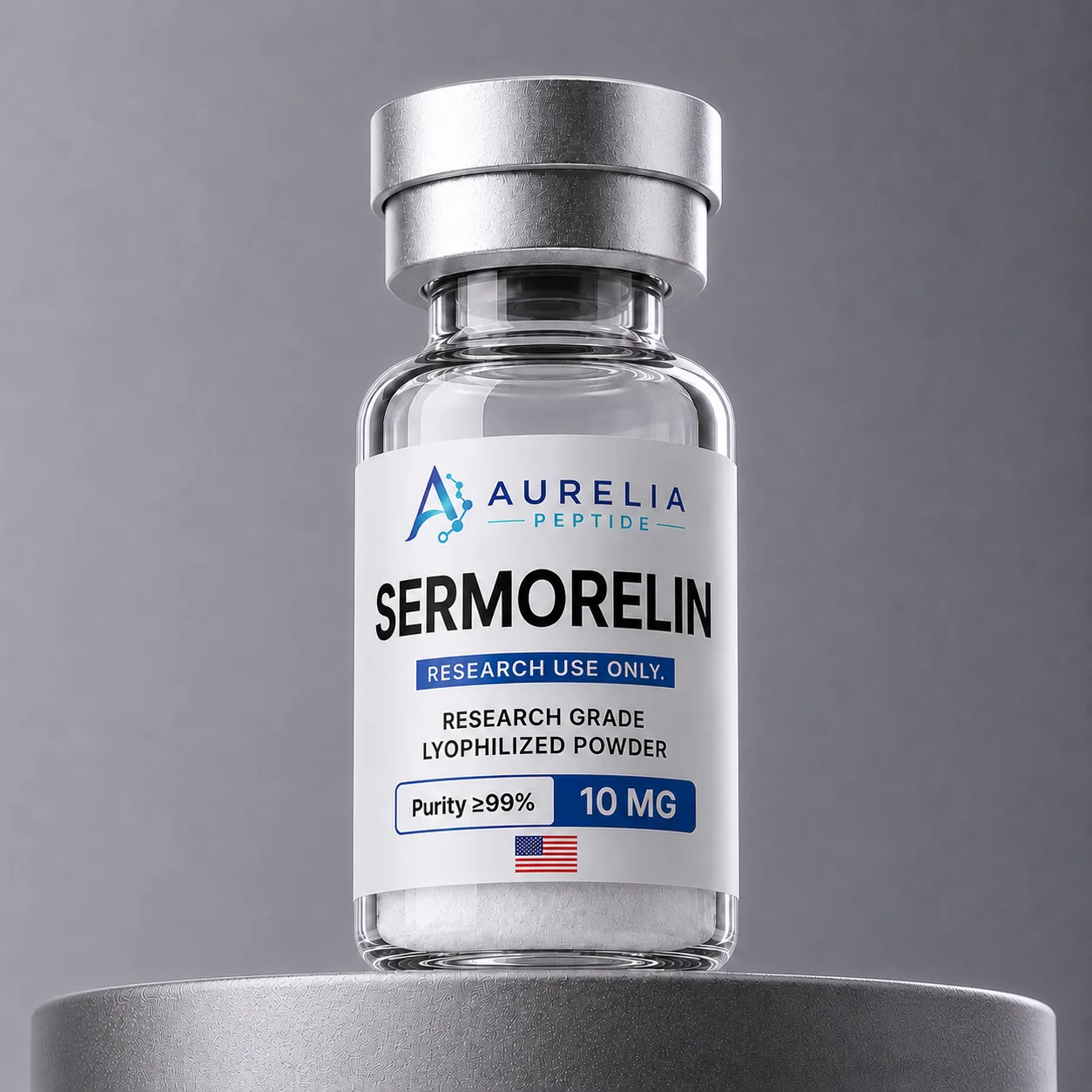
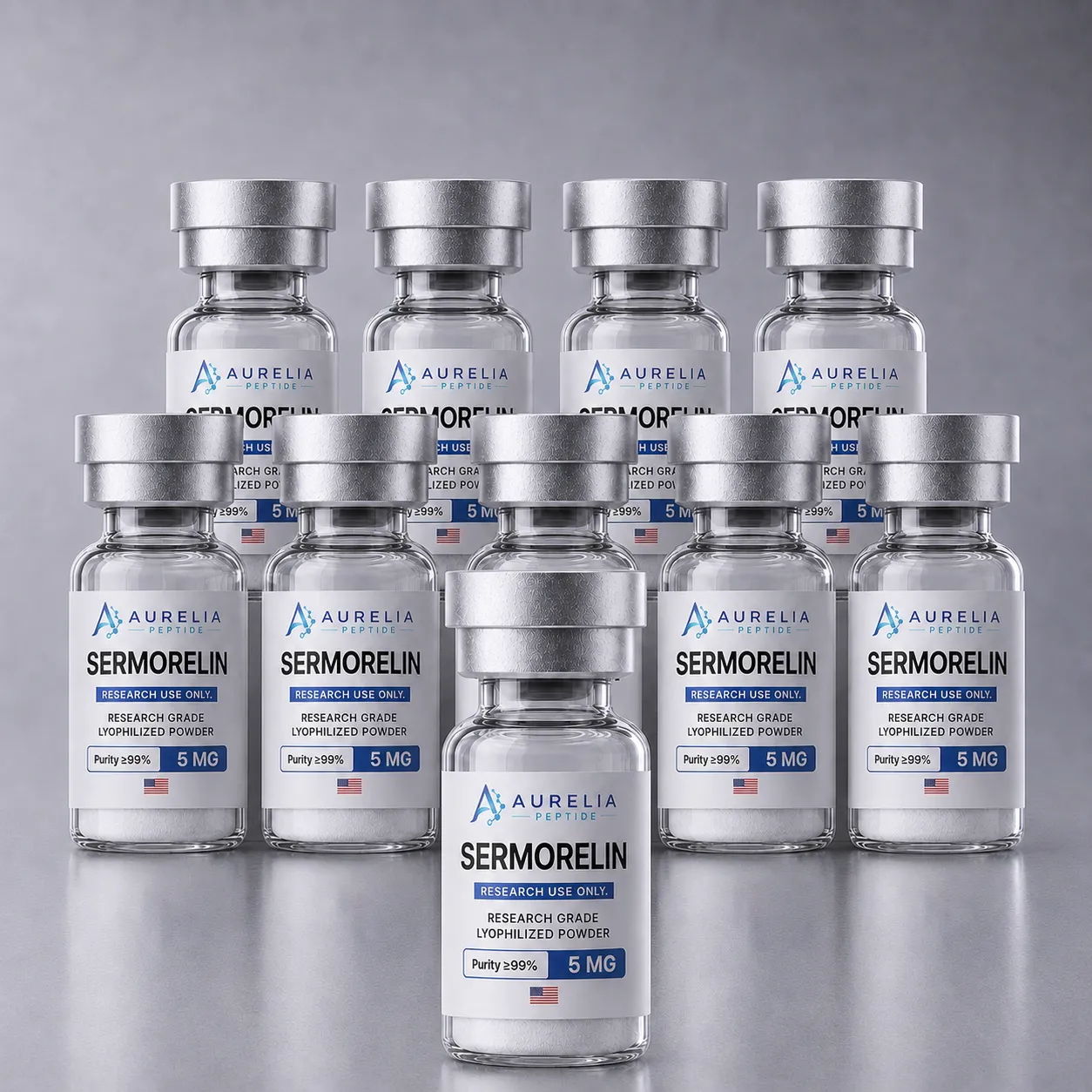
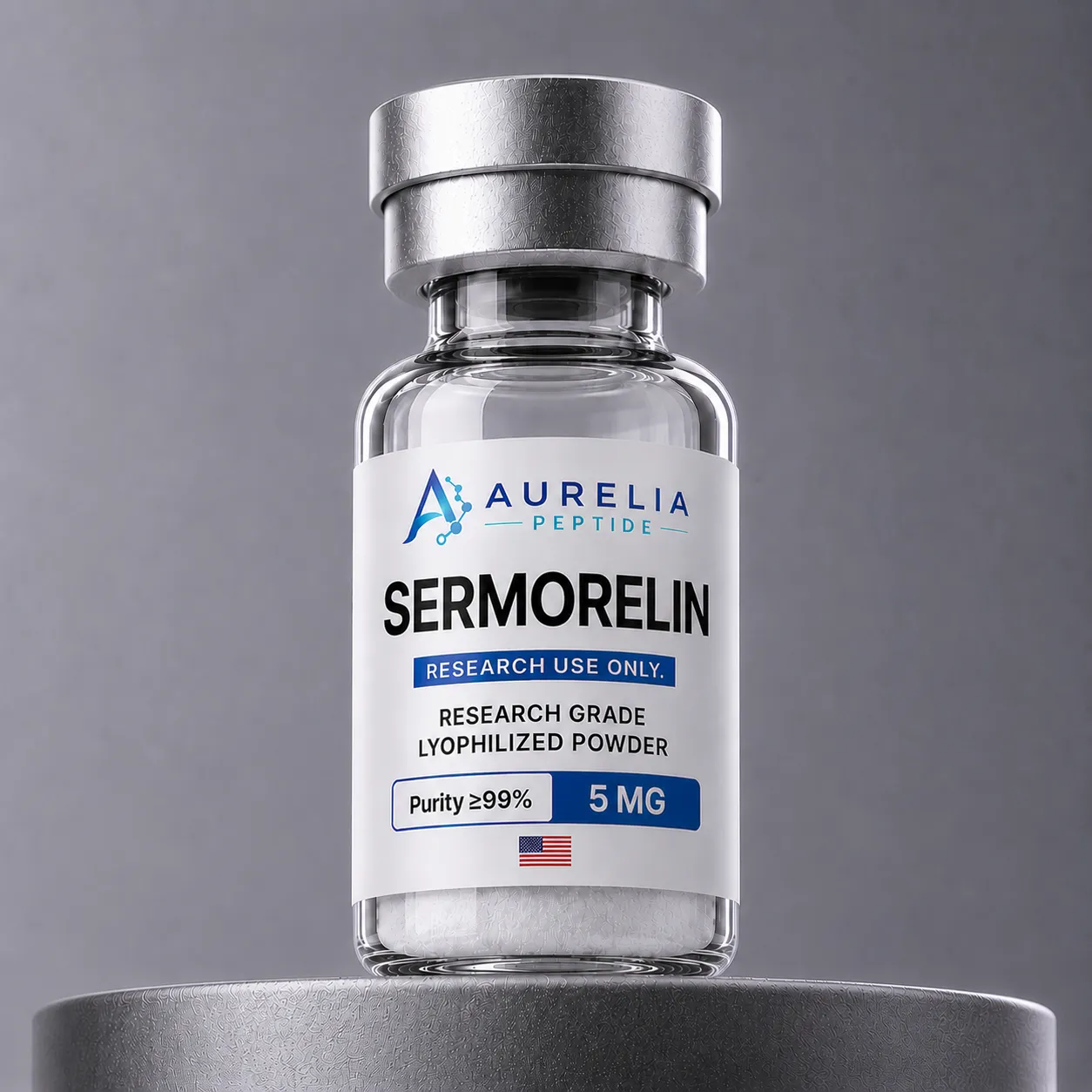
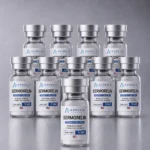
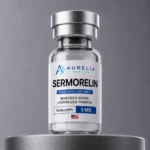
Sermorelin
The biologically active 29-residue fragment of human growth hormone-releasing hormone
- Fulfillment Origin
- us
Sermorelin is a synthetic analog of the N-terminal 29 amino acids of human growth hormone-releasing hormone. This fragment retains the receptor-activating region required for GHRH receptor signaling in anterior-pituitary somatotrophs. Research commonly examines pulsatile growth-hormone release, downstream hepatic IGF-1 signaling, pituitary reserve and preservation of the endogenous feedback architecture of the somatotropic axis.
Synthetic GHRH(1–29) analog · GHRH receptor agonist
- Formula
- C149H246N44O42S
- Molecular weight
- 3357.93 g/mol
- Form
- Lyophilized powder
- CAS / ID
- 86168-78-7
Independently tested. Verifiably pure.
Every batch of Sermorelin is reviewed against its independent laboratory documentation before fulfillment.
- HPLC Purity AnalysisReported purity: Lot-specific purity — see COA
- Mass SpectrometryMass-spectrometric identity — see lot COA
- Heavy Metals ScreeningLot-specific result — see COA
- Endotoxins (LPS)Lot-specific result — see COA
- Sterility TestingLot-specific result — see COA
- Net Peptide ContentLot-specific result — see COA
- HPLC Purity
- Lot-specific purity — see COA
- Identity
- Mass-spectrometric identity — see lot COA
- Endotoxin (LAL)
- Lot-specific result — see COA
- Lab
- Independent third-party laboratory
Not for human or veterinary use. For in-vitro laboratory research only. This product is not intended to diagnose, treat, cure, or prevent any disease.
The shortest fully active fragment of human GHRH.
Sermorelin contains the first 29 amino acids of the native 44-residue human GHRH sequence and preserves the receptor-binding region needed to stimulate pituitary somatotrophs.
Linear 29-residue peptide
A defined synthetic fragment corresponding to human GHRH residues 1 through 29.
GHRH receptor
Acts at the growth hormone-releasing hormone receptor on anterior-pituitary somatotrophs.
Endogenous GH-axis signaling
Used to investigate pituitary GH release, IGF-1 signaling and feedback-regulated pulsatility.
The Sermorelin molecule visualized.
The animated structure illustrates the compound's 29-residue linear peptide architecture and elemental composition.
Published research areas associated with Sermorelin.
The summaries below reflect endocrine and pituitary research themes and are not directions for administration or clinical use.
Somatotroph activation
Sermorelin is used to study receptor-dependent synthesis and pulsatile release of endogenous growth hormone.
Somatotropic signaling
Growth hormone released from the pituitary can stimulate hepatic production of insulin-like growth factor 1.
Preserved physiologic control
Because signaling begins upstream, somatostatin and IGF-1 negative feedback remain part of the experimental system.
Sermorelin signaling pathways visualized.
The animated map follows the signal from pituitary GHRH receptor engagement to growth-hormone release, hepatic IGF-1 production and endocrine feedback.
GHRH receptor agonism
Sermorelin binds GHRH receptors on anterior-pituitary somatotrophs and initiates receptor-dependent signaling.
Intracellular signal amplification
Receptor activation recruits adenylyl cyclase, increases cAMP and supports calcium-dependent secretory signaling.
Pulsatile growth-hormone release
The peptide stimulates endogenous GH synthesis and release rather than supplying growth hormone directly.
Downstream somatotropic signaling
Pituitary GH can drive hepatic IGF-1 production and related metabolic and anabolic signaling.
How Sermorelin differs from recombinant growth hormone.
Sermorelin acts upstream at the pituitary, while recombinant growth hormone supplies the downstream hormone directly.
Stimulates endogenous release
Requires functional pituitary somatotrophs and acts through the GHRH receptor.
Provides the downstream hormone
Acts directly at growth-hormone receptors without requiring pituitary secretion.
Endocrine feedback architecture
Upstream stimulation retains somatostatin and IGF-1 feedback within the signaling model.
| Compound | Primary site of action | Immediate output | Research distinction |
|---|---|---|---|
| Sermorelin | Pituitary GHRH receptor | Endogenous GH release | Feedback-regulated upstream secretagogue |
| Recombinant GH | Peripheral GH receptor | Direct GH-receptor activation | Exogenous downstream hormone |
Research emphasis visualized.
These bars summarize the principal experimental uses of Sermorelin and are not quantitative binding-affinity measurements.
Rapid plasma clearance, longer downstream endocrine signaling.
Published sources commonly describe a plasma half-life in the approximate 10–20 minute range, while the induced endocrine response may persist beyond direct peptide exposure.
Rapid peptide clearance
Direct circulating exposure is brief and depends on assay conditions, formulation and study design.
Downstream effects outlast exposure
Pituitary GH release and hepatic IGF-1 signaling can continue after circulating peptide levels decline.
Use analytical documentation
Identity, purity and net peptide content should be verified using the actual batch COA.
Full specification.
The fields below describe the compound identity. Final analytical values must match the actual Aurelia lot documentation.
Sermorelin
Synthetic analog of human GHRH residues 1–29.
GHRH analog
Pituitary growth-hormone-releasing peptide.
GHRH receptor
Expressed on anterior-pituitary somatotrophs.
29 residues
The N-terminal bioactive fragment of human GHRH.
C149H246N44O42S
Elemental composition of Sermorelin.
3357.93 g/mol
Calculated molecular mass.
86168-78-7
Common Sermorelin identifier.
See lot COA
Confirm identity, purity, net peptide content and applicable contaminant testing.
From GHRH receptor engagement to endocrine feedback.
This is an illustrative mechanistic sequence, not a dosing or treatment timeline.
GHRH receptor binding
Sermorelin engages GHRH receptors on anterior-pituitary somatotrophs.
cAMP and calcium signaling
Intracellular second messengers support synthesis and secretory activity.
Pulsatile GH release
The pituitary releases endogenous growth hormone into the experimental system.
IGF-1 production and feedback
Hepatic IGF-1 signaling and somatostatin-mediated feedback shape the downstream response.
Handle as a sensitive linear peptide.
Follow supplier-validated storage documentation for the actual Aurelia lot and record all preparation conditions.
Cold, dry and protected
Protect from moisture, direct light, heat and repeated temperature cycling.
Matrix and time matter
Working stability depends on solvent, concentration, pH, container and temperature.
Minimize adsorption and degradation
Use validated containers and avoid unnecessary agitation or prolonged exposure to ambient conditions.
- Record the batchLink every experiment to the vial lot and corresponding COA.
- Maintain validated storageUse the temperature range stated on the Aurelia product label and lot documentation.
- Minimize cyclingAvoid repeated warming, cooling or freeze-thaw events.
- Document preparationRecord solvent, concentration, pH, container, temperature and elapsed hold time.
For in-vitro laboratory research only. Not for human or veterinary use.
Sermorelin literature library.
The publications below provide context for growth-hormone deficiency research, pituitary testing and the aging somatotropic axis.
A review discussing the rationale for upstream stimulation of endogenous growth-hormone secretion.
View primary source →A review of Sermorelin pharmacology and historical diagnostic and therapeutic research.
View primary source →A broad review of age-associated changes in the GH and IGF-1 axis.
View primary source →References.
Independent literature supporting the molecular and mechanistic context used in this dossier.
- Walker RF. Sermorelin: a better approach to management of adult-onset growth hormone insufficiency? Clin Interv Aging. 2006.Open source ↗
- Prakash A, Goa KL. Sermorelin: a review of its use in the diagnosis and treatment of idiopathic growth hormone deficiency. BioDrugs. 1999.Open source ↗
- Corpas E, Harman SM, Blackman MR. Human growth hormone and human aging. Endocr Rev. 1993.Open source ↗
Related products
CJC / IPA Blend
CJC-1295 Whit DAC
IGF-1 LR3
Ipamorelin
TESA / IPA Blend