
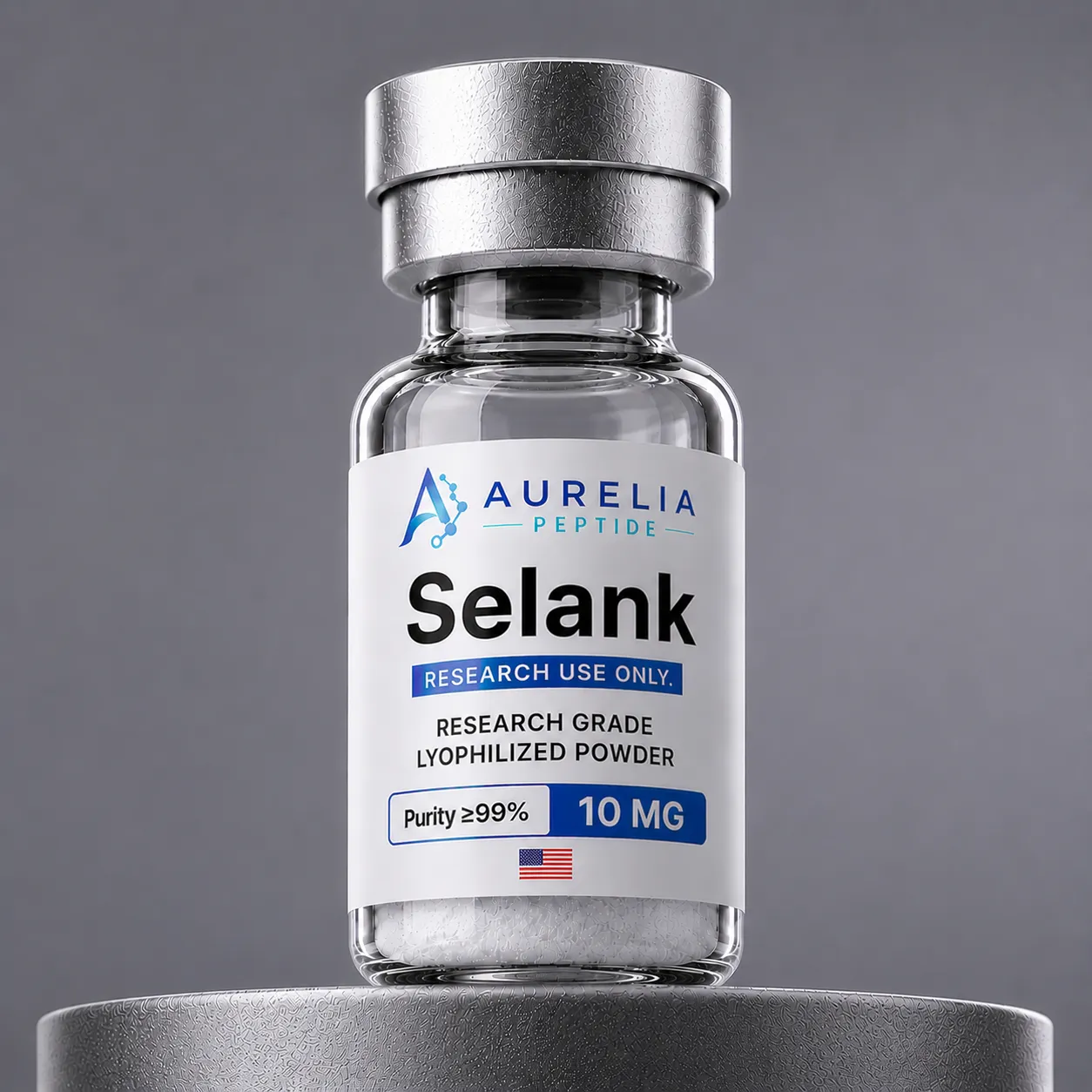
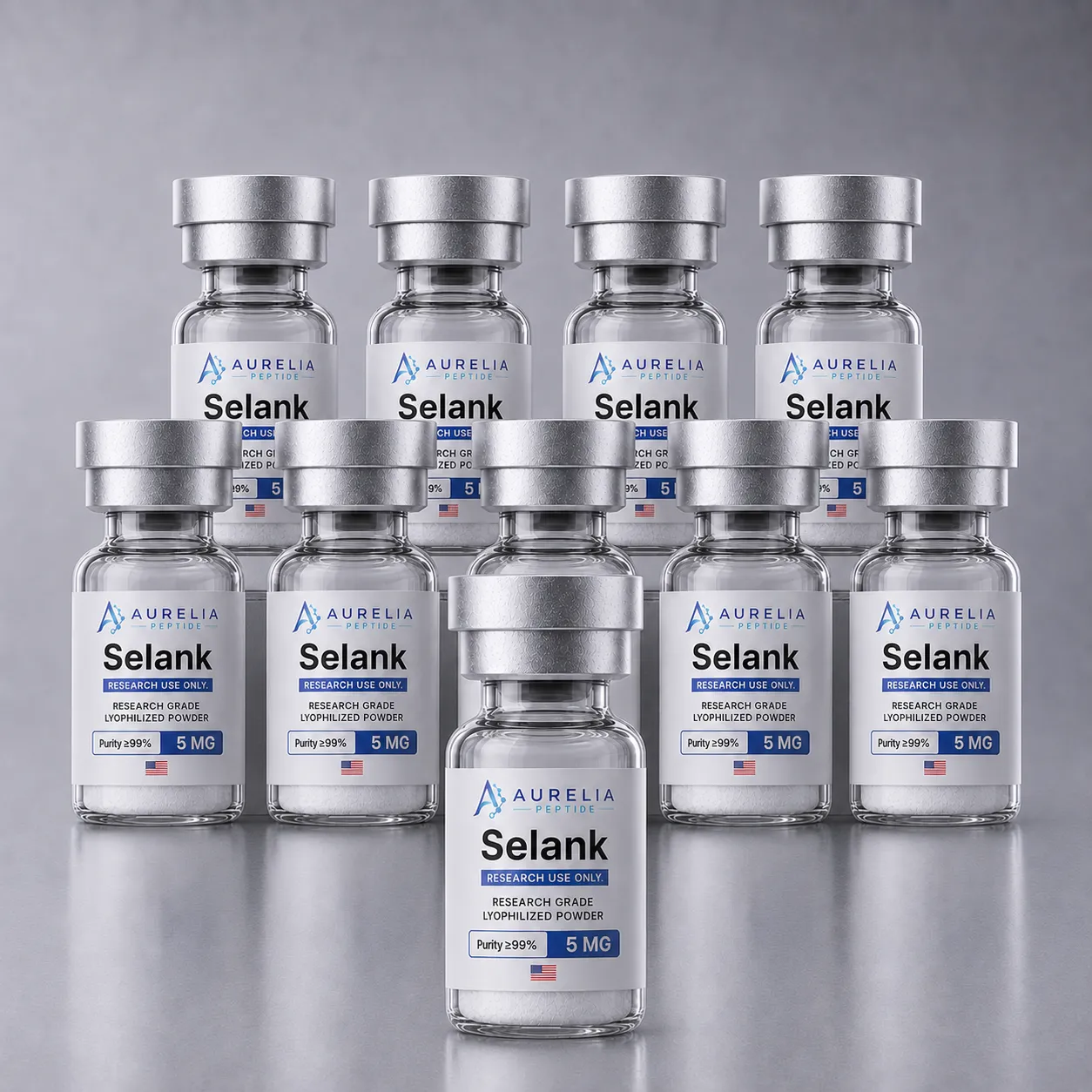
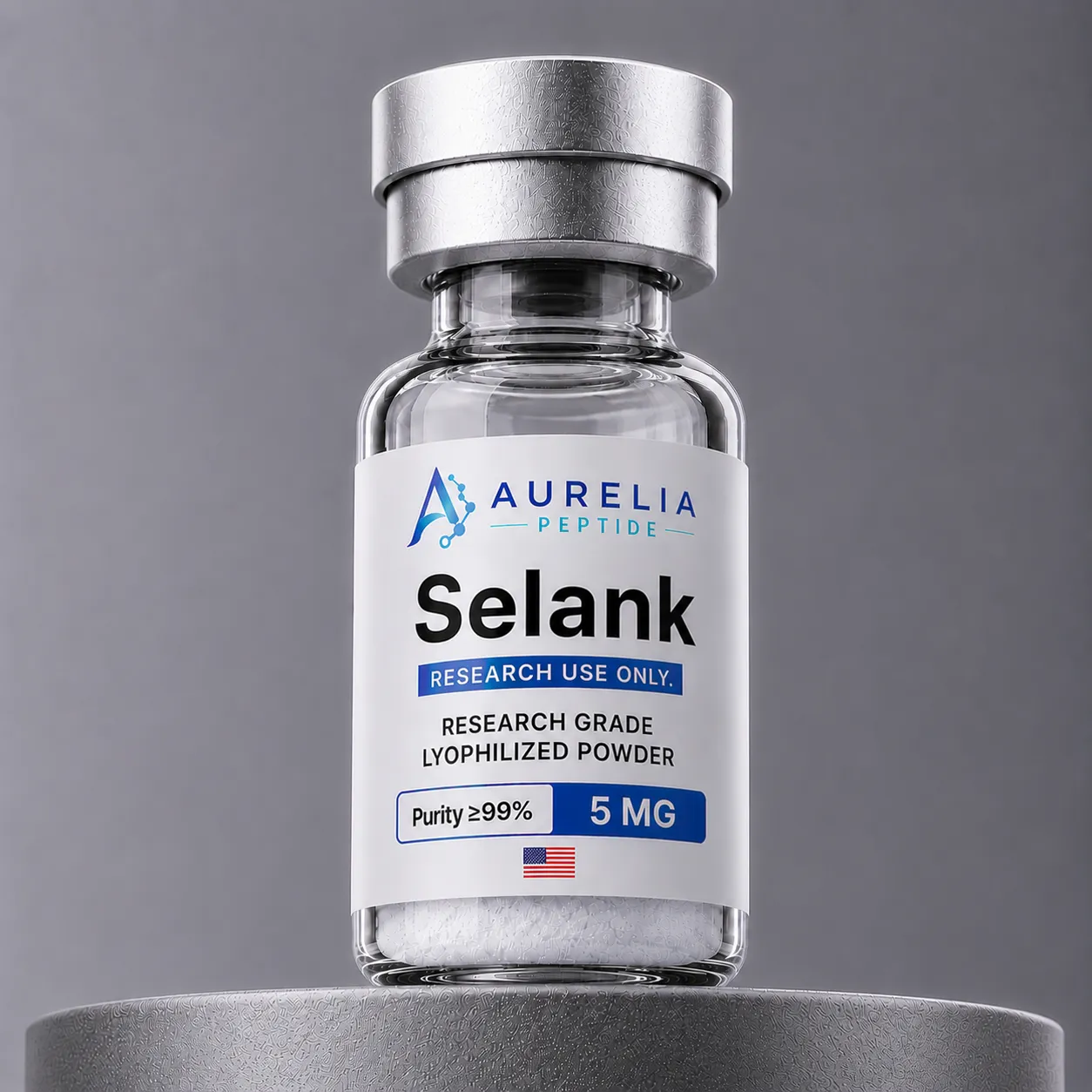
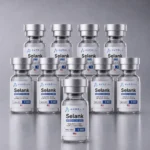
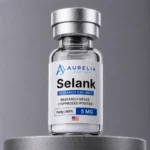
Selank
A synthetic tuftsin-derived heptapeptide studied in neuroimmune, anxiolytic and cognitive research
- Fulfillment Origin
- us
Selank is a synthetic seven-residue peptide derived from the immunomodulatory peptide tuftsin. Published research has examined its effects on GABAergic signaling, neurotrophic pathways, stress-related behavior, monoamine systems and immune-associated gene expression. This dossier summarizes compound-level research and is intended only for laboratory reference.
Synthetic linear heptapeptide · tuftsin analog
- Formula
- C33H57N11O9
- Molecular weight
- 751.88 g/mol
- Form
- Lyophilized powder
- CAS / ID
- 129954-34-3
Independently tested. Verifiably pure.
Every batch of Selank is reviewed against its independent laboratory documentation before fulfillment.
- HPLC Purity AnalysisReported purity: Lot-specific purity — see COA
- Mass SpectrometryMass-spectrometric identity — see lot COA
- Heavy Metals ScreeningLot-specific result — see COA
- Endotoxins (LPS)Lot-specific result — see COA
- Sterility TestingLot-specific result — see COA
- Net Peptide ContentLot-specific result — see COA
- HPLC Purity
- Lot-specific purity — see COA
- Identity
- Mass-spectrometric identity — see lot COA
- Endotoxin (LAL)
- Lot-specific result — see COA
- Lab
- Independent third-party laboratory
Not for human or veterinary use. For in-vitro laboratory research only. This product is not intended to diagnose, treat, cure, or prevent any disease.
A seven-residue tuftsin analog designed for neuroimmune research.
Selank is composed of Thr-Lys-Pro-Arg-Pro-Gly-Pro. The N-terminal tetrapeptide corresponds to the natural tuftsin sequence, followed by a Pro-Gly-Pro extension.
Linear heptapeptide
A defined seven-residue synthetic peptide.
Thr-Lys-Pro-Arg-Pro-Gly-Pro
Often abbreviated TKPRPGP.
Neuroimmune and stress signaling
Research spans GABAergic regulation, neurotrophic factors and immune-related transcription.
The Selank molecule visualized.
The animated structure illustrates the compound's linear seven-residue peptide framework and elemental composition.
Published research areas associated with Selank.
The summaries below reflect preclinical and translational literature themes and are not instructions for administration or use.
GABAergic modulation
Research has examined changes in GABA receptor-associated signaling and inhibitory neurotransmission.
Neuroplasticity research
Selected studies have investigated neurotrophin expression and synaptic-regulation pathways.
Anxiety-related research
Selank has been evaluated in experimental models of stress-responsive and anxiety-like behavior.
Selank signaling pathways visualized.
The pathway animation separates inhibitory neurotransmission, neurotrophic signaling and immune-related research themes.
GABAergic signaling
Selank research has examined GABA receptor-associated transcription and inhibitory neurotransmission.
Neuroplasticity pathways
Experimental work has explored neurotrophin expression and memory-related signaling.
Immune-associated regulation
As a tuftsin analog, Selank has also been studied in immune-linked transcriptional pathways.
How Selank differs from Semax.
Both are synthetic seven-residue peptides, but their research emphasis differs: Selank is more closely associated with GABAergic, stress-response and neuroimmune pathways, while Semax is more strongly linked to neurotrophic and ischemia research.
GABAergic and neuroimmune focus
Derived from tuftsin and studied in stress-related and inhibitory signaling.
Neurotrophic and ischemia focus
Derived from ACTH(4-10) and studied in BDNF-linked and neuroprotection models.
Seven-residue peptide structure
Both compounds are synthetic linear heptapeptides used in neuroscience research.
| Compound | Parent sequence | Primary research emphasis | Molecular type |
|---|---|---|---|
| Selank | Tuftsin-derived | GABAergic, stress and neuroimmune research | Linear heptapeptide |
| Semax | ACTH(4-10)-derived | Neurotrophic, cognitive and ischemia research | Linear heptapeptide |
Research emphasis visualized.
These bars summarize literature emphasis and are not receptor-binding affinity measurements.
Selank exposure is formulation- and route-dependent.
Research findings should be interpreted in the context of the specific formulation, species, route and study design. A universal half-life should not be assigned to lyophilized research material.
Enzymatic degradation matters
Linear peptides may be sensitive to proteolytic degradation depending on the biological matrix.
Do not generalize across formulations
Published exposure data may not transfer between experimental preparations.
Use analytical documentation
Identity and net peptide content should be verified using the actual batch COA.
Full specification.
The fields below describe the compound identity. Final analytical values must match the actual Aurelia lot documentation.
Selank
Synthetic tuftsin-derived heptapeptide.
Thr-Lys-Pro-Arg-Pro-Gly-Pro
Seven amino-acid residues.
C33H57N11O9
Elemental composition of Selank.
751.88 g/mol
Calculated molecular mass.
129954-34-3
Common Selank identifier.
See lot COA
Confirm identity, purity, net peptide content and applicable contaminant testing.
From peptide exposure to downstream signaling.
This is an illustrative research sequence, not a dosing or treatment timeline.
Peptide interaction
Selank enters the experimental system as a defined seven-residue peptide.
Inhibitory signaling response
GABA receptor-associated and related transcriptional pathways are evaluated.
Neurotrophic and immune modulation
Researchers assess BDNF-linked and immune-related gene-expression changes.
Functional endpoints
Behavioral, memory, stress-response and molecular endpoints are measured.
Handle as a sensitive linear peptide.
Follow supplier-validated storage documentation for the supplied lot and record all preparation conditions.
Cold, dry and protected
Minimize moisture, heat, direct light and repeated temperature cycling.
Matrix and time matter
Working stability depends on solvent, concentration, pH, container and temperature.
Track lot and hold time
Document preparation time, storage temperature and elapsed time before analysis.
- Record the batchLink each experiment to the vial lot and its corresponding COA.
- Minimize cyclingAvoid unnecessary freeze-thaw or warming cycles.
- Use validated containersSelect materials appropriate for low-concentration peptide solutions.
- Document preparationRecord solvent, concentration, pH, temperature and hold time.
For in-vitro laboratory research only. Not for human or veterinary use.
Selank literature library.
The publications below provide context for GABAergic, behavioral, neurotrophic and gene-expression research.
Research examining transcriptional effects associated with GABA receptor and neurotransmission pathways.
View primary source →Preclinical work evaluating stress-responsive and anxiety-like behavioral endpoints.
View primary source →Experimental research assessing broad gene-expression responses after Selank exposure.
View primary source →Research context for tuftsin-derived peptides and immune-associated regulatory effects.
View primary source →References.
Independent literature supporting the molecular and mechanistic context used in this dossier.
- Volkova AA et al. Selank-associated regulation of GABAergic-system gene expression. Bull Exp Biol Med.Open source ↗
- Medvedeva EV et al. Behavioral and stress-response research involving Selank. Neurosci Behav Physiol.Open source ↗
- Kolomin T et al. Transcriptional responses associated with Selank exposure. Mol Biol.Open source ↗
- Ashmarin IP et al. Tuftsin-derived peptides and neuroimmune regulation. Peptides.Open source ↗
Related products
L-Glutathione
MOTS-c
NAD+
Pinealon
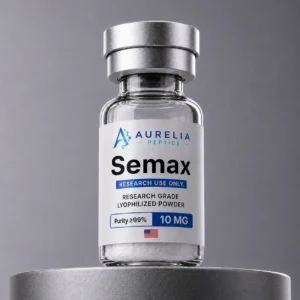
Semax