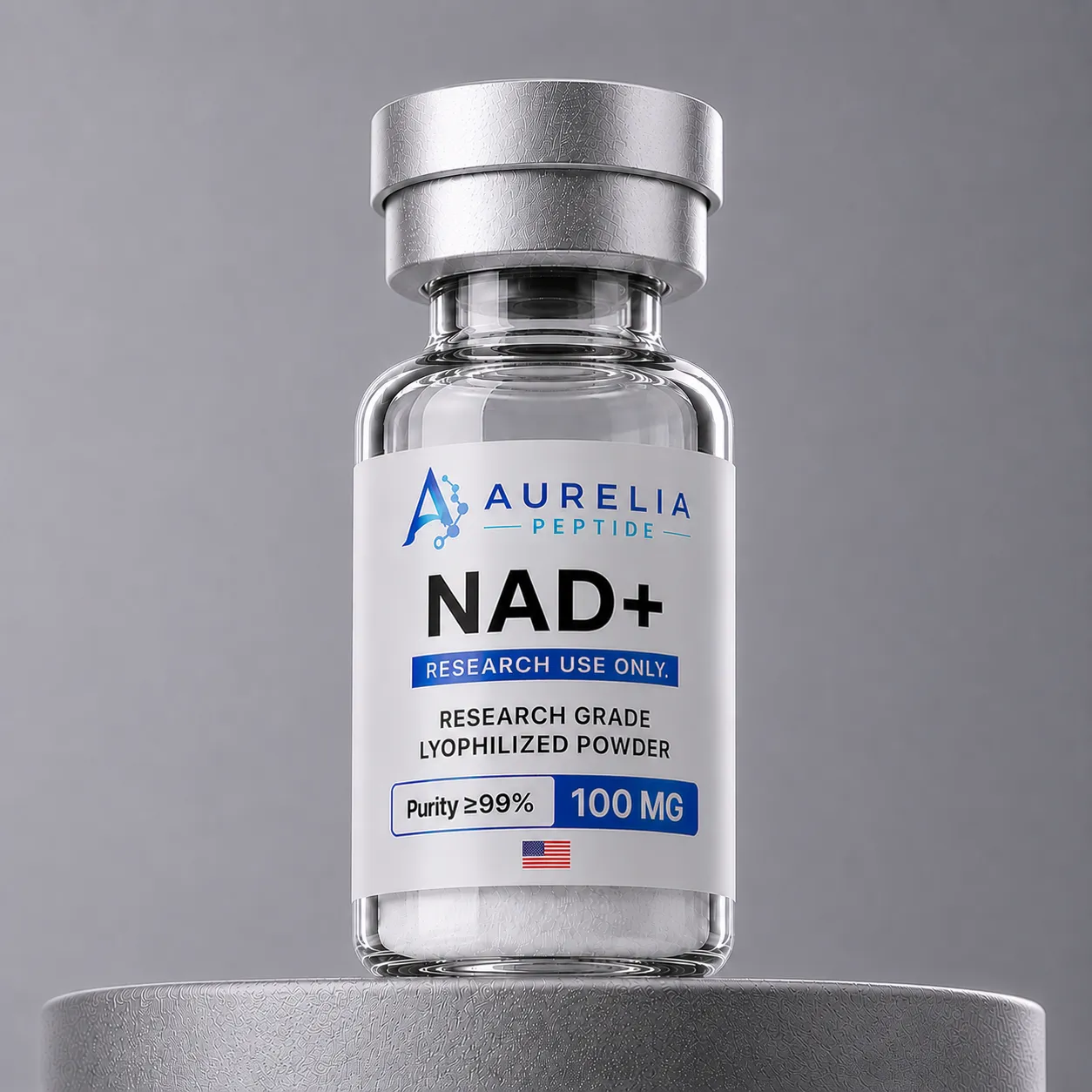
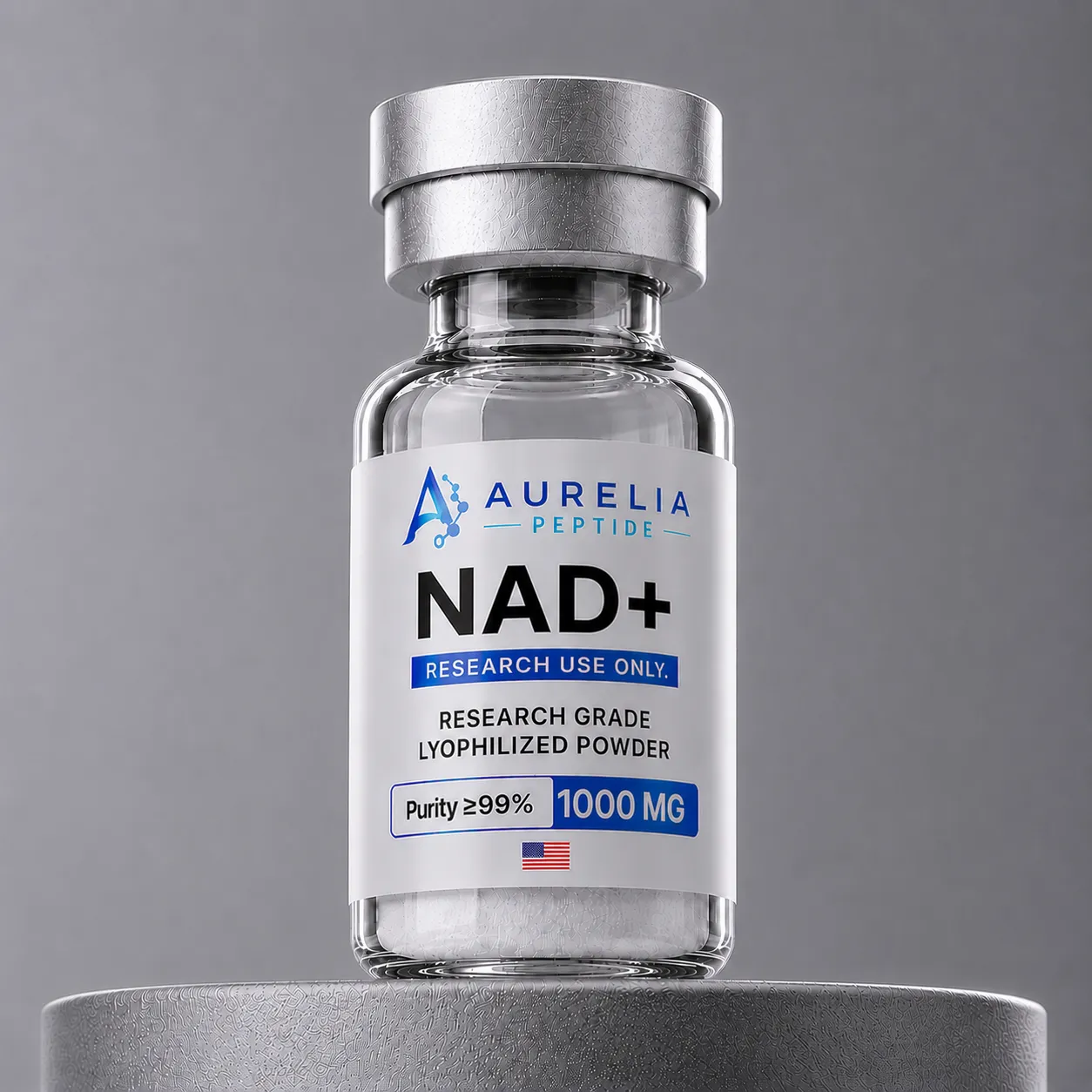
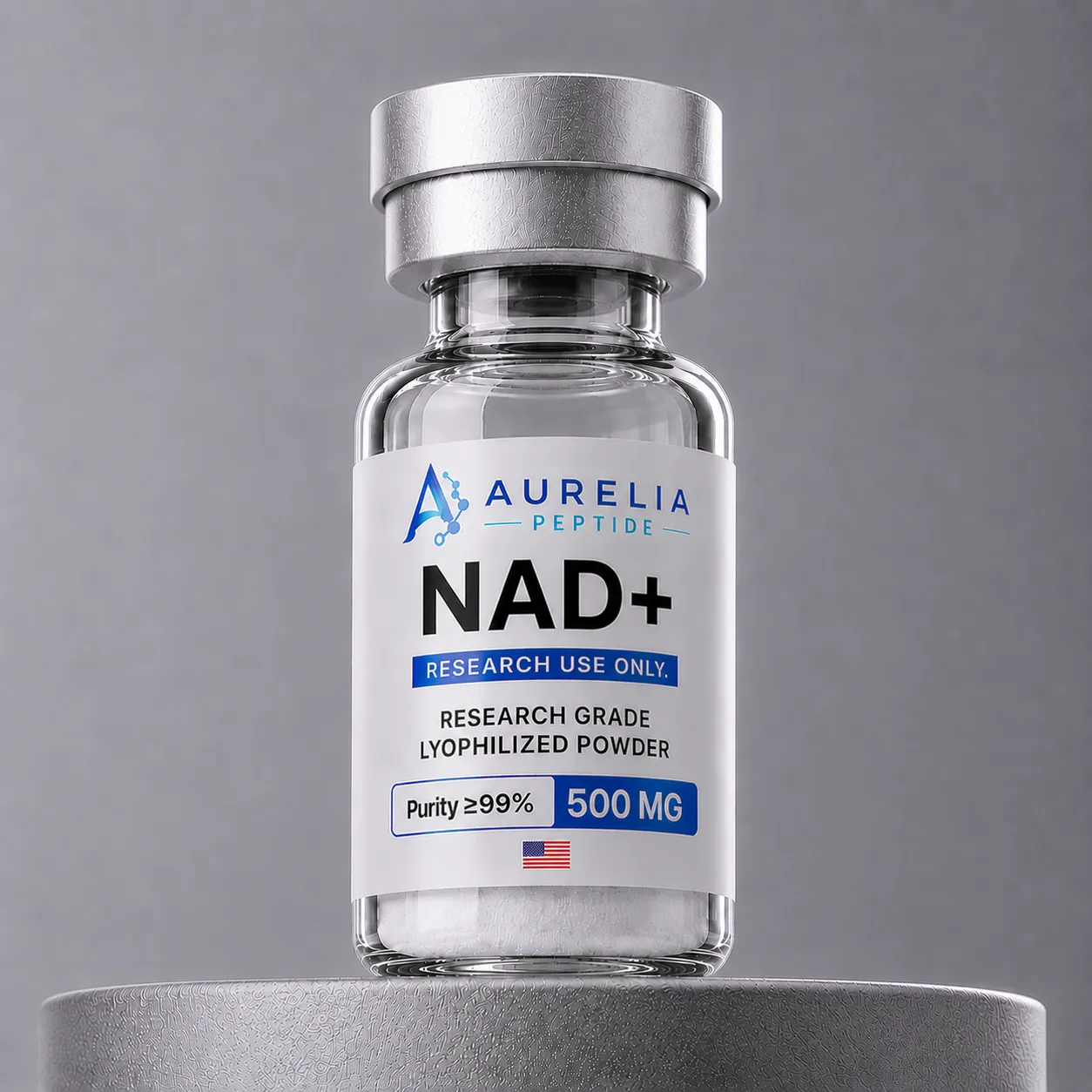
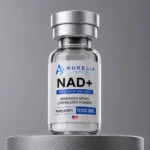
NAD+
An oxidized pyridine dinucleotide coenzyme central to redox metabolism and NAD-dependent signaling
- Fulfillment Origin
- us
NAD+ is the oxidized form of nicotinamide adenine dinucleotide, a small-molecule coenzyme present throughout cellular metabolism. It accepts electrons in redox reactions and also serves as a consumed substrate for sirtuins, poly(ADP-ribose) polymerases and NAD glycohydrolases. Research links NAD homeostasis with bioenergetics, DNA-damage responses, chromatin regulation and cellular aging.
Oxidized pyridine dinucleotide coenzyme; not a peptide
- Formula
- C21H27N7O14P2
- Molecular weight
- 663.43 g/mol
- Form
- Lyophilized powder
- CAS / ID
- 53-84-9
Independently tested. Verifiably pure.
Every batch of NAD+ is reviewed against its independent laboratory documentation before fulfillment.
- HPLC Purity AnalysisReported purity: Lot-specific purity — see COA
- Mass SpectrometryMass spectrometry — see lot COA
- Heavy Metals ScreeningLot-specific result — see COA
- Endotoxins (LPS)Lot-specific result — see COA
- Sterility TestingLot-specific result — see COA
- Net Peptide ContentLot-specific net content — see COA
- HPLC Purity
- Lot-specific purity — see COA
- Identity
- Mass spectrometry — see lot COA
- Endotoxin (LAL)
- Lot-specific result — see COA
- Lab
- Independent third-party laboratory
Not for human or veterinary use. For in-vitro laboratory research only. This product is not intended to diagnose, treat, cure, or prevent any disease.
Two nucleotides. One central redox coenzyme.
NAD+ links an adenosine nucleotide and a nicotinamide ribonucleotide through a pyrophosphate bridge. Its nicotinamide ring accepts a hydride during reduction to NADH, allowing reversible electron transfer across metabolic pathways.
NAD+ ⇄ NADH
The oxidized and reduced forms transfer electrons between metabolic reactions.
Pyridine dinucleotide
A nucleotide-derived small-molecule coenzyme rather than a peptide.
Consumed enzyme substrate
Sirtuins, PARPs and CD38-family enzymes consume NAD+ during their catalytic reactions.
The NAD+ molecule
An interactive illustrative atomic representation paired with verified public compound data. The graphic is schematic and does not specify the protonation, hydrate or counterion state of a particular lot.
Published research observations.
These observations summarize basic, cellular and animal research into NAD metabolism. They do not establish that externally supplied NAD+ produces anti-aging or therapeutic outcomes in humans.
Oxidized electron acceptor
Reduction of the nicotinamide ring produces NADH for subsequent electron-transfer reactions.
Mammalian sirtuins
SIRT1 through SIRT7 use NAD+ as a cosubstrate in compartment-specific deacylation reactions.
Free-form molecular mass
Public molecular weight in grams per mole; salts and hydrates have different values.
Redox carrier. Signaling substrate. Metabolic hub.
NAD+ participates both catalytically in reversible redox reactions and stoichiometrically as a consumed substrate for regulatory enzymes.
Energy and redox metabolism
Dehydrogenases use the NAD+/NADH pair to connect glycolysis, the TCA cycle and mitochondrial electron transfer.
NAD-dependent deacylation
Sirtuins couple protein deacylation to NAD+ cleavage and participate in metabolic, stress and chromatin regulation.
DNA-response and calcium signaling
PARPs consume NAD+ during ADP-ribosylation, while CD38-family enzymes generate signaling metabolites.
Where NAD+ fits.
This comparison separates the active oxidized coenzyme from its reduced redox partner and from common biosynthetic precursors. It does not imply equivalent cellular uptake or biological effect.
NAD+
Accepts reducing equivalents and serves as a substrate for NAD-consuming enzymes.
NADH
Carries reducing equivalents generated by metabolic oxidation reactions.
NMN and NR
Biosynthetic intermediates that cells can process through enzyme-dependent NAD pathways.
| Molecule | Class | Primary relationship | Research focus |
|---|---|---|---|
| NAD+ | Oxidized dinucleotide | Electron acceptor / enzyme substrate | Redox and signaling |
| NADH | Reduced dinucleotide | Electron donor | Energy metabolism |
| NMN | Mononucleotide precursor | NAD biosynthesis intermediate | Precursor metabolism |
| NR | Nucleoside precursor | Converted through NRK pathways | Precursor metabolism |
NAD-dependent biology visualized.
Qualitative bars summarize established biochemical roles. They are not treatment-effect or clinical-performance measurements.
A charged dinucleotide with compartment-specific biology.
Cellular NAD pools are regulated by biosynthesis, consumption, compartmentalization, transport and extracellular metabolism. A vial's chemical identity alone does not establish cellular delivery or pharmacokinetic behavior.
Dinucleotide structure
Nicotinamide and adenosine ribonucleotides joined through pyrophosphate.
Highly polar structure
Phosphate groups contribute charge, solubility and membrane-transport constraints.
Compartmentalized metabolism
Nuclear, cytosolic and mitochondrial NAD pools support distinct but connected processes.
Full specification.
The public free-form identity is shown separately from salt, hydrate and lot-specific analytical measurements.
β-Nicotinamide adenine dinucleotide
Oxidized NAD+ coenzyme form.
C21H27N7O14P2
Public free-form molecular formula.
663.43 g/mol
Public free-form molecular weight.
Pyridine dinucleotide
A small-molecule coenzyme, not an amino-acid peptide.
53-84-9
PubChem CID 5892.
See selected COA
Purity, identity, salt form, water and net content are lot-specific.
Selected NAD+ research milestones.
These milestones trace modern research into NAD homeostasis, mitochondrial communication and NAD-consuming enzymes.
Comprehensive aging review published
A Nature Reviews article summarized NAD biosynthesis, compartmentalization, consumption and aging-related research.
Mitochondrial NAD transporter identified
Independent studies characterized SLC25A51 as a mammalian mitochondrial NAD transporter.
NMN and NR biology reviewed
A major review examined NAD precursors, biosynthetic enzymes, transport questions and translational limits.
NAD, sirtuin and mitonuclear studies
Animal and cell studies connected NAD decline with mitochondrial communication and stress-response pathways.
Handling and documentation.
NAD+ stability depends on pH, temperature, light, moisture, salt form, concentration and container. Follow the actual product label and supplier-validated lot documentation.
Follow documented storage
Keep the lyophilized product within its validated storage conditions.
Minimize exposure
Keep the container tightly closed and protect material according to its documentation.
Use validated stability data
Solution stability varies with pH, buffer, concentration, temperature and microbial controls.
- Verify the lotMatch the container identifier with its available Certificate of Analysis.
- Confirm chemical formDocument free acid, salt, hydrate and assay basis before calculating concentration.
- Use a validated methodPrepare research material using qualified equipment and an approved laboratory protocol.
- Record preparationDocument lot, buffer, concentration, container, conditions, date and disposition.
Featured NAD+ research.
Explore public compound data and selected peer-reviewed research on NAD metabolism. Most intervention findings concern precursors, cells or animal models rather than direct administration of this commercial material.
Public molecular formula, molecular weight, structure, identifiers and coenzyme description.
View primary source →A comprehensive review of NAD biosynthesis, redox function, sirtuins, PARPs, CD38 and cellular aging.
View primary source →A review of precursor pathways, biosynthetic enzymes, tissue context and translational questions.
View primary source →Cell and mouse research examined SIRT1-dependent mitochondrial signaling during aging.
View primary source →Worm, cell and animal work examined NAD, sirtuin signaling, mitochondrial stress responses and longevity.
View primary source →Research connected senescent-cell-associated inflammation with CD38-positive macrophages and tissue NAD decline.
View primary source →References.
Government compound data and peer-reviewed publications used for this dossier.
- PubChem. Nadide / oxidized NAD+, CID 5892.Open source ↗
- Covarrubias AJ, et al. NAD+ metabolism and its roles in cellular processes during ageing. Nature Reviews Molecular Cell Biology. 2021.Open source ↗
- Rajman L, et al. NAD+ intermediates: The biology and therapeutic potential of NMN and NR. Cell Metabolism. 2018.Open source ↗
- Gomes AP, et al. Declining NAD+ induces a pseudohypoxic state disrupting nuclear-mitochondrial communication during aging. Cell. 2013.Open source ↗
- Mouchiroud L, et al. The NAD+/Sirtuin pathway modulates longevity through mitochondrial UPR and FOXO signaling. Cell. 2013.Open source ↗
- Covarrubias AJ, et al. Senescent cells promote tissue NAD+ decline during ageing via CD38-positive macrophages. Nature Metabolism. 2020.Open source ↗
Related products
L-Glutathione
MOTS-c
Pinealon
Selank
Semax